
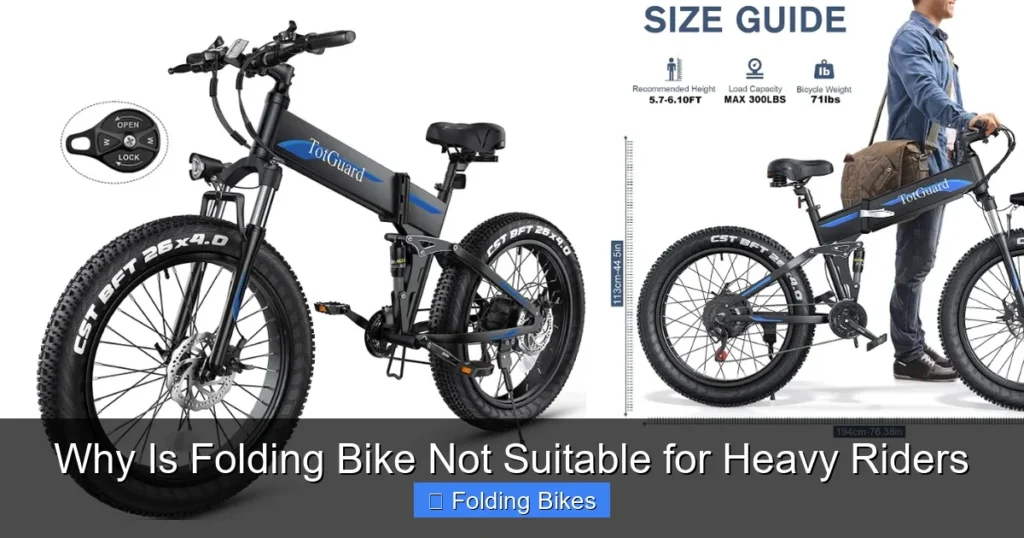
Folding bikes are compact and convenient, but they often lack the durability and support needed for heavy riders. This guide explains the structural, safety, and performance limitations that make them a poor fit for larger individuals.
Key Takeaways
- Weight capacity is limited: Most folding bikes support only 220–275 lbs, which may be too low for heavier riders.
- Frame design prioritizes portability over strength: The compact, hinged frame isn’t built to handle high stress or heavy loads.
- Smaller wheels reduce stability: Tiny wheels offer less traction and balance, increasing the risk of accidents for heavier users.
- Suspension and comfort are minimal: Folding bikes often lack proper shock absorption, leading to an uncomfortable ride on rough terrain.
- Safety risks increase with excess weight: Overloading can cause frame failure, brake issues, or tire blowouts.
- Better alternatives exist: Electric, mountain, or hybrid bikes are safer and more comfortable for heavy riders.
- Always check manufacturer specs: Never assume a folding bike can support your weight—verify before buying.
Why Is Folding Bike Not Suitable for Heavy Riders?
If you’re a heavier rider considering a folding bike, you might be drawn to their compact size, easy storage, and portability. But before you make a purchase, it’s important to understand why folding bikes are generally not suitable for heavy riders. While these bikes are great for city commuters, travelers, and those with limited space, their design comes with significant limitations—especially when it comes to weight capacity and structural integrity.
In this guide, we’ll walk you through the key reasons folding bikes fall short for heavier individuals. You’ll learn about weight limits, frame construction, wheel size, comfort issues, and safety concerns. We’ll also explore better bike options designed to support heavier riders, ensuring a safer, more enjoyable cycling experience. Whether you’re 200 lbs or over 300 lbs, this guide will help you make an informed decision.
Understanding Weight Limits and Frame Strength
One of the most critical factors when choosing any bike is its weight capacity. Most folding bikes are designed with a maximum load limit between 220 and 275 pounds. This includes the rider plus any gear, bags, or accessories. If you exceed this limit—even slightly—you risk damaging the bike or causing a dangerous failure while riding.
How Folding Bikes Are Built
Folding bikes use lightweight materials like aluminum or steel to keep them portable. However, this emphasis on lightness often means thinner tubing, smaller joints, and less reinforcement. The folding mechanism itself—usually a hinge near the frame’s center—creates a weak point. Under high stress, this hinge can bend, crack, or even break.
For example, a typical folding bike like the Brompton or Dahon might weigh around 25–30 lbs and support up to 250 lbs. But if you’re a 280-lb rider, you’re already pushing beyond safe limits. Over time, repeated stress can lead to fatigue in the frame, especially around the folding joint.
Real-World Consequences
Imagine riding downhill at speed when the frame suddenly gives way. Or worse—your rear wheel collapses because the hub wasn’t built for heavy loads. These aren’t just theoretical risks. Many heavy riders report creaking frames, bent hinges, or snapped bolts after just a few months of use.
Always check the manufacturer’s specifications before buying. If your weight plus gear exceeds the limit, don’t risk it. Your safety is more important than convenience.
The Problem with Smaller Wheels and Stability
Another major drawback for heavy riders is the small wheel size common in folding bikes. Most use 16″ or 20″ wheels, compared to the standard 26″ or 700c wheels on traditional bikes.
Why Wheel Size Matters
Larger wheels roll over bumps, cracks, and debris more easily. They offer better traction, stability, and momentum—especially important when you’re carrying extra weight. Smaller wheels, on the other hand, are more prone to getting stuck in potholes or losing grip on uneven surfaces.
For a heavier rider, this means:
- More effort to maintain speed
- Increased risk of tipping or losing control
- Harder braking, especially on hills
Imagine trying to stop quickly on a 20″ folding bike while carrying 30 lbs of groceries. The short wheelbase and small contact patch make it harder to brake safely. This is why many folding bikes come with weaker V-brakes instead of disc brakes—they simply can’t handle high-speed stops with heavy loads.
Impact on Ride Quality
Smaller wheels also transmit more road vibrations to the rider. Without proper suspension, every bump feels harsher. For a heavier rider, this can lead to discomfort in the back, wrists, and knees—especially on longer rides.
If comfort is a priority, consider bikes with larger wheels and better suspension. For example, the Which Cruiser Bike Is Best For Long Rides guide highlights models with wide tires and ergonomic designs ideal for heavier users.
Limited Suspension and Poor Shock Absorption
Most folding bikes have little to no suspension. Some may include a basic front suspension fork, but rear suspension is rare. This lack of cushioning is a big problem for heavy riders.
Why Suspension Matters for Heavy Riders
Heavier riders generate more force with each pedal stroke and when hitting bumps. Without proper shock absorption, that force gets transferred directly to your body. Over time, this can cause:
- Joint pain (knees, hips, back)
- Numb hands and feet
- Fatigue and reduced endurance
In contrast, mountain bikes and hybrid bikes often feature full or partial suspension systems designed to handle rough terrain and heavier loads. For example, the How To Prepare A Mountain Bike For Long Rides guide explains how suspension improves comfort and control on extended journeys.
Folding Bike Workarounds (And Why They Fall Short)
Some riders try to compensate by using wider tires or adding gel seat pads. While these can help slightly, they don’t solve the core issue: the frame and wheels weren’t built for high stress.
You might also consider a folding bike with a suspension seatpost, but even these have limits. They can’t make up for weak frame joints or undersized wheels.
Safety Risks of Overloading a Folding Bike
Riding a folding bike beyond its weight capacity isn’t just uncomfortable—it’s dangerous. Here are the top safety risks heavy riders face:
Frame Failure
The folding hinge and lightweight tubing are the weakest points. Under excessive weight, they can warp, crack, or snap. This is especially likely during sudden stops, hard landings, or collisions.
Brake Performance Degradation
Most folding bikes use rim brakes, which lose effectiveness when wet or under heavy load. Disc brakes are stronger but rare on folding models. For a heavy rider, this means longer stopping distances and higher risk of accidents.
Tire and Wheel Damage
Smaller wheels and thinner tires are more likely to pinch flat or blow out under pressure. Overloading increases the chance of tire failure, especially on rough roads or when carrying heavy bags.
Reduced Maneuverability
Heavier riders may find folding bikes harder to steer and balance. The short wheelbase and upright riding position can make quick turns feel unstable.
Always prioritize safety over convenience. If you’re over the weight limit, choose a bike built for your size.
Better Alternatives for Heavy Riders
If folding bikes aren’t the right fit, what should heavy riders consider instead? Here are some safer, more comfortable options:
Electric Bikes (E-Bikes)
E-bikes provide pedal assistance, reducing strain on your joints and making hills easier. Many models support 300+ lbs and come with sturdy frames, large wheels, and disc brakes. The Best Electric Bike For Heavy Adults guide reviews top models with high weight capacities and excellent build quality.
Mountain Bikes
Built for rough terrain, mountain bikes have strong frames, wide tires, and suspension systems. They’re ideal for off-road adventures and city riding alike. Look for models with reinforced frames and 29″ wheels for better stability.
Hybrid and Comfort Bikes
These combine the best of road and mountain bikes. They offer upright seating, wide saddles, and shock-absorbing features. The Which Bike Is Most Comfortable For Long Rides article highlights several models perfect for heavier riders seeking comfort and durability.
Cruiser Bikes
With wide tires, low center of gravity, and plush seats, cruisers are great for casual riding. They’re stable, easy to mount, and often support higher weights.
Troubleshooting Common Issues for Heavy Riders
Even if you choose a non-folding bike, you may still face challenges. Here’s how to address common problems:
Bike Feels Unstable
- Check tire pressure—underinflated tires reduce control
- Ensure the frame size fits your height and weight
- Add a rear rack for better weight distribution
Discomfort on Long Rides
- Upgrade to a wider, gel-padded saddle
- Use ergonomic grips and padded shorts
- Adjust handlebar height for a relaxed posture
Brake Issues
- Switch to hydraulic disc brakes for better stopping power
- Regularly inspect brake pads and cables
- Avoid overloading the rear rack
Conclusion
Folding bikes are innovative and convenient, but they’re not built for heavy riders. Their lightweight frames, small wheels, and low weight limits make them risky for anyone over 250 lbs. While they excel in portability, they fall short in strength, stability, and comfort.
If you’re a heavier rider, investing in a sturdy electric, mountain, or hybrid bike is the smarter choice. These models are designed to support your weight, absorb shocks, and keep you safe on any terrain. Always check manufacturer specs, test ride before buying, and prioritize durability over convenience.
Your ride should be enjoyable, not risky. Choose a bike that’s built for you—not one that forces you to compromise on safety.



