
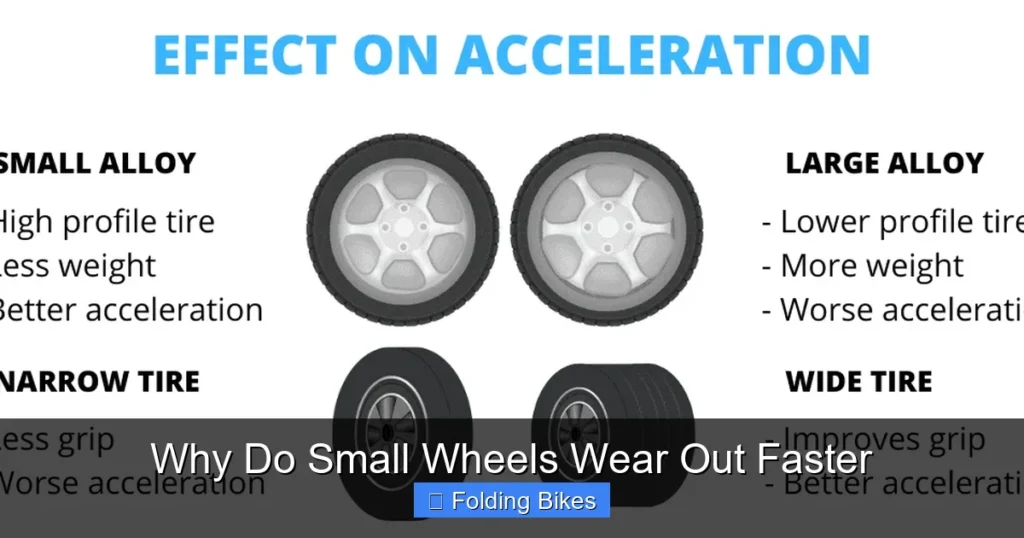
Small wheels on folding bikes wear out faster due to higher rotational speeds, increased pressure per square inch, and reduced tire volume. This guide explains the science behind faster wear and offers actionable tips to slow it down and maintain performance.
Key Takeaways
- Higher RPMs: Smaller wheels spin faster to maintain speed, increasing friction and heat, which accelerates tire wear.
- Reduced Tire Volume: Less air and rubber mean less cushioning and more direct impact transfer, wearing tires quicker.
- Increased Pressure Needs: Smaller tires require higher PSI, which reduces contact patch flexibility and speeds up tread loss.
- Frequent Stops and Starts: Folding bikes are often used in cities with stop-and-go traffic, increasing brake and tire wear.
- Proper Maintenance Helps: Regular checks, correct inflation, and smart riding habits can significantly extend wheel life.
- Tire Choice Matters: Investing in high-quality, puncture-resistant tires designed for small wheels improves durability.
- Internal Linking Tip: For more on tire care, check out our guide on how to maintain bike wheels.
Why Do Small Wheels Wear Out Faster? A Complete Guide for Folding Bike Riders
If you ride a folding bike, you’ve probably noticed that your tires don’t last as long as those on larger bikes. It’s not your imagination—small wheels really do wear out faster. But why? And more importantly, what can you do about it?
In this guide, we’ll break down the science behind rapid tire wear on small-wheeled bikes, explain the key factors at play, and give you practical, step-by-step tips to make your tires last longer. Whether you’re commuting daily or using your folding bike for weekend adventures, understanding these principles will help you save money, ride safer, and enjoy a smoother journey.
The Science Behind Faster Wear on Small Wheels
Visual guide about Why Do Small Wheels Wear Out Faster
Image source: admin.zeetex-radial.com
At first glance, it might seem like wheel size shouldn’t matter much. After all, a tire is a tire, right? But physics tells a different story. Smaller wheels—common on folding bikes like the Brompton, Dahon, or Tern—face unique challenges that accelerate wear.
Let’s look at the main reasons.
Higher Rotational Speeds (RPMs)
One of the biggest factors is rotational speed. To cover the same distance as a larger wheel, a smaller wheel must spin more times. For example, a 20-inch wheel rotates about 1.5 times more per mile than a 26-inch wheel.
More rotations mean more friction between the tire and the road. More friction generates more heat. And heat is the enemy of rubber—it breaks down the tire compound faster, leading to quicker tread wear and a higher risk of blowouts.
Think of it like running in place versus running forward. Your legs move faster when you’re in place, even if you’re not going anywhere. The same principle applies to small wheels: they’re working harder just to keep up.
Reduced Tire Volume and Cushioning
Smaller wheels mean smaller tires, which hold less air. Less air volume reduces the tire’s ability to absorb shocks from potholes, curbs, and rough pavement. Instead of the tire flexing and cushioning the impact, more of that force gets transferred directly to the rim—and the tire wears down faster.
This is especially noticeable on city streets, where folding bikes are commonly used. Every bump and crack takes a toll. Over time, the constant pounding wears down the tread and weakens the tire structure.
Higher Required Tire Pressure
To support the rider’s weight and prevent pinch flats, small wheels need to be inflated to higher pressures—often 80–100 PSI or more. High pressure makes the tire stiffer, which reduces the contact patch (the area of the tire touching the ground).
A smaller, stiffer contact patch means the same amount of force is concentrated on a smaller area of rubber. This increases wear per square inch and makes the tire more prone to cuts and abrasions.
It’s like standing on one foot instead of two—your weight is supported, but the pressure on that one foot is much greater.
Frequent Braking and Acceleration
Folding bikes are popular in urban environments, where traffic lights, pedestrians, and stop signs mean constant stopping and starting. Each time you brake, especially with rim brakes, the tire rubs against the brake pads. On small wheels, this friction happens at a faster rate due to higher RPMs.
Additionally, accelerating from a stop puts extra stress on the rear tire. The repeated strain of stop-and-go riding accelerates tread wear, particularly on the rear wheel, which bears most of the drivetrain force.
How to Slow Down Tire Wear on Small Wheels
Now that you understand why small wheels wear out faster, let’s talk about what you can do to fight back. With a few smart habits and maintenance routines, you can significantly extend the life of your tires.
1. Inflate Tires to the Correct Pressure
One of the easiest and most effective ways to reduce wear is to keep your tires properly inflated. Underinflated tires flex too much, generating excess heat and increasing rolling resistance. Overinflated tires are too rigid, reducing grip and accelerating center tread wear.
Check your tire pressure at least once a week using a reliable gauge. Look for the recommended PSI range printed on the tire sidewall—usually between 80 and 100 PSI for 20-inch folding bike tires.
Pro tip: Use a floor pump with a built-in gauge for accuracy. Hand pumps often don’t give precise readings.
2. Choose the Right Tires
Not all tires are created equal. For folding bikes, invest in high-quality tires designed for small wheels and urban riding. Look for features like:
– Puncture-resistant layers (e.g., Kevlar belts)
– Durable rubber compounds
– Smooth or lightly treaded designs for low rolling resistance
Brands like Schwalbe, Continental, and Kenda offer excellent options for folding bikes. The Schwalbe Marathon Plus, for example, is known for its long life and resistance to cuts and wear.
Avoid cheap, generic tires—they may save you money upfront but will cost more in the long run due to frequent replacements.
For more on selecting the best wheels for your ride, check out our guide on best hybrid bike wheels for city riding.
3. Ride Smoothly and Avoid Hard Braking
Your riding style has a big impact on tire life. Try to anticipate stops and slow down gradually instead of slamming on the brakes. This reduces friction between the tire and brake pads, especially if you have rim brakes.
Also, avoid sudden accelerations. Smooth, steady pedaling puts less stress on the rear tire and helps distribute wear more evenly.
Bonus tip: If your folding bike has disc brakes, you’ll experience less tire wear from braking since the braking force is applied at the hub, not the rim.
4. Rotate Your Tires (If Possible)
On most folding bikes, the rear tire wears out faster than the front because it handles propulsion and often more weight. If your bike allows it, consider rotating the tires periodically to even out wear.
However, note that many folding bikes have different front and rear setups (e.g., gearing, brake types), so rotation isn’t always practical. Check your bike’s manual or consult a mechanic before attempting this.
5. Avoid Rough Surfaces When Possible
Gravel, broken pavement, and debris can chew up tires quickly. While you can’t always avoid rough roads, try to choose smoother routes when commuting or riding for fun.
If you must ride on rough terrain, reduce your speed to minimize impact. Slowing down gives the tire more time to absorb shocks and reduces the chance of cuts or punctures.
6. Clean and Inspect Tires Regularly
Dirt, glass, and metal shards can embed in your tire tread and slowly wear it down from the inside. Make it a habit to inspect your tires weekly.
Use a damp cloth to wipe away debris. Run your fingers along the tread to feel for embedded objects. If you find a thorn or piece of glass, remove it carefully with pliers.
Also, check for signs of wear: cracks in the rubber, bald spots, or uneven tread. These are warnings that it’s time for a replacement.
For a full breakdown of tire maintenance, visit our detailed guide on how to maintain bike wheels.
Troubleshooting Common Tire Wear Issues
Even with good care, you might notice unusual wear patterns. Here’s what they could mean:
Center Tread Wear
If the middle of the tire is worn down but the sides are still thick, you’re likely overinflating. High pressure causes the center to bulge and wear faster. Reduce PSI slightly (within the safe range) to allow more even contact.
Edge or Shoulder Wear
Worn-down edges usually mean underinflation. The tire flexes too much, causing the sides to rub against the road. Increase pressure and check for leaks.
Uneven or Patchy Wear
This could indicate misaligned wheels, worn bearings, or a bent rim. Have a mechanic inspect your bike if you notice irregular wear.
Rapid Wear on One Side
If one side of the tire wears faster, your bike might be leaning consistently to one side due to a misaligned frame or improper load distribution. Check your bike’s alignment and how you’re carrying bags or gear.
Conclusion: Small Wheels Need Big Care
Yes, small wheels on folding bikes do wear out faster—but that doesn’t mean you have to replace tires every few months. By understanding the reasons behind accelerated wear and taking proactive steps, you can dramatically extend the life of your tires.
Focus on proper inflation, smart tire selection, smooth riding, and regular maintenance. These habits not only save money but also improve safety and ride quality.
Remember, your folding bike is designed for convenience and portability, but it still deserves the same care as any other bike. Treat your wheels well, and they’ll carry you far.
For help choosing the right tire size for your folding bike, check out our guide on what size bike tire do I need.



