

Folding bikes often deliver a rougher ride due to small wheels, stiff frames, and limited suspension. This guide explains the key reasons behind poor ride quality and offers actionable solutions to enhance comfort and performance.
Key Takeaways
- Small wheels reduce shock absorption: Smaller wheels struggle to roll over bumps and cracks, leading to a harsher ride compared to full-sized bikes.
- Stiff frame design limits flexibility: Folding mechanisms require rigid joints, which reduces the frame’s ability to absorb road vibrations.
- Lack of suspension systems: Most folding bikes don’t include suspension, making them less capable of handling rough terrain.
- Compact geometry affects stability: Shorter wheelbases and steeper angles can make folding bikes feel twitchy or unstable at higher speeds.
- Tire pressure and width play a major role: Narrow, high-pressure tires common on folding bikes transmit more road shock to the rider.
- Weight distribution impacts handling: Poorly balanced loads or front-heavy designs can worsen ride quality, especially on uneven surfaces.
- Upgrades can significantly improve comfort: Swapping tires, adding suspension seatposts, or using ergonomic grips can make a noticeable difference.
Why Is Ride Quality Poor on Folding Bikes?
If you’ve ever ridden a folding bike over a bumpy road or cracked pavement, you’ve likely noticed how much rougher the ride feels compared to a standard bicycle. While folding bikes offer unbeatable convenience for commuters, travelers, and city dwellers, their ride quality often falls short. But why is that?
In this guide, we’ll break down the main reasons behind poor ride quality on folding bikes and show you how to improve it. Whether you’re dealing with a shaky frame, uncomfortable vibrations, or poor handling, understanding these factors will help you make smarter upgrades and adjustments. By the end, you’ll know exactly what to look for—and what to change—to enjoy a smoother, more comfortable ride.
1. Small Wheels = Less Shock Absorption
One of the biggest contributors to a rough ride on folding bikes is the use of small wheels—typically 16″ or 20″ in diameter. While these compact wheels make the bike easier to fold and store, they come with a major downside: reduced ability to absorb shocks.
How Small Wheels Affect Ride Quality
Smaller wheels have less rotational mass and a shorter contact patch with the ground. This means they can’t roll over obstacles like potholes, cracks, or gravel as smoothly as larger wheels. Instead, they tend to “bounce” or “skip” over bumps, sending vibrations directly up through the frame and into your hands and seat.
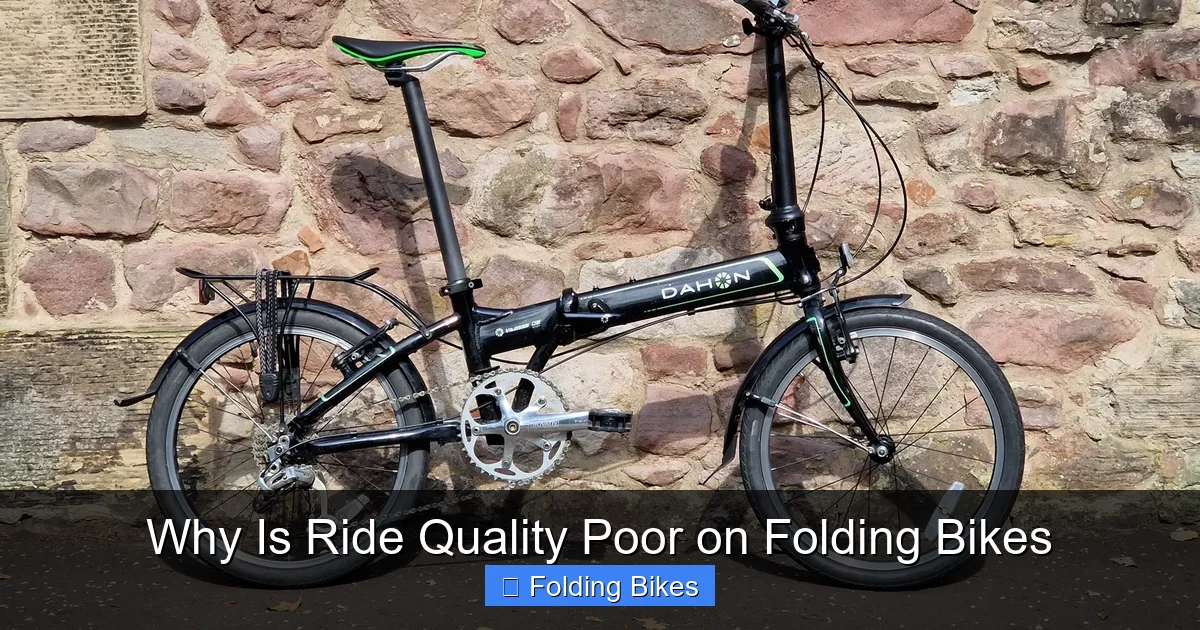
Visual guide about Why Is Ride Quality Poor on Folding Bikes
Image source: dqh479dn9vg99.cloudfront.net
Real-World Example
Imagine riding over a pebble-strewn path. A full-sized bike with 26″ or 700c wheels will glide over most stones. A folding bike with 16″ wheels, however, will hit each stone individually, creating a jarring experience.
What You Can Do
- Choose wider tires: Opt for tires at least 1.5″ wide if your frame allows. Wider tires can be run at lower pressures, improving cushioning.
- Use puncture-resistant tires with flexible casings: These offer better compliance and comfort without sacrificing durability.
- Consider air-filled tires over solid ones: Solid rubber tires offer zero shock absorption—always go with pneumatic (air-filled) tires when possible.
2. Stiff Frame Design Limits Flexibility
Folding bikes are built with reinforced frames to maintain structural integrity when folded and unfolded. This rigidity is essential for safety and durability, but it comes at the cost of ride comfort.
The Trade-Off Between Strength and Comfort
Unlike traditional bikes, which often use curved or flexible tubing to absorb vibrations, folding bikes rely on strong, straight joints and hinges. These components are designed to lock securely, not to flex. As a result, road shocks aren’t dampened—they’re transferred directly to the rider.
Common Frame Materials and Their Impact
- Aluminum: Lightweight and stiff—common in folding bikes but harsh on rough roads.
- Steel: Offers natural flex and better vibration damping, but adds weight.
- Carbon fiber: Rare in folding bikes due to cost, but provides excellent ride quality when used.
What You Can Do
- Look for models with steel rear triangles or seat stays: These areas can add subtle flex without compromising foldability.
- Avoid over-tightening bolts: Slight frame movement can actually improve comfort—don’t crank everything down too hard.
- Use a suspension seatpost: This is one of the most effective upgrades for improving ride quality. Check out our guide on the best seatpost for road bikes for compatible options.
3. Lack of Suspension Systems
Most folding bikes don’t include suspension forks or rear shocks—unlike mountain bikes or hybrid bikes designed for rough terrain. This absence is a major reason why ride quality suffers on uneven surfaces.
Why Suspension Is Rare on Folding Bikes
Suspension adds weight, complexity, and cost—three things folding bike designers try to minimize. Additionally, suspension components can interfere with the folding mechanism, making the bike bulkier or harder to collapse.
Exceptions to the Rule
Some high-end folding bikes, like the best folding mountain bikes for bikepacking, do include front suspension or rear elastomer dampers. These models are better suited for off-road or long-distance riding but are less common and more expensive.
What You Can Do
- Install a suspension seatpost: A spring or elastomer-based seatpost can absorb up to 30% of road vibrations.
- Add ergonomic grips with gel padding: This reduces hand fatigue and numbness on long rides.
- Use a suspension stem (if compatible): Some models allow for a spring-loaded stem that softens front-end impacts.
4. Compact Geometry Affects Stability
The geometry of folding bikes is optimized for compactness, not comfort or high-speed stability. This leads to a ride that can feel twitchy, unstable, or overly responsive.
Key Geometry Issues
- Short wheelbase: Reduces stability, especially at higher speeds or when carrying cargo.
- Steep head tube angle: Makes steering feel quick and sensitive, which can be unnerving on rough roads.
- High bottom bracket: Raises the center of gravity, making the bike feel less planted.
Real-World Impact
On a smooth bike path, these traits may not be noticeable. But on a gravel trail or busy city street, the bike can feel skittish or hard to control, increasing rider fatigue and discomfort.
What You Can Do
- Lower your riding position slightly: A more relaxed posture improves control and reduces strain.
- Distribute weight evenly: Avoid overloading the front basket. For tips, see our guide on how to balance weight on a bike rack.
- Practice slow-speed maneuvers: Get comfortable with the bike’s handling in a safe area before tackling busy roads.
5. Tire Pressure and Width Matter
Many folding bikes come with narrow, high-pressure tires—great for speed on pavement but terrible for comfort.
The Problem with High Pressure
Running tires at maximum PSI makes them act like rigid rods, transmitting every bump directly to your body. This is especially true on small wheels, which have less air volume to begin with.
How to Optimize Tire Setup
- Lower tire pressure: Drop it 10–15 PSI below the max rating for better cushioning (without risking pinch flats).
- Upgrade to wider tires: If your frame and fenders allow, switch to 1.75″ or 2.0″ tires for a noticeable improvement.
- Use tubeless or puncture-resistant tires: These often have more flexible sidewalls, enhancing ride quality.
Pro Tip
Check out our guide on how to choose tires for gravel bikes—many of the same principles apply to folding bikes seeking comfort over speed.
6. Weight Distribution and Cargo Load
Poorly distributed weight can amplify ride quality issues, especially on folding bikes with short wheelbases.
Common Mistakes
- Loading heavy items in a front basket (shifts weight forward, making steering unstable).
- Overloading rear racks without proper support.
- Carrying unbalanced loads that cause the bike to sway.
How to Fix It
- Use a rear rack with panniers: Keeps weight low and centered.
- Limit front basket use to light items: Under 5 lbs is ideal.
- Secure all loads tightly: Loose items shift during riding, worsening handling. See our guide on how to prevent load shifting on bike rack for best practices.
Troubleshooting Poor Ride Quality
If your folding bike still feels rough after trying the above tips, here’s a quick checklist:
- Are your tires properly inflated? Use a gauge—don’t guess.
- Is the frame fully locked in place? Loose hinges can cause wobbling and noise.
- Are bolts and clamps tightened correctly? Over-tightening can damage parts; under-tightening causes instability.
- Is your seatpost at the right height? Too high or too low affects posture and comfort.
- Have you checked for worn components? Old tires, loose bearings, or damaged hinges worsen ride quality.
Conclusion
While folding bikes aren’t known for plush, cloud-like rides, understanding why ride quality is poor is the first step toward fixing it. Small wheels, stiff frames, lack of suspension, and compact geometry all contribute to a harsher experience—but they don’t have to ruin your ride.
By upgrading tires, adjusting pressure, adding suspension components, and optimizing weight distribution, you can dramatically improve comfort and control. Remember, even small changes—like switching to wider tires or installing a suspension seatpost—can make a big difference.
With the right tweaks, your folding bike can go from a bumpy compromise to a smooth, enjoyable ride—perfect for daily commutes, weekend adventures, or even light bikepacking. Don’t let ride quality hold you back. Take control, make smart upgrades, and enjoy every mile.



