

Finding the VIN number on a dirt bike is essential for registration, insurance, and resale. This guide walks you through the most common locations across popular brands and models, so you can locate it quickly and accurately.
Key Takeaways
- The VIN is usually stamped on the frame near the steering head or engine mount. This is the most common location for dirt bikes of all brands.
- Check under the front fender or near the swingarm pivot for hidden VINs. Some manufacturers place it in less obvious spots to prevent tampering.
- Always clean the area before searching. Dirt, grease, and mud can hide the VIN, making it hard to read.
- Use a flashlight and magnifying glass if needed. The numbers are small and may be stamped deeply into metal.
- Never rely on a sticker alone. Stickers can fall off or be forged—always verify with a stamped VIN on the frame.
- Document your VIN in a safe place. Keep a photo or written copy for insurance and registration purposes.
- If you can’t find it, consult your owner’s manual or contact the manufacturer. Some older or custom bikes may have non-standard placements.
Why the VIN Number Matters on a Dirt Bike
Whether you’re buying a used dirt bike, registering your ride, or filing an insurance claim, the Vehicle Identification Number (VIN) is your bike’s unique fingerprint. Just like a car, every dirt bike has a VIN that identifies its make, model, year, and manufacturing details. Knowing where to find the VIN number on a dirt bike helps you verify authenticity, avoid stolen vehicles, and complete legal paperwork with confidence.
Unlike street motorcycles, dirt bikes are often ridden in muddy, dusty, and rugged conditions. This means the VIN can get buried under grime or damaged over time. That’s why it’s important to know exactly where to look—and how to clean and read it properly. In this guide, we’ll walk you through the most common VIN locations, step-by-step instructions, and tips to make the process easy, even for beginners.
What Is a Dirt Bike VIN?
A VIN is a 17-character alphanumeric code assigned to every motorized vehicle, including dirt bikes. It’s like a birth certificate for your bike. The VIN contains information such as:
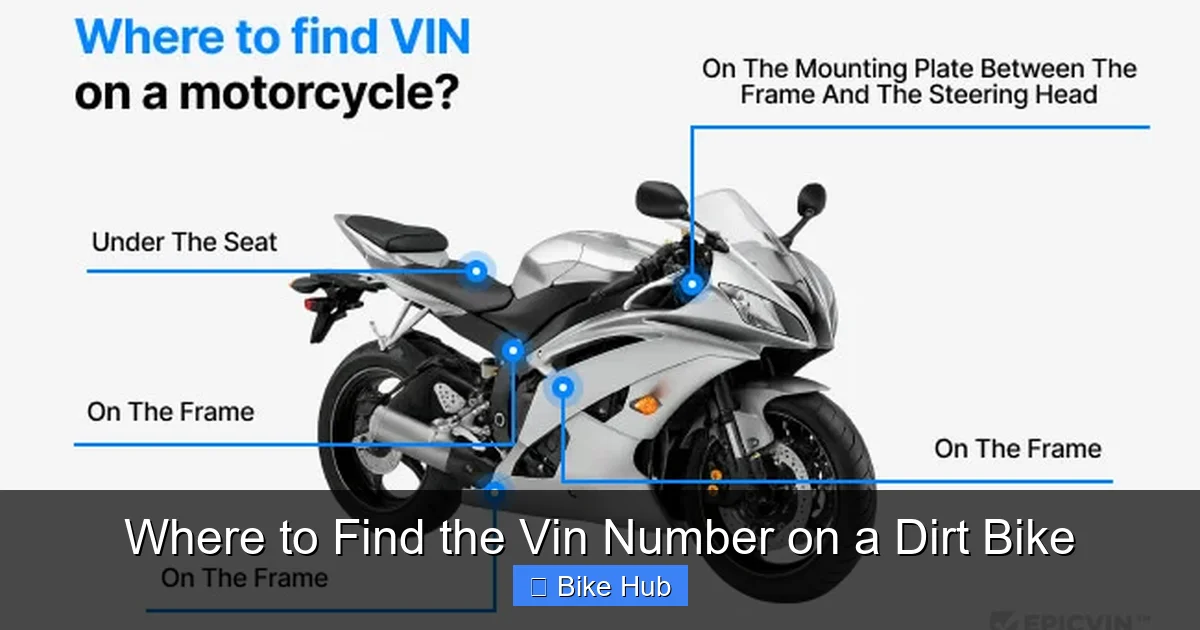
Visual guide about Where to Find the Vin Number on a Dirt Bike
Image source: epicvin.com
- The manufacturer (e.g., Honda, Yamaha, KTM)
- The model and engine type
- The year it was made
- The assembly plant
- A unique serial number
For example, a VIN starting with “JH2” indicates a Honda motorcycle made in Japan. The 10th character usually tells you the model year—so a “K” means 2019, “L” means 2020, and so on. Understanding your VIN helps you order the right parts, confirm compatibility, and prove ownership.
Common Locations to Find the VIN on a Dirt Bike
While VIN placement can vary slightly by brand and model, most dirt bikes follow similar patterns. Here are the top spots to check:
Visual guide about Where to Find the Vin Number on a Dirt Bike
Image source: epicvin.com
1. Steering Head or Triple Clamp Area
This is the most common location. Look on the front of the frame, just behind the front wheel and below the handlebars. The VIN is often stamped into the metal on the left or right side of the steering stem.
How to check: Stand in front of the bike and look down between the forks. Use a flashlight to scan the frame tubes. You may need to wipe away dirt or grease with a rag.
Tip: On bikes like the Honda CRF450R or Yamaha YZ250F, the VIN is clearly visible here. If it’s hard to see, try shining a light at an angle to catch the stamped grooves.
2. Engine Mount or Frame Down Tube
Some manufacturers stamp the VIN on the lower frame tube near the engine. This area is usually on the left side, close to where the engine bolts to the frame.
How to check: Kneel beside the bike and look along the frame rail. The VIN may be horizontal or vertical. On KTM and Husqvarna models, this is a frequent spot.
Example: The KTM 250 SX-F often has its VIN stamped on the left-side down tube, just above the engine case.
3. Under the Front Fender
On some older or less common models, the VIN is hidden under the front fender. This protects it from damage but makes it harder to find.
How to check: Remove the front fender by unscrewing the bolts. Look on the inner side of the fender or on the frame directly behind it.
Note: This method requires basic tools and a bit of patience. Only remove the fender if you’re comfortable doing so—don’t force anything.
4. Swingarm Pivot Area
A few dirt bikes, especially older Japanese models, place the VIN near the swingarm pivot bolt on the right or left side of the frame.
How to check: Look at the rear frame section where the swingarm connects. The VIN may be stamped vertically or horizontally.
Tip: Use a mirror on a stick or your phone’s camera to see into tight spaces.
5. Stamped on the Engine Itself
In rare cases, especially with aftermarket or custom builds, the VIN may be stamped on the engine block. However, this is not the official frame VIN and should not be used for registration.
How to check: Look on the left or right side of the engine casing. Compare it with the frame VIN to ensure they match.
Warning: If the engine VIN doesn’t match the frame, the bike may have been rebuilt or altered—proceed with caution.
Step-by-Step Guide to Finding Your Dirt Bike VIN
Follow these steps to locate your VIN quickly and safely:
Step 1: Park on a Level Surface
Make sure your dirt bike is on a flat, stable surface. Turn off the engine and let it cool if it’s been running. This prevents accidents and makes it easier to inspect.
Step 2: Gather Your Tools
You’ll need:
- A clean rag or paper towels
- A flashlight (phone flashlight works)
- A magnifying glass (optional)
- A small mirror (optional, for tight spots)
- Gloves (to protect your hands)
Step 3: Clean the Suspected Areas
Use the rag to wipe down the steering head, frame tubes, and engine mount. Dirt and grease are the biggest enemies of VIN visibility. For stubborn grime, use a bit of degreaser or soapy water—just avoid spraying directly into electrical components.
Step 4: Inspect the Steering Head First
Start at the most common location: the steering head. Look for a series of stamped numbers and letters. They’re usually 17 characters long and may include both letters and numbers.
If you find it, double-check that it matches the format of a standard VIN. If not, move to the next likely spot.
Step 5: Check the Frame Down Tube
Move to the lower frame near the engine. Look carefully along the metal surface. The VIN may be faint or partially covered by a bracket.
Pro tip: Run your fingers over the area—you might feel the stamped grooves even if you can’t see them clearly.
Step 6: Look Under the Fender (If Needed)
If you still haven’t found it, consider removing the front fender. This is a bit more involved, so only do it if you’re confident. Once removed, inspect the inner frame and fender for any stamped numbers.
Step 7: Verify and Record the VIN
Once you locate the VIN, write it down or take a clear photo. Store it in a secure place like your phone’s notes app or a physical file. This will help with registration, insurance, or resale.
Troubleshooting: What If You Can’t Find the VIN?
Sometimes, the VIN is missing, damaged, or in an unusual spot. Here’s what to do:
The VIN Is Worn or Illegible
Over time, the stamped numbers can fade due to weather, abrasion, or corrosion. Try using a metal polish or fine steel wool to gently clean the area. Avoid sanding or grinding, as this can destroy the VIN permanently.
The VIN Doesn’t Match the Title or Manual
If the VIN on the bike doesn’t match the paperwork, the bike may have been rebuilt, stolen, or altered. Contact your local DMV or law enforcement for guidance. Never ignore a mismatch—it could lead to legal trouble.
No VIN Found at All
In rare cases, especially with very old or custom-built bikes, there may be no VIN. Contact the manufacturer with the model and serial number (if available) to request documentation. Some states allow VIN assignments for homemade vehicles.
Brand-Specific Tips
Different brands have slight variations in VIN placement:
- Honda: Usually on the steering head or left frame down tube.
- Yamaha: Often on the right side of the steering stem or near the engine mount.
- KTM: Frequently on the left down tube or under the fuel tank.
- Kawasaki: Typically on the steering head or frame neck.
- Suzuki: Commonly on the left side of the frame near the engine.
Always refer to your owner’s manual for the exact location. If you don’t have one, search online using your bike’s model and year.
Final Tips for Dirt Bike Owners
Now that you know where to find the VIN number on a dirt bike, here are a few extra tips to keep in mind:
- Check the VIN before buying a used bike. Use a VIN decoder tool online to verify the details.
- Protect the VIN from damage. Avoid welding or drilling near the stamped area.
- Keep a backup record. Store a photo in your phone and a printed copy in your garage.
- Use the VIN for maintenance. It helps ensure you get the right parts and service.
Whether you’re preparing for a race, storing your bike for the winter, or just staying organized, knowing your VIN is a small but crucial step. And if you’re getting ready for long rides, don’t forget to check out our guide on how to prepare a mountain bike for long rides—many of the tips apply to dirt bikes too.
Conclusion
Finding the VIN number on a dirt bike doesn’t have to be a mystery. With the right knowledge and a little patience, you can locate it quickly and confidently. Remember to start at the steering head, clean the area thoroughly, and use tools like a flashlight or mirror if needed. Always verify the VIN matches your paperwork, and keep a safe record for future use.
Whether you’re registering your bike, filing an insurance claim, or buying a new ride, this simple step can save you time, money, and stress. So grab your rag and flashlight—your dirt bike’s VIN is waiting to be found.



