
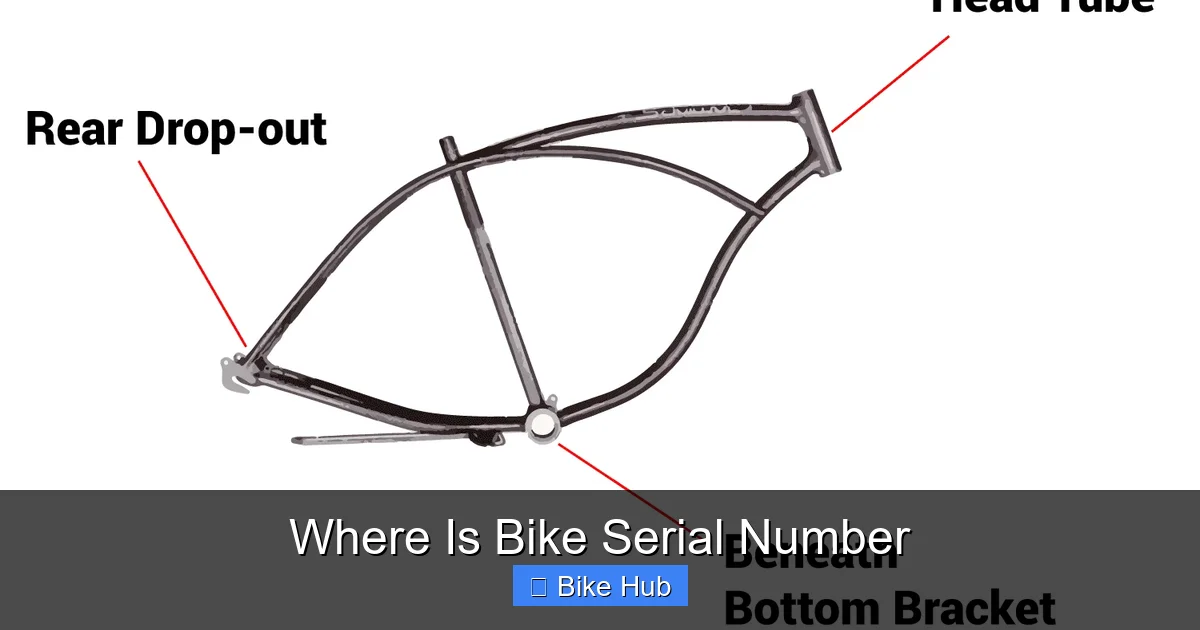
This guide shows you exactly where to find your bike’s serial number, whether it’s on the bottom bracket, rear dropout, or head tube. Knowing your serial number helps with theft recovery, warranty claims, and resale—and we’ll walk you through every common location step by step.
Key Takeaways
- Most bikes have the serial number under the bottom bracket—the metal casing where the pedals connect.
- Check the rear dropout (where the wheel attaches) if you can’t find it elsewhere, especially on newer or high-end models.
- Some brands place the number on the head tube (front of the frame) or inside the seat tube near the seat post.
- Always record and store your serial number securely—take a photo or write it down in a safe place.
- Use your serial number to register your bike with national databases like Bike Index or 529 Garage for theft protection.
- If the number is worn or missing, contact the manufacturer—they may help identify your bike using other details.
- Serial numbers are unique to each bike—never assume two bikes of the same model share the same number.
Why Your Bike Serial Number Matters
Your bike’s serial number is like its fingerprint—unique, permanent, and essential for identification. Whether you’re trying to recover a stolen bike, file a warranty claim, or sell your ride, this number is your best friend. Unfortunately, many riders don’t know where to find it—or even that their bike has one. In this guide, we’ll show you exactly where is bike serial number located on different types of bikes, how to read it, and why it’s so important to keep it safe.
Most bikes come with a serial number stamped or engraved into the frame. It’s usually 6 to 12 characters long and may include letters and numbers. While some manufacturers print it clearly, others make it hard to spot—especially if it’s worn down or hidden under dirt. But don’t worry: with a little patience and the right approach, you’ll find it every time.
Step 1: Check Under the Bottom Bracket
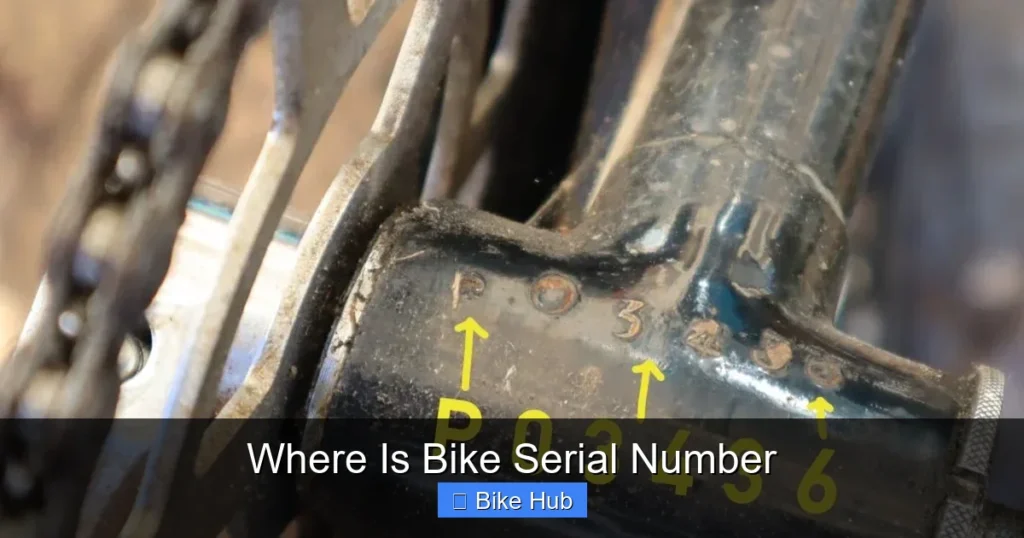
The most common location for a bike serial number is under the bottom bracket—the metal shell where the crankset (pedal arms) connects to the frame. This area is usually at the very bottom of the bike, between the two pedals.

Visual guide about Where Is Bike Serial Number
Image source: i.ytimg.com
How to Access It
- Turn your bike upside down so it rests on the handlebars and seat. Use a soft surface like a towel or mat to avoid scratching the paint.
- Look directly beneath the crank arms. You’ll see a cylindrical or box-shaped metal part—that’s the bottom bracket.
- Use a flashlight and magnifying glass if needed. The number is often stamped into the metal and may be faint.
- Wipe away dirt or grease with a clean rag. Sometimes grime hides the number completely.
What to Look For
The serial number here is typically 6–12 characters long and may include both letters and numbers. For example: BMC123456 or GT789XYZ. Some brands like Trek, Specialized, and Giant use this spot consistently.
Pro Tip
If you’re working on your bike regularly—like when cleaning the chain or adjusting the bottom bracket—take a moment to snap a photo of the serial number. Store it in your phone or cloud storage for quick access later.
Step 2: Inspect the Rear Dropout
If you can’t find the number under the bottom bracket, check the rear dropout—the part of the frame where the rear wheel attaches. This is especially common on newer bikes, carbon frames, or models from brands like Canyon, Santa Cruz, and Yeti.
Visual guide about Where Is Bike Serial Number
Image source: bikehistory.org
How to Find It
- Look at the back of the bike, on either side of the rear wheel hub.
- The dropout is the fork-like extension that holds the axle. The serial number is often stamped on the inside or outside of this piece.
- You may need to remove the rear wheel to see it clearly, especially if it’s on the inner side.
Example Locations
- Canyon bikes: Often on the non-drive side (left) dropout.
- Trek mountain bikes: Sometimes on the drive side (right) dropout near the derailleur hanger.
- Specialized road bikes: May have it on the left dropout under the chainstay.
Pro Tip
Use a small mirror on a stick (like a dental mirror) to see into tight spaces. This helps when the number is facing inward or hidden behind cables.
Step 3: Look at the Head Tube
The head tube—the vertical tube at the front of the bike that holds the handlebars—is another common spot, especially on road bikes, hybrids, and some commuter models.
How to Check
- Stand in front of the bike and look at the front of the frame, just below the handlebar stem.
- The number may be printed on a sticker or stamped directly into the metal or carbon.
- Some brands, like Cannondale, place it here for easy visibility.
What to Expect
On carbon frames, the number might be etched lightly and hard to read. Use bright light and gentle cleaning to reveal it. Avoid using abrasive tools—you don’t want to damage the frame.
Step 4: Check Inside the Seat Tube
On some bikes—especially older models or certain European brands—the serial number is located inside the seat tube, near where the seat post inserts.
How to Access It
- Remove the seat post completely.
- Shine a flashlight down into the tube. You may need a long, thin mirror to see the number.
- The number is often stamped on the inside wall, about 2–4 inches down.
Caution
Be careful not to scratch the inside of the frame. Use soft tools and avoid forcing anything. If you’re unsure, consult your bike’s manual or contact the manufacturer.
Step 5: Other Possible Locations
If you’ve checked all the above and still can’t find the number, don’t panic. Some bikes have it in less obvious places.
Common Alternatives
- Under the water bottle cage: Some brands stamp the number under where the cage bolts on.
- On the non-drive side chainstay: The horizontal tube that runs from the bottom bracket to the rear dropout.
- Inside the fork steerer tube: Rare, but possible on high-end road or gravel bikes.
- On a sticker near the rear brake: Especially on kids’ bikes or budget models.
Pro Tip
Check your bike’s manual or visit the manufacturer’s website. Most brands list the serial number location in the product documentation.
Troubleshooting: What If You Can’t Find It?
Sometimes, the serial number is missing, worn off, or never stamped at all. Here’s what to do:
The Number Is Worn or Faded
- Use a soft pencil to gently shade over the area. The graphite can highlight the engraved digits.
- Try a UV light—some stamps fluoresce under blacklight.
- Take clear photos from multiple angles and zoom in digitally.
The Number Is Missing
If there’s no serial number at all, it could mean:
- The bike is very old and predates standard numbering.
- It’s a custom or handmade frame without a factory stamp.
- The bike may be stolen or illegally altered (a red flag if buying used).
Contact the Manufacturer
Many brands can help identify your bike using the model, year, and component details. Have your receipt, photos, and any markings ready. For example, comparing frame materials can help narrow down the model if you’re unsure.
How to Record and Protect Your Serial Number
Once you’ve found your serial number, don’t just forget about it. Take these steps to keep it safe:
1. Take a Photo
Snap a clear picture of the number in its location. Store it in your phone, cloud drive, or email it to yourself.
2. Write It Down
Keep a physical copy in a secure place—like a locked drawer or safety deposit box.
3. Register Your Bike
Sign up with free services like Bike Index or 529 Garage. These databases help police and buyers verify ownership if your bike is lost or stolen.
4. Add It to Your Insurance
If you have renters or homeowners insurance, add your bike as a scheduled item. Include the serial number in the description.
Final Tips for Bike Owners
Knowing where is bike serial number isn’t just for emergencies—it’s part of responsible bike ownership. Whether you’re preparing for a long ride or storing your bike for winter, take a few minutes to verify your number. It could save you thousands in replacement costs.
And if you’re shopping for a used bike, always ask for the serial number before buying. Run it through a database to ensure it’s not reported stolen. It’s a simple step that protects both you and the cycling community.
For more bike maintenance tips, check out our guide on how to store a recumbent bike or learn how to inflate bike tires without a pump in a pinch.



