
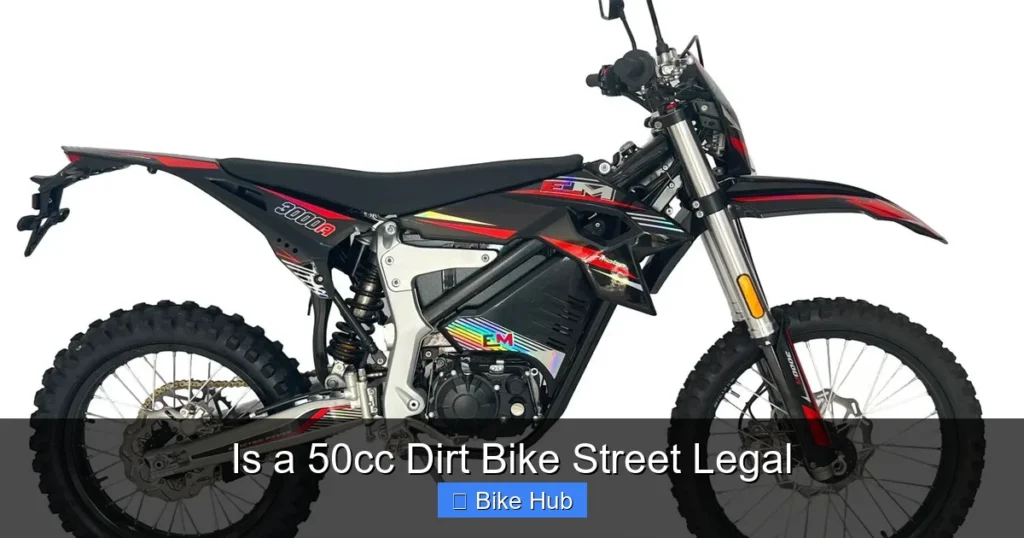
Most 50cc dirt bikes are not street legal by default, but they can be made legal with proper modifications and registration. This guide walks you through state-specific laws, required equipment, and the process to get your bike approved for road use.
Key Takeaways
- Street legality varies by state: Each state has different rules for 50cc dirt bikes, so always check local DMV regulations before riding on public roads.
- Factory models are usually off-road only: Most 50cc dirt bikes are built for trails and lack street-legal features like headlights, mirrors, and turn signals.
- Modifications are often required: Adding lights, a horn, mirrors, and a speedometer can help meet legal standards in many areas.
- Registration and insurance may be needed: Even small engines often require titling, registration, and liability insurance to ride legally on streets.
- Age restrictions apply: Many states limit who can operate a 50cc bike on public roads, often requiring a valid driver’s license or permit.
- Electric 50cc bikes may have easier paths: Some electric models come pre-equipped with street-legal features, simplifying the process.
- Safety gear is essential: Always wear a helmet and protective clothing, even if not legally required, to stay safe on the road.
Is a 50cc Dirt Bike Street Legal? A Complete How-To Guide
So you’ve got a zippy little 50cc dirt bike and you’re dreaming of cruising around town instead of just tearing up the trails. That’s a great idea—but before you hit the pavement, you need to know: is a 50cc dirt bike street legal?
The short answer? It depends. Most 50cc dirt bikes aren’t street legal right out of the box. But with the right upgrades and paperwork, you can often make them road-ready. This guide will walk you through everything you need to know—from understanding your state’s laws to modifying your bike and getting it registered.
By the end, you’ll know exactly what it takes to legally ride your 50cc dirt bike on public streets.
Step 1: Understand Your State’s Laws
The first and most important step is checking your local regulations. Street legality for 50cc dirt bikes varies widely across the U.S. Some states treat them like mopeds or scooters, while others classify them as motorcycles—even with such a small engine.
Check Your DMV Website
Start by visiting your state’s Department of Motor Vehicles (DMV) website. Look for sections on “off-highway vehicles,” “motorized bicycles,” or “mopeds.” These categories often include 50cc bikes.
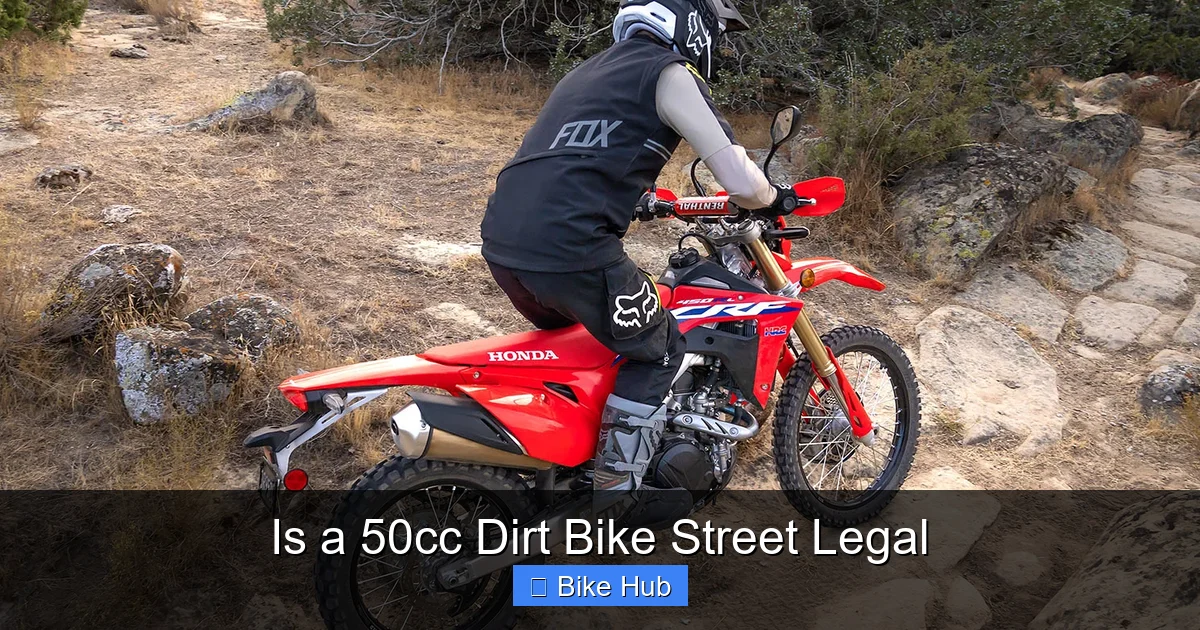
Visual guide about Is a 50cc Dirt Bike Street Legal
Image source: images.bikeexif.com
Look for Engine Size and Speed Limits
Many states allow 50cc bikes on streets only if they don’t exceed a certain speed—usually 30 mph. If your bike can go faster, it may be classified as a motorcycle and require a full motorcycle license.
Example: California Rules
In California, a 50cc bike can be street legal if it’s registered as a “motorized bicycle.” It must have working pedals (even if unused), a top speed under 20 mph, and meet basic lighting requirements. No motorcycle license is needed—just a regular driver’s license.
Tip: Call Your Local DMV
Websites can be outdated. Call your local DMV office and ask specifically about 50cc dirt bikes. Say: “I have a 50cc off-road dirt bike. What do I need to make it street legal?”
Step 2: Know What Makes a Bike Street Legal
Even if your state allows 50cc bikes on roads, your bike must meet certain equipment standards. Most dirt bikes lack these features, so modifications are usually necessary.
Required Equipment Checklist
- Headlight: Must work and be visible from 500 feet.
- Taillight and brake light: Red light that shines when braking.
- Turn signals: Required in most states (front and rear).
- Mirrors: At least one rearview mirror on the left side.
- Horn: Must be audible from 200 feet.
- Speedometer: Shows speed in mph.
- License plate mount and light: To display your plate at night.
- Reflectors: White front, red rear, and amber side reflectors.
Example: Adding Lights to Your Bike
If your dirt bike has no lights, you’ll need to install them. Kits are available online for under $100. For help, check out our guide on how to install lights on a fat tire bike—the process is similar for dirt bikes.
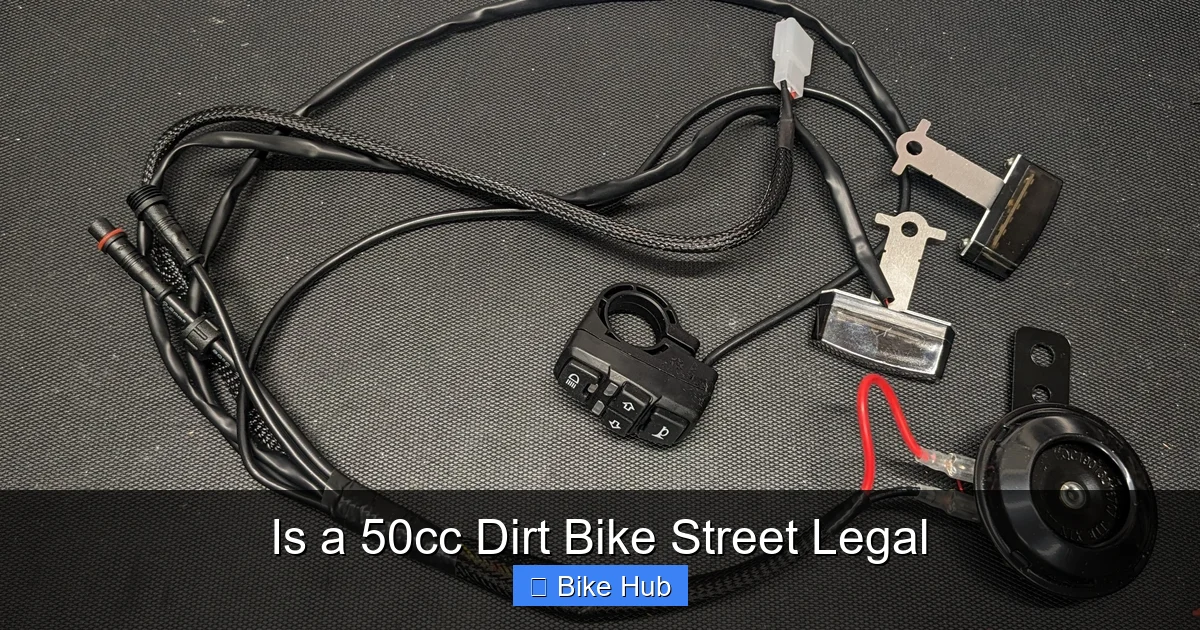
Visual guide about Is a 50cc Dirt Bike Street Legal
Image source: dirtscootdesigns.com
Tip: Use DOT-Approved Parts
Only use lighting and mirrors labeled “DOT” (Department of Transportation). These meet federal safety standards and are more likely to pass inspection.
Step 3: Modify Your 50cc Dirt Bike
Now it’s time to upgrade your bike. This step can take a weekend or two, depending on your mechanical skills.
Install Lighting and Electrical System
Most 50cc dirt bikes have a basic electrical system. You may need to add a battery or upgrade the stator to power lights and signals. Follow wiring diagrams carefully or consult a mechanic.
Add Mirrors and a Horn
Mount mirrors to the handlebars. Choose convex mirrors for better visibility. Install a compact horn—bicycle horns won’t meet volume requirements.
Mount a Speedometer
Even a basic digital speedometer helps prove your bike meets speed limits. Some models plug into the existing wiring; others are battery-powered.
Attach a License Plate Bracket
You’ll need a place to mount your plate. Many riders use a rear fender bracket or a custom metal plate. Ensure it’s secure and doesn’t block the taillight.
Tip: Test Everything Before Inspection
Turn on all lights, test the horn, and check that signals flash correctly. Fix any issues before visiting the DMV.
Step 4: Get Your Bike Inspected and Registered
Once your bike is modified, it’s time to go official.
Schedule a VIN Inspection
Some states require a Vehicle Identification Number (VIN) inspection. If your bike doesn’t have a VIN, the DMV may assign one. Bring your bike, proof of ownership, and ID.
Pass a Safety Inspection
Many states require a safety check to verify your lights, brakes, and tires are roadworthy. This is usually done at the DMV or a certified mechanic.
Register and Title Your Bike
Fill out the registration form, pay fees (usually $20–$100), and get your license plate. You’ll also receive a title, which proves ownership.
Get Insurance (If Required)
Some states require liability insurance even for 50cc bikes. Shop around for motorcycle or moped insurance. It’s often affordable—under $100 per year.
Example: Texas Process
In Texas, 50cc bikes can be registered as “motor-driven cycles.” You’ll need a safety inspection, proof of insurance, and a completed Form VTR-231. Once approved, you’ll get a plate and decal.
Step 5: Ride Legally and Safely
Congratulations—you’re street legal! Now ride responsibly.
Follow Traffic Laws
Obey speed limits, stop signs, and traffic signals. Don’t lane-split unless allowed. Stay in the right lane and avoid highways.
Wear Proper Gear
Always wear a DOT-approved helmet. Add gloves, boots, and protective clothing. For tips, see our guide on how to properly fit a bike helmet.
Maintain Your Bike
Regular maintenance keeps you safe and legal. Check lights, brakes, and tires weekly. For help, read our article on how to maintain a road bike—many tips apply to small motorcycles too.
Troubleshooting Common Issues
Problem: My State Doesn’t Allow 50cc Bikes on Streets
Some states, like New York, ban all off-road vehicles from public roads. In that case, your only option is to ride on private property or find a nearby OHV trail.
Problem: My Bike Can’t Reach 30 mph
That’s actually good! Many states require 50cc bikes to stay under 30 mph. If yours is slower, it may qualify as a motorized bicycle with fewer restrictions.
Problem: No VIN on My Bike
Many imported or older dirt bikes lack a VIN. Contact your DMV—they may perform a VIN assignment or use the engine number instead.
Problem: Insurance Is Too Expensive
Shop around. Some companies specialize in small bikes. You might also qualify for a discount if you have a clean driving record.
Conclusion
So, is a 50cc dirt bike street legal? Not usually—but it can be. With the right modifications, paperwork, and knowledge of your local laws, you can transform your off-road machine into a legal street rider.
Start by checking your state’s DMV rules. Then upgrade your bike with lights, mirrors, and other required gear. Get it inspected, registered, and insured. Finally, ride safely and follow traffic laws.
It takes effort, but the freedom of cruising around town on your 50cc bike is worth it. Just remember: safety and legality go hand in hand. When in doubt, consult your local DMV or a motorcycle mechanic.
Now get out there—and enjoy the ride!



