
E-bikes are street legal in Florida as long as they meet specific state-defined criteria. This guide explains the three classes of e-bikes, where you can ride them, required safety equipment, and how to stay compliant with local laws.
Key Takeaways
- Florida recognizes three classes of e-bikes: Class 1 (pedal-assist up to 20 mph), Class 2 (throttle-assisted up to 20 mph), and Class 3 (pedal-assist up to 28 mph). Each has different rules for where you can ride.
- E-bikes are allowed on roads and bike lanes: Unless specifically prohibited by local ordinances, e-bikes can be ridden on streets, bike paths, and multi-use trails just like regular bicycles.
- No license, registration, or insurance required: Unlike motorized scooters or motorcycles, e-bikes in Florida do not need to be registered or insured, and riders don’t need a driver’s license.
- Helmets are required for riders under 16: While adults aren’t legally required to wear helmets, it’s strongly recommended for safety, especially on higher-speed Class 3 models.
- Local rules may vary: Cities and counties can impose additional restrictions, so always check local regulations before riding in parks or on shared paths.
- Safety equipment matters: Your e-bike must have working brakes, lights, and reflectors to be street legal—especially if riding at night.
- Know the difference between e-bikes and mopeds: E-bikes with motors over 750 watts or speeds exceeding 20 mph (without pedal assist) may be classified as motor vehicles and require registration.
Are E Bikes Street Legal in Florida? A Complete How-To Guide
If you’re considering buying or riding an electric bike in Florida, you’re not alone. E-bikes are growing in popularity across the Sunshine State—from Miami bike lanes to Tampa trails and Orlando commutes. But before you hit the road, it’s important to understand: Are e bikes street legal in Florida?
The short answer is yes—but only if your e-bike meets Florida’s specific legal definitions and safety requirements. In this guide, we’ll walk you through everything you need to know to ride your e-bike legally, safely, and confidently on Florida roads, trails, and bike paths.
Step 1: Understand Florida’s E-Bike Classifications
Visual guide about Are E Bikes Street Legal in Florida
Image source: sp-ao.shortpixel.ai
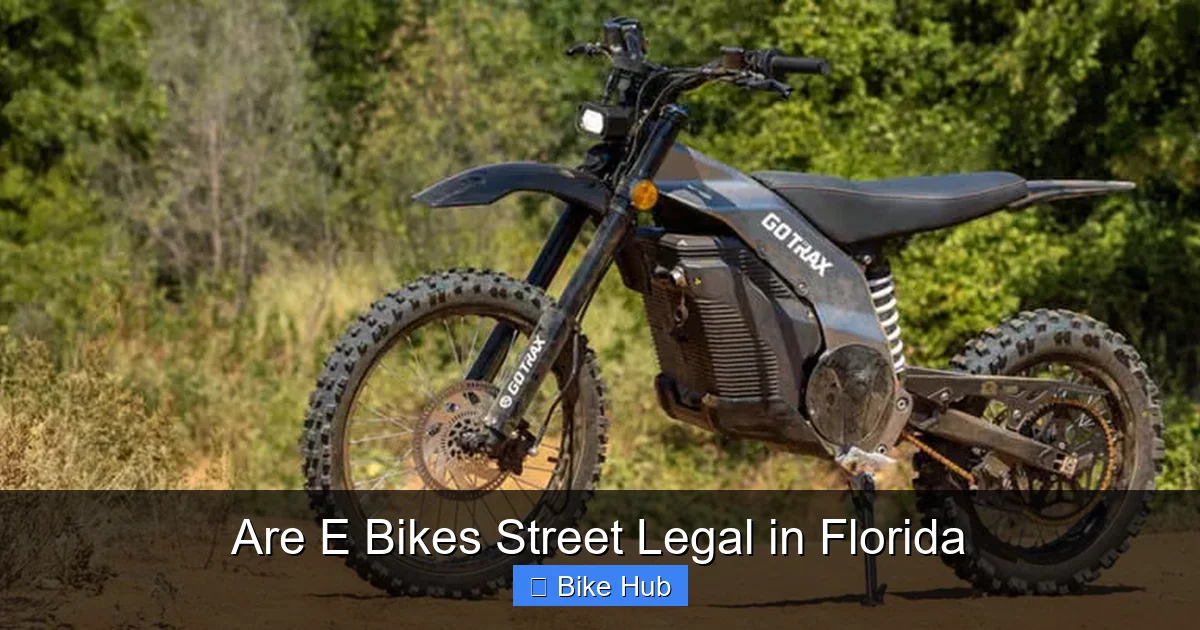
Florida follows the three-class system established by federal guidelines and adopted by many states. This system helps determine where and how you can ride your e-bike.
Class 1: Pedal-Assist Only (Up to 20 mph)
These e-bikes provide motor assistance only when you’re pedaling, and the motor cuts off at 20 mph. They’re allowed on most bike paths, roads, and multi-use trails unless otherwise posted.
Class 2: Throttle-Assisted (Up to 20 mph)
These bikes have a throttle (like a scooter) that can power the bike without pedaling, but still cap out at 20 mph. They’re treated similarly to Class 1 bikes in most areas.
Class 3: Speed Pedelec (Up to 28 mph)
These offer pedal-assist up to 28 mph and often come with a speedometer. While legal on roads and bike lanes, Class 3 e-bikes are typically restricted from bike paths and multi-use trails unless local rules allow them.
💡 Pro Tip: Always check your e-bike’s specifications before buying. Many popular models like those in our E Bikes collection clearly label their class and top speed.
Step 2: Know Where You Can Ride
Visual guide about Are E Bikes Street Legal in Florida
Image source: sp-ao.shortpixel.ai
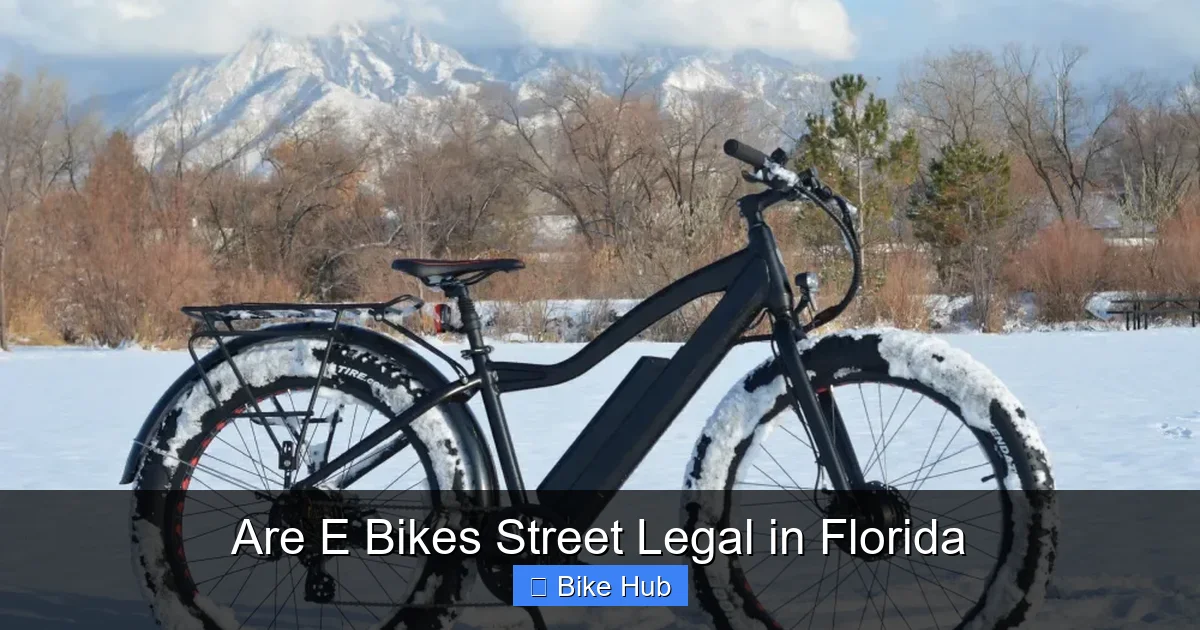
One of the biggest questions riders have is: Where can I legally ride my e-bike in Florida?
On Roads and Bike Lanes
Yes! All three classes of e-bikes are allowed on public roads and designated bike lanes, just like traditional bicycles. You must follow the same traffic laws—stop at red lights, yield to pedestrians, and ride in the same direction as traffic.
On Sidewalks
Sidewalk riding rules vary by city. In many urban areas like Miami or Jacksonville, e-bikes are not allowed on sidewalks due to safety concerns. Always check local ordinances. When in doubt, dismount and walk your bike.
On Bike Paths and Multi-Use Trails
This is where it gets tricky. While Class 1 and Class 2 e-bikes are generally permitted on shared-use paths, Class 3 e-bikes are often excluded due to their higher speed. For example, the popular Pinellas Trail allows Class 1 and 2 e-bikes but bans Class 3 models.
💡 Example: If you’re planning a ride along the Legacy Trail in Sarasota, confirm the trail’s e-bike policy beforehand. Some parks post signs at entrances—don’t assume it’s allowed.
In Parks and Nature Preserves
Many state and local parks allow e-bikes on paved roads and designated bike trails, but off-road or mountain biking with e-bikes may be restricted. Always look for posted rules or contact park management.
Step 3: Meet Safety and Equipment Requirements
To be street legal in Florida, your e-bike must meet certain safety standards—especially if you plan to ride at night or in low-visibility conditions.
Brakes
Your e-bike must have two working brakes—one on the front wheel and one on the rear—that allow you to stop within 20 feet from a speed of 10 mph. If you’re upgrading your ride, consider investing in high-quality components like those in our guide to the Best Brakes For E Bikes.
Lighting and Reflectors
If riding between sunset and sunrise, your e-bike must have:
– A white front light visible from at least 500 feet
– A red rear reflector or light visible from 600 feet
– Yellow reflectors on the sides of the pedals or wheels
– White or yellow reflectors on the front and rear wheels
💡 Pro Tip: Even during the day, using lights increases your visibility to drivers. Store your lights properly when not in use—check out our tips on How To Store Bike Lights When Not In Use.
Horn or Bell
While not always legally required, a bell or horn is recommended to alert pedestrians and other cyclists, especially on shared paths.
Step 4: Follow Age and Helmet Laws
Florida has specific rules about who can ride an e-bike and what protective gear is required.
Minimum Age
There is no minimum age to ride an e-bike in Florida, but children under 16 must wear a helmet when riding on public roads, sidewalks, or bike paths.
Helmet Requirements
– Under 16: Helmets are mandatory.
– 16 and older: Helmets are not required by law, but strongly encouraged—especially for Class 3 e-bikes that can reach higher speeds.
💡 Safety Note: Even if it’s not required, wearing a helmet can prevent serious injury. For added protection, consider helmets designed for e-bike or e-scooter riders, like those reviewed in our Best Helmet For E Scooter guide.
Step 5: Avoid Common Legal Pitfalls
Even if your e-bike is technically street legal, you can still run into trouble if you’re not careful. Here’s how to avoid common mistakes.
Don’t Modify Your E-Bike’s Speed
Tampering with your e-bike to exceed 20 mph (for Class 1 and 2) or 28 mph (for Class 3) can reclassify it as a motor vehicle. That means you’d need a license, registration, and insurance—and could face fines.
Don’t Ride Impaired
Just like driving a car, riding an e-bike under the influence of alcohol or drugs is illegal in Florida. You can be charged with a DUI if your blood alcohol content is 0.08% or higher.
Don’t Ignore Local Ordinances
Some cities, like Key West or Naples, have unique rules about e-bike use in tourist areas or on beaches. Always research local laws before exploring new areas.
Troubleshooting: What to Do If You’re Stopped by Law Enforcement
If a police officer stops you while riding your e-bike, stay calm and cooperative. Here’s what to do:
– Know your e-bike’s class: Be able to explain whether it’s Class 1, 2, or 3.
– Carry proof of purchase or specs: A receipt or manual can help prove your bike meets legal standards.
– Be respectful: Officers may not be familiar with e-bike laws. Politely explain Florida’s regulations if needed.
In most cases, if your e-bike is compliant and you’re following traffic rules, you won’t face penalties.
Conclusion: Ride Smart, Ride Legal
So, are e bikes street legal in Florida? Absolutely—if you follow the rules. By understanding the three classes, knowing where you can ride, equipping your bike properly, and respecting local laws, you can enjoy all the benefits of electric biking without legal worries.
Whether you’re commuting to work in Orlando, cruising the beaches of Fort Lauderdale, or exploring the trails of the Everglades, your e-bike can be a fun, eco-friendly, and legal way to get around. Just remember: safety first, know your gear, and always stay informed.
Ready to upgrade your ride? Explore our top picks for Best Electric Bikes For City Commuting to find the perfect street-legal model for your Florida adventures.



