
Your bike pump is a trusty companion, ensuring that every ride is smooth and safe. But, like any tool, it needs a little care to perform at its best.
Imagine the frustration of a deflated tire just when you’re ready to hit the road or trail. By knowing how to maintain your bike pump, you can avoid those headaches and ensure it’s always ready to go when you need it most.
This guide will show you simple yet effective ways to keep your bike pump in top shape. You’ll be equipped with easy tips that save you time and keep your cycling adventures worry-free. Dive in, and discover how a few minutes of maintenance can make all the difference for your biking experience!
Choosing The Right Bike Pump
Bike pumps come in different types. Each type serves a specific purpose. The main types are floor pumps, hand pumps, and CO2 inflators. Floor pumps are big and stay at home. They are best for quick and strong pumping. Hand pumps are small and easy to carry. They are great for emergencies. CO2 inflators use gas to fill tires fast. They are compact and easy to use. Knowing the differences helps in picking the right pump.
Bike valves can be tricky. There are two main types: Prestaand Schrader. Presta valves are thin and found on road bikes. Schrader valves are like car tire valves. They are common on mountain bikes. A good pump works with both valve types. Check if your pump has an adjustable head. This will make it easier to use with any valve. Always ensure the pump fits your bike’s valve.
Regular Cleaning Routine
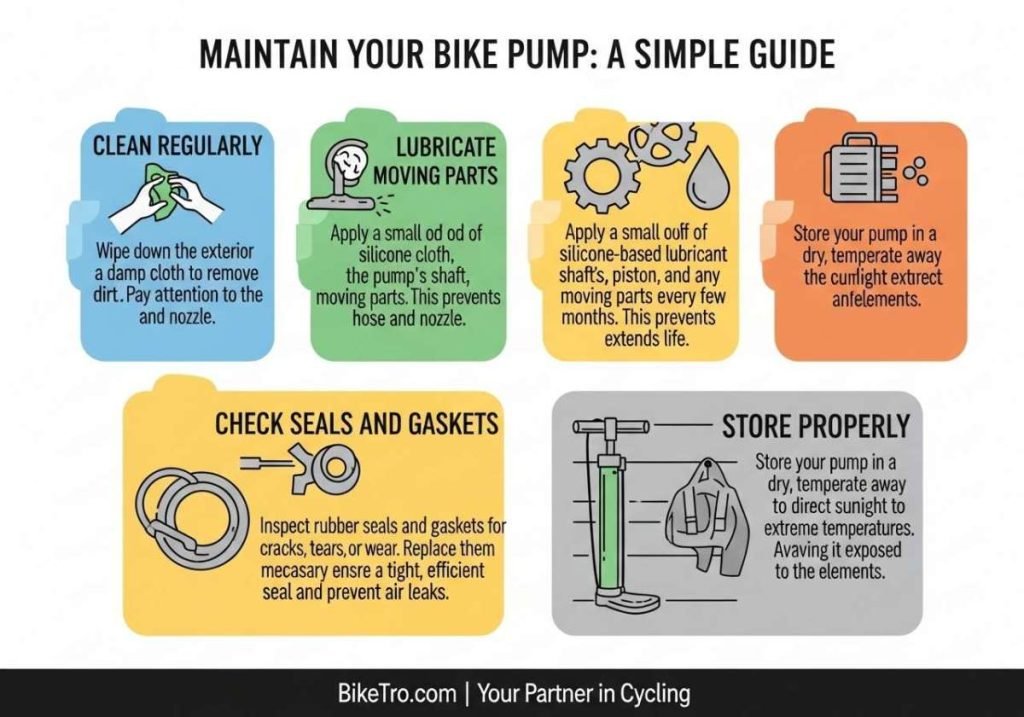
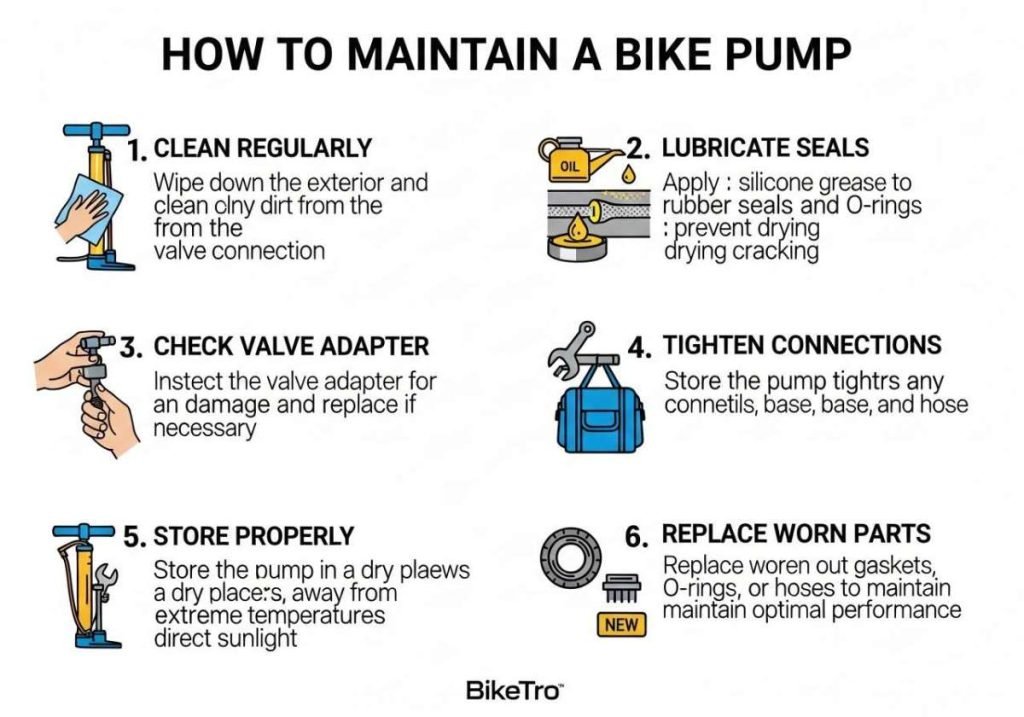
Wipe the bike pump with a soft, damp cloth. Remove all dirt and dust. Use mild soap for tough stains. Dry the pump with a clean towel. Inspect for scratches or dents. Keep the pump looking new.
Detach the hose and nozzle gently. Check for cracks or leaks. Use a cloth to clean the inside of the hose. Ensure the nozzle is clean and clear. Store the hose in a dry place. Avoid bending the hose too much. It might cause damage.
Lubrication Techniques
Regularly lubricate the pump’s moving parts to ensure smooth operation. Use a suitable oil to prevent rust and wear. Clean the pump periodically to remove dirt that can hinder performance.
Lubricating Moving Parts
Keeping the bike pump smooth is key. Apply lubricant to all moving parts. This includes the pump shaft and handle. Use a small amount of oil or grease. Ensure it spreads evenly. This helps parts move without sticking. Regular lubrication prevents wear and tear. It’s like giving your pump a spa day. Be gentle and thorough.
Choosing The Right Lubricant
Selecting the correct lubricant is important. Use a light oilor silicone-based lubricant. Avoid heavy oils that can gum up. Check the pump manual for specific recommendations. Some pumps need special lubricants. A few drops are usually enough. Using the right type keeps the pump working well. Always store lubricants safely away from kids.
Inspecting For Damage
Always look at the pump carefully. Cracks can make the pump useless. Leaks let air out, so the pump won’t work well. Turn the pump in your hands. Check every side. Use a flashlight to see better. Feel the pump with your hands. Sometimes, small cracks are hard to see. Listen for any hissing sounds. This can mean a leak is there. Catching problems early is important.
Parts of the pump can get old. Hose and valves may wear out first. Look for spots where the paint is gone. This can show too much use. Rust can also be a sign of wear. Test the pump by using it. Does it feel hard to push? This might mean parts inside are bad. Keeping your pump in good shape helps it last longer.
Proper Storage Practices
Proper storage keeps your bike pump in good condition. Store it in a dry, cool place to prevent rust. Ensure hoses and nozzles aren’t twisted to avoid damage.
Avoiding Extreme Temperatures
Keep the bike pump away from extreme heat or cold. Too much heat can damage the pump. Too cold can make it brittle. Store it in a cool, dry place. Avoid places like garages or sheds that get too hot or cold.
Securing The Pump In A Safe Place
Choose a secure spot to store the pump. A locked cabinet is great. It keeps the pump safe from falls or theft. Make sure it’s out of reach of small children. High shelves work well if you don’t have a cabinet. This prevents damage and keeps it in good condition.
Using The Pump Correctly
Always read the pump’s manual first. It shows how to use it right. Each pump works a bit differently. Know your pump well. This keeps it from breaking. Following instructions keeps the pump working longer. Always store the manual for future checks.
Too much air can harm the tire. Check the tire’s air limit. Pump slowly and carefully. Feel the tire as you pump. Stop when it feels right. Avoid over-pumping to keep the tire safe. Use a gauge to check the pressure often. This ensures the right amount of air.
When To Seek Professional Help
Persistent issues with your bike pump require professional help. Strange noises or constant air leaks signal technical problems. Expert intervention ensures proper repairs and avoids further damage.
Identifying Complex Issues
Some issues need expert help. A broken pump gauge or cracked body are examples. If the pump loses air quickly, it might be serious. Strange noises while pumping can also indicate problems. These issues are often hard to fix at home. Professional tools might be needed. It’s best not to risk further damage.
Finding A Reliable Repair Service
Choose a trustworthy repair shop nearby. Ask friends for recommendations. Look for shops with good reviews online. Ensure they have experienced staff. Check their prices for service. A reliable shop will offer warranty on repairs. This ensures your pump works well again.
Frequently Asked Questions
What Is The Best Lubricant For A Bike Pump?
Silicone-based lubricants are ideal for bike pumps. They reduce friction and ensure smooth operation. Apply sparingly to avoid attracting dust. Regular maintenance extends pump life and enhances performance. Avoid petroleum-based products as they can degrade rubber seals. Silicone spray or grease is preferred for long-lasting results.
How To Maintain Pump Performance?
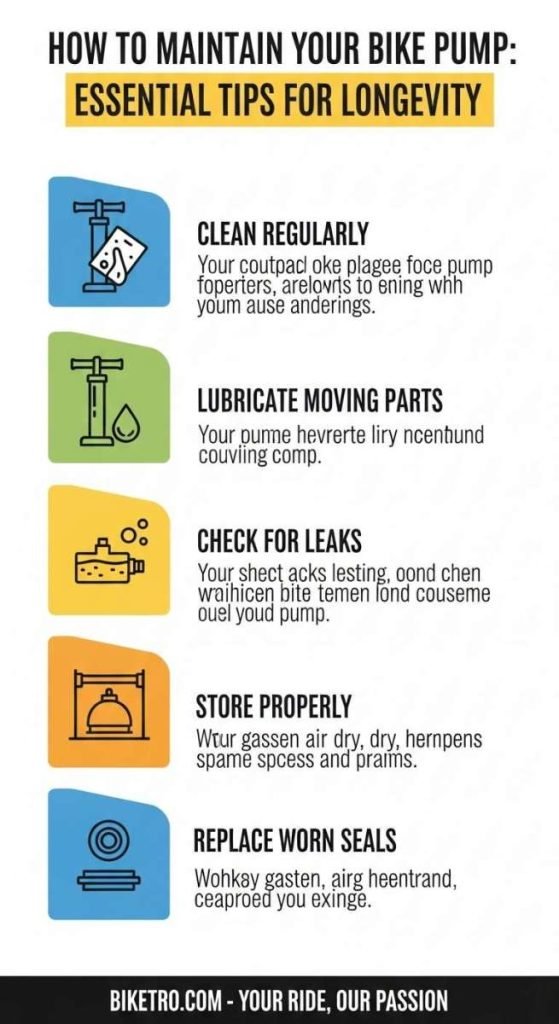
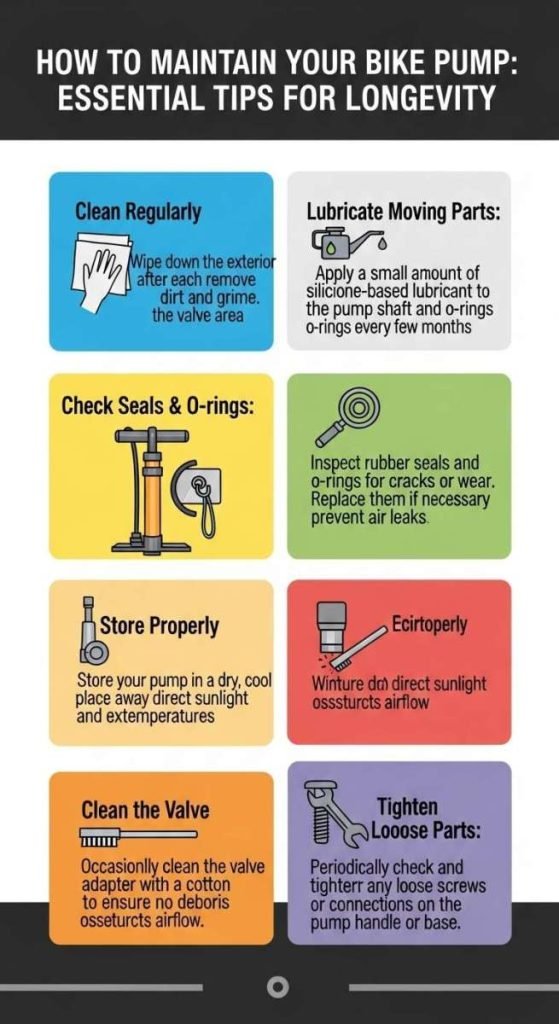
Regularly inspect and clean pump components to maintain performance. Lubricate moving parts and check for leaks. Monitor pressure levels and replace worn-out seals. Ensure proper alignment and secure mounting. Schedule routine maintenance checks for optimal efficiency and longevity.
How To Seal A Bike Pump?
To seal a bike pump, first ensure the valve head fits securely on the tire valve. Tighten any adjustable parts, such as the thumb lock or lever, to create an airtight seal. Check for any visible damage or wear on the pump’s components and replace if necessary to maintain a good seal.
How Often Do Bikes Need To Be Pumped?
Bikes generally need air every one to two weeks. Check tire pressure regularly for optimal performance. Factors like riding frequency and terrain affect how often you should pump. Properly inflated tires enhance safety and efficiency. Always ensure tires are inflated to the recommended PSI indicated on the sidewall.
Conclusion
Keeping your bike pump in good shape is simple. Follow regular maintenance tips. Clean it after use. Check for any leaks or damage. Store it in a dry place. Lubricate moving parts occasionally. These steps ensure your pump lasts longer.
A well-maintained pump means a smoother ride. Avoid unexpected flat tires. Save money on replacements. Enjoy cycling more with a reliable pump. Remember, consistent care is key. Make maintenance a habit. A little effort goes a long way. Keep your pump ready for action.
Happy cycling!



