
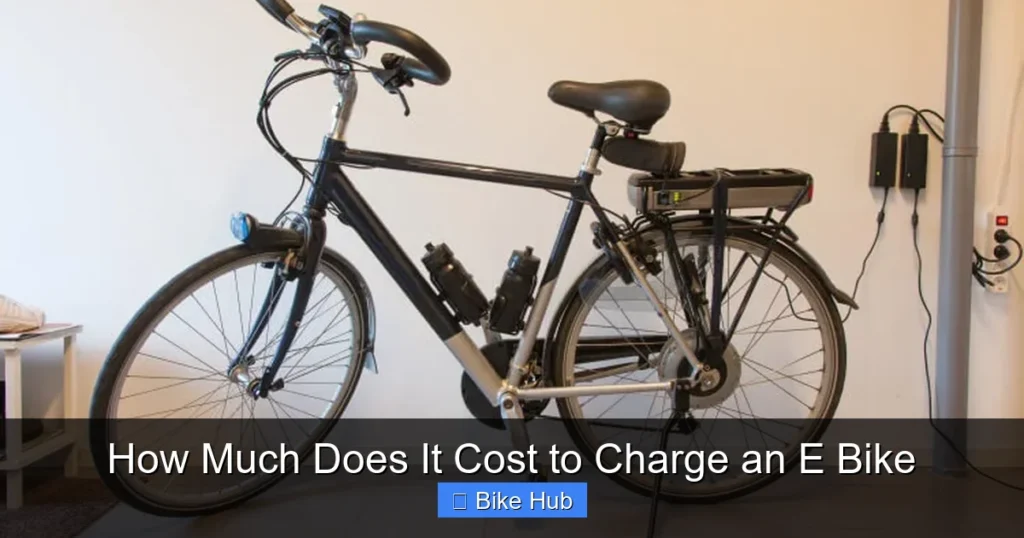
Charging an e-bike is surprisingly affordable, typically costing between $0.10 and $0.50 per full charge. This guide breaks down the factors that affect cost—like battery size and electricity rates—and shows you how to calculate your own expenses. You’ll also learn smart tips to reduce energy use and keep your rides eco-friendly and budget-friendly.
Key Takeaways
- E-bike charging is cheap: Most riders spend less than $5 a year on electricity for daily commuting.
- Battery capacity matters: Larger batteries (measured in watt-hours) cost more to charge but offer longer range.
- Electricity rates vary: Your local utility rate directly impacts charging cost—check your bill for kWh pricing.
- Charge during off-peak hours: Some providers offer lower rates at night, cutting your costs significantly.
- Maintain your battery: Proper care extends battery life and ensures efficient charging over time.
- Use the right charger: Always use the manufacturer-recommended charger to avoid damage and wasted energy.
- Track your usage: Simple math helps you estimate monthly and annual charging expenses.
How Much Does It Cost to Charge an E-Bike?
If you’re thinking about switching to an e-bike—or you’ve just bought one—you’re probably wondering: How much does it actually cost to charge an e-bike? The good news? It’s far cheaper than filling up a car, and even less expensive than most people expect. In fact, charging an e-bike typically costs just a few cents per session. But to understand the real numbers, you need to dig into a few key factors: battery capacity, electricity rates, and charging habits.
In this guide, we’ll walk you through everything you need to know to calculate your own e-bike charging costs. You’ll learn how to read your battery specs, find your local electricity rate, and use simple math to estimate expenses. Plus, we’ll share practical tips to help you save even more while keeping your e-bike running smoothly. Whether you ride for fun, fitness, or your daily commute, understanding charging costs helps you ride smarter and greener.
Step 1: Understand Your E-Bike Battery Capacity
Visual guide about How Much Does It Cost to Charge an E Bike
Image source: fucarebike.com
The first step in calculating charging cost is knowing your e-bike’s battery capacity. This is measured in watt-hours (Wh), which tells you how much energy the battery can store. For example, a common e-bike battery might be 48V and 10Ah. To find the watt-hours, multiply volts by amp-hours:
48V × 10Ah = 480Wh
That means your battery holds 480 watt-hours of energy. Most e-bike batteries range from 300Wh to 700Wh. Higher-capacity batteries give you more range but cost slightly more to charge.
You can usually find this info on the battery label, in the user manual, or on the manufacturer’s website. If you’re unsure, check your e-bike’s model online or contact customer support.
Why Battery Capacity Affects Cost
A larger battery requires more electricity to charge fully. Think of it like filling a water bottle—bigger bottles need more water. So, a 700Wh battery will cost more to charge than a 400Wh one, assuming the same electricity rate.
But here’s the catch: you don’t always charge from 0% to 100%. Most riders charge when the battery drops to 20–30%, which means you’re only replacing a portion of the total capacity. This helps reduce wear on the battery and saves a little energy too.
Step 2: Find Your Local Electricity Rate
Visual guide about How Much Does It Cost to Charge an E Bike
Image source: macfoxbike.com
Next, you need to know how much your electricity costs. This is measured in cents per kilowatt-hour (kWh). One kilowatt-hour equals 1,000 watt-hours.
In the U.S., the average residential electricity rate is about 15 cents per kWh, but this varies widely by state and provider. For example:
– California: ~25 cents/kWh
– Texas: ~12 cents/kWh
– New York: ~20 cents/kWh
– Midwest states: often under 12 cents/kWh
To find your exact rate, check your monthly utility bill. Look for a line item like “Energy Charge” or “Usage Rate.” It should list the cost per kWh. Some bills also show tiered pricing or time-of-use rates, which we’ll cover later.
Example: Calculating Cost per Charge
Let’s say you have a 500Wh battery and your electricity rate is 15 cents/kWh.
First, convert watt-hours to kilowatt-hours:
500Wh ÷ 1,000 = 0.5 kWh
Now multiply by your rate:
0.5 kWh × $0.15 = $0.075
So, a full charge costs about 7.5 cents.
If you charge every other day, that’s roughly 180 charges per year:
180 × $0.075 = $13.50 per year
That’s less than the cost of one tank of gas—and you’re powering your daily commute!
Step 3: Factor in Charging Efficiency
Not all the electricity you pay for makes it into your battery. Some energy is lost as heat during charging. Most e-bike chargers are about 85–90% efficient, meaning 10–15% of the energy is wasted.
To account for this, divide your battery capacity by the efficiency rate. For example:
500Wh ÷ 0.85 = 588Wh (or 0.588 kWh)
Now multiply by your rate:
0.588 kWh × $0.15 = $0.088
So, the real cost is closer to 9 cents per full charge.
It’s a small difference, but it adds up over time. Using an efficient charger and avoiding overcharging can help minimize waste.
Step 4: Optimize Charging Habits to Save Money
You can reduce your e-bike charging costs even further with smart habits.
Charge During Off-Peak Hours
Many utility companies offer time-of-use (TOU) plans, where electricity is cheaper at night or during off-peak hours (usually 9 PM to 6 AM). If you charge your e-bike overnight, you could save 30–50% on energy costs.
Check with your provider to see if TOU pricing is available. Some smart chargers even let you schedule charging automatically.
Avoid Frequent Full Charges
Lithium-ion batteries (used in most e-bikes) last longer when kept between 20% and 80% charge. Charging to 100% every time can stress the battery and reduce its lifespan. Plus, you’re paying for energy you might not need.
Instead, charge when the battery drops to 20–30%, and unplug once it reaches 80–90%. This saves energy and helps your battery last longer.
Use the Right Charger
Always use the charger that came with your e-bike. Third-party or universal chargers might not match the voltage or current requirements, leading to slower charging, overheating, or battery damage. A damaged battery is less efficient and may need replacement sooner—costing you more in the long run.
For more on safe charging practices, check out our guide on how to charge bike camera battery, which covers similar principles for small electronics.
Step 5: Track and Estimate Your Annual Costs
Now that you know the basics, let’s estimate your yearly charging expenses.
Example Calculation
– Battery: 500Wh
– Electricity rate: 15 cents/kWh
– Charging efficiency: 85%
– Charges per week: 3 (every other day)
– Weeks per year: 52
First, calculate cost per charge:
500Wh ÷ 1,000 = 0.5 kWh
0.5 kWh ÷ 0.85 = 0.588 kWh
0.588 kWh × $0.15 = $0.088
Now, annual cost:
3 charges/week × 52 weeks = 156 charges
156 × $0.088 = $13.73
So, you’ll spend about $14 per year to charge your e-bike.
Compare that to driving: the average car costs over $1,500 a year in fuel. Even public transit can cost $500–$1,000 annually. E-bikes are a bargain.
Troubleshooting Common Charging Issues
Sometimes, charging doesn’t go as planned. Here’s how to handle common problems.
Battery Won’t Charge
– Make sure the charger is plugged in securely.
– Check for dirt or corrosion on the battery contacts—clean with a dry cloth.
– Try a different outlet to rule out power issues.
– If the battery is old (3+ years), it may be nearing the end of its life.
Charger Gets Very Hot
A warm charger is normal, but if it’s too hot to touch, unplug it immediately. This could signal a faulty charger or battery. Stop using it and contact the manufacturer.
Charging Takes Too Long
Most e-bike batteries take 3–6 hours to charge. If it’s taking much longer, the battery may be degraded, or the charger could be underpowered. Avoid using fast chargers unless recommended by the manufacturer.
Battery Drains Quickly
If your range drops suddenly, check tire pressure—underinflated tires increase resistance. Also, cold weather reduces battery efficiency. For tips on maintaining performance in winter, see our guide on how to prepare bike tires for winter.
Conclusion: E-Bike Charging Is Affordable and Eco-Friendly
So, how much does it cost to charge an e-bike? The answer is: not much at all. Most riders spend less than $15 a year on electricity—less than the cost of a single pizza. With a little knowledge and smart habits, you can keep your e-bike running efficiently and your wallet happy.
Remember to check your battery capacity, know your electricity rate, and charge wisely. Avoid overcharging, use the right equipment, and take advantage of off-peak pricing when possible. Your battery will last longer, and you’ll save money in the process.
Switching to an e-bike isn’t just good for your health—it’s great for your budget and the planet. With charging costs this low, there’s never been a better time to ride electric.
For more tips on keeping your e-bike in top shape, explore our guide on how to maintain bike wheels to ensure a smooth, efficient ride every time.



