
A bike tune up ensures your bicycle runs safely and efficiently by checking and adjusting key components like brakes, gears, tires, and the drivetrain. Regular tune ups prevent wear, improve performance, and extend your bike’s lifespan—whether you’re a casual rider or a daily commuter.
Key Takeaways
- Brakes are inspected and adjusted for proper pad alignment, cable tension, and stopping power to ensure rider safety.
- Gears are fine-tuned for smooth shifting by adjusting derailleurs and checking cable tension.
- Tires are checked for wear and inflation to prevent flats and improve ride comfort and efficiency.
- The chain and drivetrain are cleaned and lubricated to reduce friction and extend component life.
- Bolts and fasteners are tightened to prevent loosening from vibration during rides.
- Wheels are trued and hubs inspected to eliminate wobbles and ensure smooth rotation.
- A full safety check is performed on lights, reflectors, and frame integrity for overall ride readiness.
What Does a Bike Tune Up Include? A Complete How-To Guide
If you’ve ever felt your bike shifting roughly, heard squeaky brakes, or noticed a wobbly wheel, it’s probably time for a tune up. A bike tune up is like a health check for your bicycle—it ensures everything is working as it should so you can ride safely, smoothly, and confidently.
In this guide, we’ll walk you through exactly what a bike tune up includes, step by step. Whether you’re doing it yourself or taking your bike to a shop, understanding these components will help you maintain your ride and spot issues early. From brakes to gears to tires, we’ll cover all the essentials so your bike stays in top shape mile after mile.
1. Brake Inspection and Adjustment

Visual guide about What Does Bike Tune Up Include
Image source: lowryfoundation.org
Brakes are your most critical safety feature. A proper tune up always starts with checking them.
Check Brake Pads
Look at the brake pads for wear. If they’re thin (less than 1mm thick) or cracked, replace them. Also, make sure they’re aligned properly—pads should hit the rim squarely, not the tire or too high on the rim.
Test Brake Lever Feel
Squeeze the brake levers. They should engage firmly without touching the handlebar. If they feel spongy, the cables may need tightening or the brakes may need bleeding (for hydraulic systems).
Adjust Cable Tension
For mechanical brakes, use the barrel adjuster on the lever or caliper to fine-tune cable tension. Turn it counterclockwise to tighten, clockwise to loosen. This small tweak can make a big difference in responsiveness.
Inspect Brake Cables and Housing
Frayed cables or cracked housing reduce braking power. Replace any damaged parts. For hydraulic brakes, check for leaks and ensure the fluid level is adequate.
Tip:
If your brakes squeal, try cleaning the rims with rubbing alcohol and sanding the pads lightly to remove glazing.
2. Gear Shifting Adjustment
Visual guide about What Does Bike Tune Up Include
Image source: ebikepursuits.com
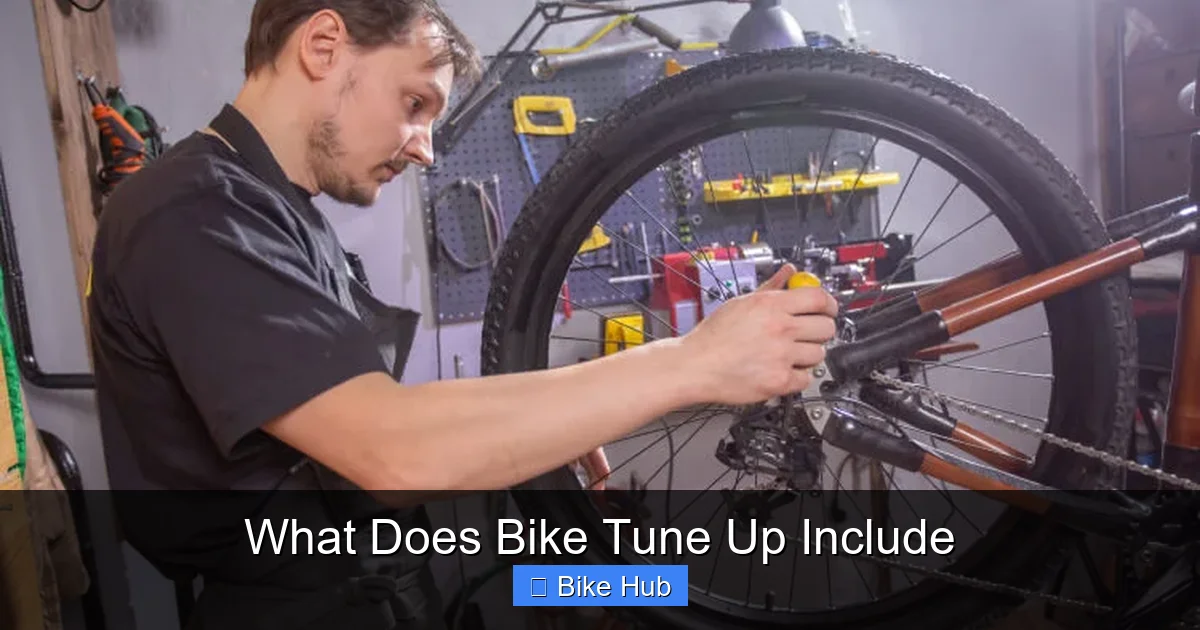
Smooth shifting makes riding more enjoyable and efficient. A tune up ensures your derailleurs are properly aligned and adjusted.
Check Derailleur Alignment
Look at the rear derailleur from behind. The jockey wheels should be directly under the selected cog. If not, the derailleur hanger may be bent and needs straightening.
Adjust Limit Screws
The high (H) and low (L) limit screws prevent the chain from falling off the cassette. Shift to the smallest cog and adjust the H screw so the derailleur pulley is aligned. Do the same for the largest cog with the L screw.
Fine-Tune Cable Tension
Use the barrel adjuster to fix shifting issues. If the chain struggles to shift up, tighten the cable (turn barrel adjuster counterclockwise). If it won’t shift down, loosen it.
Test All Gears
Shift through every gear combination while pedaling. Listen for skipping or hesitation. Make small adjustments until shifting is smooth across the board.
Internal Link:
For mountain bikers, mastering smooth shifting is crucial—check out our Mountain Bike Gear Shifting Tips for advanced techniques.
3. Tire and Wheel Check
Tires affect comfort, speed, and safety. A tune up includes inspecting and inflating them properly.
Inspect Tread and Sidewalls
Look for cuts, cracks, or embedded debris. Worn tread reduces grip, especially in wet conditions. Replace tires that show significant wear.
Check Tire Pressure
Use a pressure gauge to ensure tires are inflated to the recommended PSI (found on the sidewall). Under-inflated tires increase rolling resistance and risk pinch flats. Over-inflated tires reduce comfort and traction.
Internal Link:
Not sure what pressure to use? Our Mountain Bike Tire Pressure Guide offers detailed recommendations based on terrain and rider weight.
True the Wheels
Spin each wheel and watch for side-to-side wobbles (lateral trueness) or up-and-down hops (radial trueness). Minor wobbles can be fixed with a spoke wrench. Major issues may require professional help.
Inspect Hubs and Spokes
Check that hubs spin smoothly without play. Wiggle the wheel side to side—if it moves, the bearings may need adjustment. Also, ensure all spokes are tight and none are broken.
4. Chain and Drivetrain Maintenance
A clean, well-lubricated drivetrain improves efficiency and extends component life.
Clean the Chain
Use a chain cleaner tool or rag with degreaser to remove built-up grime. Rotate the pedals backward while cleaning to reach all links.
Lubricate the Chain
Apply bike-specific lubricant to each link while turning the pedals. Wipe off excess oil to prevent attracting dirt. Use wet lube for rainy conditions and dry lube for dry, dusty rides.
Internal Link:
Storing lube properly keeps it effective—learn how in our guide on How to Store Bike Lubricant.
Check Chain Wear
Use a chain checker tool to measure stretch. A worn chain (0.75% or more elongation) can damage the cassette and chainrings. Replace it if needed.
Clean Cassette and Chainrings
Use a brush and degreaser to scrub the cogs and chainrings. A clean drivetrain shifts better and lasts longer.
5. Bolt and Fastener Check
Vibrations from riding can loosen bolts over time. A tune up includes tightening key fasteners.
Check Stem and Handlebar Bolts
Use a torque wrench to tighten stem bolts to the manufacturer’s specification (usually 5–8 Nm). Loose handlebars can be dangerous.
Tighten Seatpost and Saddle Clamp
Ensure the seatpost is secure and the saddle is level and firmly attached. A slipping saddle affects comfort and control.
Inspect Pedals and Crank Bolts
Make sure pedals spin freely and crank arms are tight. Loose cranks can lead to creaking or damage.
Tip:
Keep a small multitool with you on rides to make quick adjustments if something feels loose.
6. Safety and Final Checks
A complete tune up ends with a full safety inspection.
Test Lights and Reflectors
Ensure front and rear lights work and are charged. Check that reflectors are clean and properly positioned.
Internal Link:
For night riders, proper lighting is essential—see how to set up reliable illumination with our guide on How to Set Up Flashing Bike Lights.
Check Frame and Fork
Look for cracks, dents, or rust, especially around welds and stress points. Any damage could compromise structural integrity.
Test Ride
Take a short ride to test brakes, gears, and overall feel. Listen for unusual noises and check that everything operates smoothly.
Troubleshooting Common Issues
Even with a tune up, problems can arise. Here’s how to handle common ones:
- Squeaky Brakes: Clean rims and pads, check alignment, or replace worn pads.
- Chain Skipping: Could be a worn chain, dirty drivetrain, or misaligned derailleur.
- Wobbly Wheels: True the wheel or check for loose spokes or hub bearings.
- Poor Shifting: Adjust cable tension, check limit screws, or replace worn cables.
- Flat Tires: Inspect for punctures, replace tubes if needed, and check tire pressure.
Conclusion
A bike tune up isn’t just about fixing problems—it’s about preventing them. By regularly checking and maintaining your brakes, gears, tires, chain, and other components, you’ll enjoy a safer, smoother, and more reliable ride. Whether you do it yourself or visit a shop, knowing what a tune up includes empowers you to keep your bike in peak condition.
Don’t wait for a breakdown to take action. Schedule tune ups every 6–12 months, or more often if you ride frequently or in harsh conditions. Your bike—and your rides—will thank you.



