
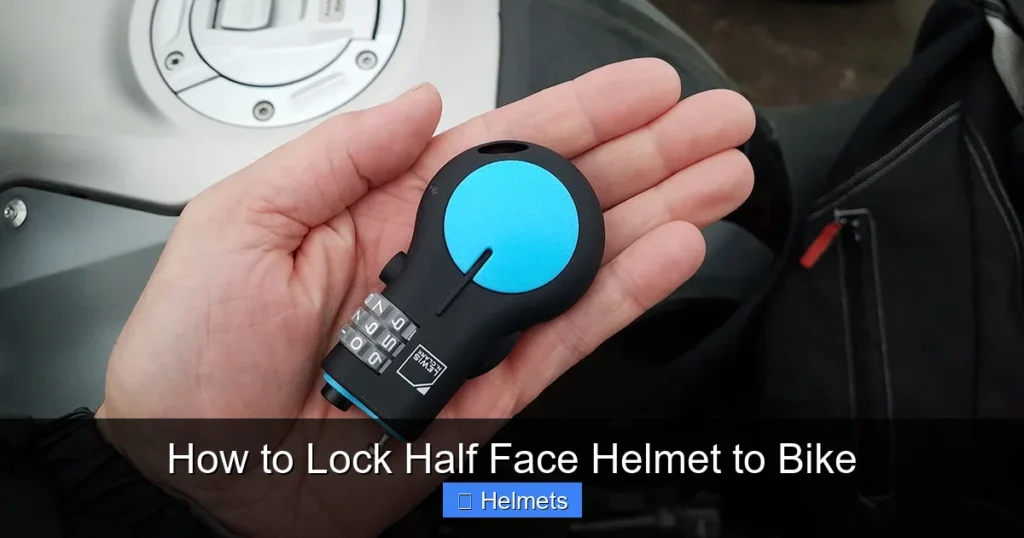
Learn how to lock your half face helmet to your bike effectively, preventing theft and ensuring peace of mind. This guide explores various methods, from using built-in locks to employing creative security solutions. Keep your essential gear safe and sound by following these simple yet crucial steps.
Riding your bike is an exhilarating experience. Whether you’re commuting through the city, hitting the trails, or just enjoying a leisurely ride, your helmet is your most important piece of protective gear. A half face helmet offers excellent protection for your head while allowing for better visibility and airflow compared to full-face options. But what happens when you arrive at your destination and need to leave your bike unattended? The question of how to lock your half face helmet to your bike becomes paramount. Leaving it unsecured is an open invitation for thieves, and nobody wants to lose their essential safety equipment.
It might seem like a simple task, but when you’re in a hurry or faced with limited options, figuring out the best way to secure your helmet can be a bit of a puzzle. You’ve invested in a good helmet, and you want to keep it safe. This guide is here to walk you through various practical and effective methods for how to lock half face helmet to bike, ensuring your gear stays put while you’re away. We’ll cover everything from using your helmet’s existing features to employing specialized locks and even some clever DIY solutions.
Let’s dive into the best ways to keep your half face helmet secure, so you can focus on enjoying your ride without worrying about your gear.
- Understand the Importance: Locking your helmet is crucial to prevent opportunistic theft, especially when leaving your bike unattended.
- Utilize Built-in Helmet Locks: Some helmets have integrated locking mechanisms or D-rings that can be used with a cable lock.
- Employ Cable and Coil Locks: These are versatile and affordable options for securing your helmet to the bike frame or a fixed object.
- Consider U-Locks with Accessories: A U-lock can secure your bike and, with an extension or accessory, your helmet too.
- Get Creative with Straps and Carabiners: For a quick, temporary solution, strong straps and carabiners can be used to attach the helmet to a secure part of the bike.
- Choose the Right Location: Always lock your helmet to a solid, immovable part of your bike or a fixed anchor point.
📑 Table of Contents
Why Locking Your Half Face Helmet is Essential
It might seem obvious, but let’s really think about why securing your helmet is so important. For starters, helmets aren’t cheap! You’ve likely spent a good amount of money to get a helmet that fits well and offers adequate protection. The last thing you want is for someone to walk away with it because it was left out in the open. Opportunistic theft is real, and a helmet sitting on your handlebars or seat is an easy target, especially in busy public areas.
Beyond the financial aspect, your helmet is a critical piece of safety equipment. If it gets stolen, you’ll need to replace it before your next ride. This can be inconvenient and potentially dangerous if you ride without proper head protection because you haven’t had time to buy a new one. Furthermore, some helmets have specific fits and features tailored to you, like custom padding. Replacing it means finding another helmet that fits just right. Understanding how to lock half face helmet to bike is the first step in preventing this hassle.
The Threat of Opportunistic Theft
Think about the places you might park your bike: outside a coffee shop, at the grocery store, or even near your workplace. These are all places where people come and go, and unfortunately, where some individuals might be looking for an easy score. A helmet, especially a stylish or relatively new one, can be an attractive item to a thief. They don’t need to steal your entire bike to profit; a helmet can be resold or used by the thief themselves.
Protecting Your Investment
Your helmet is more than just plastic and foam; it’s a protective shield. It’s designed to absorb impact and keep your brain safe in case of an accident. This advanced technology and design come at a cost. By taking a few moments to secure your helmet, you’re protecting that investment and ensuring you have reliable protection whenever you ride.
Maintaining Fit and Comfort
Helmets are often designed for a specific fit. The internal padding, the strap adjustments – these are all set up for optimal comfort and safety for the wearer. If your helmet gets stolen, you’ll have to go through the process of finding a new one, trying it on, and adjusting it all over again. This can be a time-consuming and frustrating process, especially if you have specific needs, like wearing glasses or a ponytail. Knowing how to lock half face helmet to bike helps preserve the comfort and fit you’ve already achieved.
Methods for Locking Your Half Face Helmet
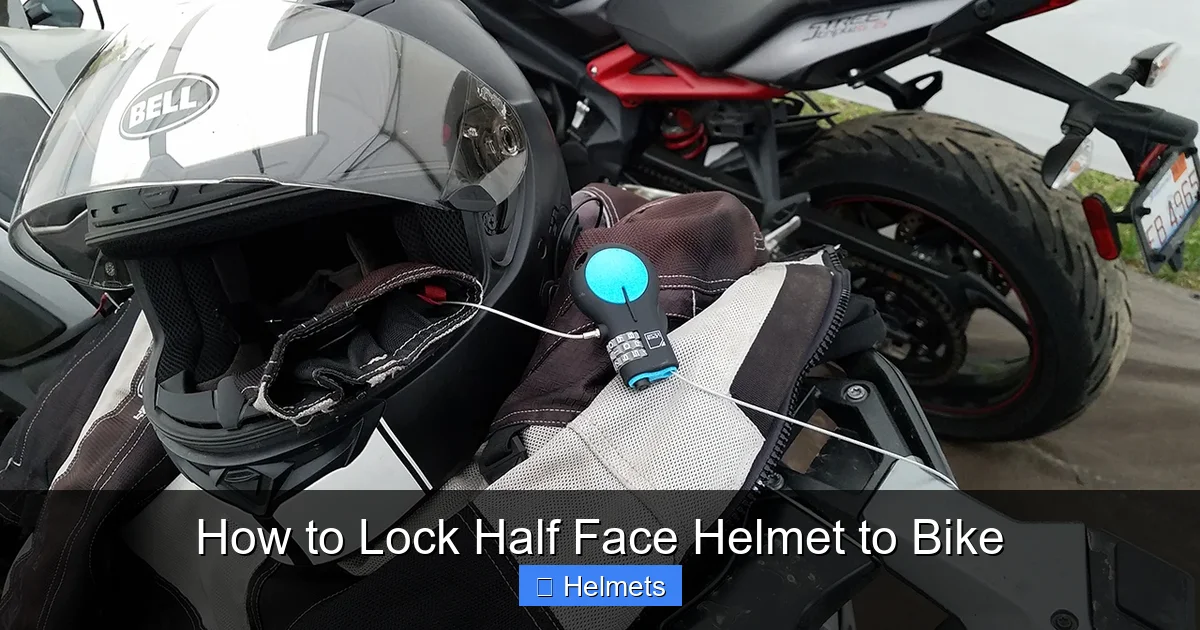
Visual guide about How to Lock Half Face Helmet to Bike
Image source: tro.bike
Now that we understand why it’s crucial, let’s explore the practical ways you can actually lock your half face helmet to your bike. There isn’t always a single “perfect” method, as it often depends on the type of helmet you have, the type of bike, and the locks you have available. We’ll cover the most common and effective techniques.
Using Your Helmet’s D-Rings and a Cable Lock
Many motorcycle-style half face helmets, and even some bicycle helmets, use D-rings for their strap closure. These D-rings are a fantastic anchor point for a lock.
* **What are D-rings?** They are two metal rings, typically shaped like the letter ‘D’, through which the helmet strap is threaded and then secured.
* **How to use them:** Thread a flexible cable lock, a small padlock with a cable, or even a chain through both D-rings of your helmet. Then, loop the other end of the cable around a secure part of your bike frame (like the seat tube or downtube) or a fixed object like a bike rack. Finally, secure the lock.
* **Tip:** Ensure the cable is taut to make it harder to cut or pry. If you’re using a padlock and cable, make sure the padlock itself is also secured to the bike or a fixed point if possible, or at least difficult to access.
This method is straightforward and effective for most helmets with D-rings. It’s a common way to lock half face helmet to bike.
Leveraging Built-in Helmet Locks
Some helmets are designed with integrated locking features. While less common on standard bicycle half face helmets, certain motorcycle-style or specialized commuter helmets might have a small locking mechanism or a reinforced loop specifically for this purpose.
* **Check your helmet:** Carefully inspect your helmet’s strap system and shell for any unusual loops, holes, or mechanisms that look like they could be used for locking.
* **Manufacturer’s instructions:** If you suspect your helmet has a built-in lock, consult the user manual or the manufacturer’s website for instructions on how to use it.
* **Compatibility:** If your helmet has such a feature, you’ll likely need a specific type of lock or cable that can interface with it.
This is the most integrated solution, but it requires your helmet to have this specific feature.
The Versatile Cable Lock Method
Cable locks are incredibly versatile and a popular choice for securing helmets. They are relatively inexpensive and easy to carry.
* **Types of cable locks:** You can get simple coiled cable locks with integrated key or combination locks, or you can buy a separate padlock and a length of steel cable.
* **Securing the helmet:** Loop the cable through the helmet’s ventilation holes (if they are large enough and strategically placed) or, preferably, through the D-rings. Then, secure the other end to your bike frame, a wheel spoke (though this is less secure than the frame), or a U-lock if you’re using one.
* **Combination lock tip:** If you’re using a combination lock, remember your code! It’s also a good idea to periodically change it for added security. If you forget your combination, you might need to consult your guide on how to reset combination bike lock, though this is often not possible for integrated helmet lock mechanisms.
Cable locks are a good general-purpose solution for how to lock half face helmet to bike.
Using a U-Lock (with an Extension or Accessory)
A U-lock is one of the most secure ways to lock your bike. While it might not directly fit around your helmet and bike frame simultaneously, there are ways to incorporate your helmet into your U-lock strategy.
* **Looping through the helmet:** If your helmet has large enough ventilation holes, you might be able to thread the U-lock shackle through them. However, this can put stress on the helmet shell and is generally not recommended for structural integrity. The D-rings are a much better option if accessible.
* **Using a secondary cable:** The most common and effective method is to use your U-lock to secure your bike frame to a fixed object, and then use a separate, smaller cable lock (or even a strong strap) to attach your helmet to the U-lock itself or to the bike frame alongside the U-lock.
* **Helmet lock accessories:** Some U-lock manufacturers offer accessory cables or straps designed to work with their locks, allowing you to secure additional items like helmets.
While a U-lock is excellent for the bike, you’ll likely need an additional accessory to effectively lock your helmet.
Creative Solutions: Straps, Carabiners, and More
If you don’t have a dedicated lock or are in a pinch, there are some creative ways to secure your helmet. These are often less secure than dedicated locks but can deter casual theft.
* **Strong Velcro Straps:** Heavy-duty Velcro straps can be used to attach the helmet to your bike frame or handlebars. Loop the strap through the helmet’s D-rings or ventilation holes and then secure it tightly.
* **Carabiners:** A sturdy carabiner can be clipped through the helmet’s D-rings and then attached to a secure point on your bike. However, carabiners can be easily opened, so ensure it’s a locking carabiner or that it’s positioned where it can’t be easily unclipped.
* **Bungee Cords:** While not ideal for security as they can be easily cut or removed, a bungee cord can be used to temporarily secure a helmet to a rack or frame. This is more for keeping it from falling off than preventing theft.
* **Seatpost Trick:** If your seatpost is high enough, you can sometimes thread your helmet strap through it and then secure the helmet underneath the seat. This makes it less visible and slightly harder to grab.
These creative methods are best for short stops or when you’re keeping a close eye on your bike.
Choosing the Right Lock for Your Helmet
With various options available, how do you choose the best lock for your half face helmet? It depends on several factors, including your budget, the type of helmet you have, and the environment where you’ll be locking it.
Consider the Type of Helmet
* **D-ring helmets:** As mentioned, helmets with D-ring closures are ideal for use with cable locks or padlocks threaded through the rings.
* **Helmets with large vents:** Some helmets have large, strategically placed ventilation holes that can accommodate a cable lock. However, be cautious about where you thread the cable to avoid damaging the helmet’s structure.
* **Helmets with integrated locks:** If your helmet has a built-in locking mechanism, you’ll need to use a compatible lock.
Assess Your Security Needs
* **Low-risk areas:** For quick stops in safe neighborhoods, a simple cable lock or even a strong strap might suffice.
* **High-risk areas:** In cities or areas with a known higher crime rate, you’ll want to invest in a more robust locking solution, perhaps a high-quality cable lock or combining a U-lock with a secondary cable for your helmet. When considering security, it’s also important to know how to lock your bike in the city effectively, as a secure bike is the first step.
Budget and Portability
* **Budget-friendly:** Cable locks are generally the most affordable option.
* **Portability:** Consider how you’ll carry your lock when you’re not using it. Many cable locks coil up nicely, and some U-locks come with frame mounts. You can learn more about how to carry a bike lock while riding to ensure convenience.
Ultimately, the best lock is one that you’ll actually use consistently. Choose a method that is convenient enough for your daily routine.
Where to Lock Your Helmet
It’s not just about *how* you lock your helmet, but also *where* you attach it. The location can significantly impact its security.
Ideal Anchor Points on Your Bike
* **Frame:** The main triangle of your bike frame (downtube, seat tube) is generally the most secure place to attach your helmet. It’s solid and less accessible than other parts.
* **Seatpost:** While sometimes removable, a sturdy seatpost can be a decent anchor point, especially if it’s a proprietary design or difficult to adjust quickly.
* **Wheels:** Locking your helmet to a wheel spoke is possible but less secure. Wheels can be removed, especially if they have quick-release skewers. Always aim for the frame or a fixed object first.
Using Fixed Objects
* **Bike Racks:** These are designed for securing bicycles and are often the best option. Lock your bike to the rack, and then secure your helmet to the bike frame or the rack itself. You can find more on how to lock your bike to a rack to ensure your entire setup is secure.
* **Sturdy Poles or Signposts:** In areas without dedicated bike racks, look for solid, immovable poles. Avoid flimsy signposts that could be easily bent or broken.
* **Fences:** Some metal fences can be used, but be aware of the material and construction. Chain-link fences can sometimes be cut.
What to Avoid
* **Handlebars:** While convenient, handlebars are often easy to manipulate and can be a target for thieves to try and twist or pry.
* **Mirrors or small attachments:** Anything that can be easily detached or broken off should be avoided.
* **Locking to a removable part:** Never lock your helmet to a part of your bike that can be easily removed, like a quick-release seatpost or wheel.
The goal is to make it as difficult and time-consuming as possible for a thief to get away with your helmet.
Maintaining Your Helmet and Lock
Just like your bike, your helmet and locks need a little care to ensure they function correctly and last.
Helmet Care
* **Cleaning:** Regularly clean your helmet to remove sweat and dirt. For a half face helmet, this usually involves wiping down the exterior and washing the interior padding if it’s removable. If your helmet gets wet, learn how to dry a bike helmet after rain properly to prevent mildew.
* **Padding:** Over time, helmet padding can wear out. If yours is getting flat or uncomfortable, consider replacing it. You can find guides on how to replace bike helmet padding to refresh your helmet.
* **Straps and Buckles:** Check your helmet straps and buckle regularly for any signs of wear or damage. If a buckle is broken, you might need to know how to fix a broken bike helmet buckle or replace the helmet.
* **Storage:** When not in use and not locked to your bike, store your helmet in a cool, dry place away from direct sunlight, which can degrade the materials. If you decide it’s time for a new one, learn how to dispose of an old bike helmet responsibly.
Lock Maintenance
* **Lubrication:** For cable locks with key mechanisms or separate padlocks, occasional lubrication can prevent them from seizing up. Use a graphite-based lubricant or a specialized lock lubricant. Avoid oil-based lubricants, which can attract dirt.
* **Checking for Damage:** Periodically inspect your locks for any signs of damage, rust, or wear. If a lock seems compromised or difficult to operate, it might be time to replace it. If you encounter a jammed lock, you might need to learn how to remove a jammed bike lock.
* **Combination Locks:** If you use a combination lock, periodically test the combination to ensure it’s still working smoothly.
Taking good care of both your helmet and your lock ensures they provide reliable security and protection for years to come.
Conclusion: Peace of Mind on Two Wheels
Securing your half face helmet to your bike doesn’t have to be a complicated ordeal. By understanding the risks and employing the right methods, you can significantly reduce the chances of theft and enjoy your rides with greater peace of mind. Whether you’re using the D-rings with a trusty cable lock, getting creative with straps, or utilizing a combination of security devices, the key is to make your helmet a difficult target.
Remember to always choose a secure anchor point, whether it’s a solid part of your bike frame or a fixed object in the environment. Regularly maintaining your helmet and locks will also ensure they are always ready to protect your gear. So, the next time you park your bike, take those extra few moments to properly lock your half face helmet. It’s a small effort that provides significant protection for your valuable safety equipment, allowing you to focus on the joy of cycling.
Frequently Asked Questions
What is the easiest way to lock a half face helmet?
The easiest way is often to use the helmet’s D-rings (if it has them) and thread a flexible cable lock through them, then secure the cable to your bike frame or a fixed object. This method is quick, effective, and requires minimal equipment.
Can I lock my helmet through the vents?
In some cases, yes, if the helmet’s ventilation holes are large enough to accommodate a lock cable. However, be cautious not to compromise the helmet’s structural integrity. Using D-rings or dedicated locking loops is generally a safer and more secure option.
What if my helmet doesn’t have D-rings?
If your helmet lacks D-rings or integrated locking points, you’ll need to get creative. Consider using strong Velcro straps or a sturdy carabiner threaded through a secure part of the helmet (like a reinforced strap attachment point) and then attached to your bike frame.
How secure are cable locks for helmets?
Cable locks offer a decent level of security against opportunistic theft and are a good deterrent. However, they are not as secure as U-locks or heavy-duty chains and can be cut with bolt cutters by determined thieves. For higher-risk areas, consider using a cable lock in conjunction with other security measures.
Should I lock my helmet to my bike every time?
It’s highly recommended to lock your helmet every time you leave your bike unattended, especially in public places. Even a quick stop can present an opportunity for theft. Taking a few extra seconds to secure your helmet is a small price to pay for its safety and your peace of mind.
How do I prevent my helmet from being stolen if I can’t lock it directly to the bike?
If direct locking isn’t feasible, try to attach it to a part of the bike that’s difficult to access or remove, like threading the strap through the frame and under the seat. Alternatively, consider carrying it with you if you’re only leaving your bike for a very short period and are in a secure location.



