

Folding electric bikes weigh more than normal bikes due to added components like batteries, motors, and reinforced frames. This guide breaks down each factor contributing to the extra weight and explains how it affects performance and portability.
Key Takeaways
- Battery adds significant weight: Lithium-ion batteries powering e-bikes are heavy, often adding 5–10 pounds compared to non-electric models.
- Motor increases overall mass: Hub or mid-drive motors add bulk, especially in compact folding designs where space is limited.
- Reinforced frame for durability: Folding mechanisms require stronger joints and materials, increasing weight but improving safety and longevity.
- Compact design = denser components: Smaller wheels and tighter builds use denser alloys to maintain strength, contributing to higher weight per cubic inch.
- Extra features add up: Integrated lights, racks, and suspension systems—common on folding e-bikes—further increase total weight.
- Weight impacts portability trade-offs: Heavier bikes are harder to carry when folded, but offer better stability and range on the road.
- Smart design minimizes excess: Top brands use lightweight alloys and efficient layouts to reduce unnecessary bulk without sacrificing function.
Introduction: Why Weight Matters in Folding Electric Bikes
If you’ve ever lifted a folding electric bike and thought, “Wow, this feels heavier than my old regular bike,” you’re not imagining things. While folding e-bikes offer incredible convenience—easy storage, public transport compatibility, and quick setup—they do come with a noticeable weight penalty. Understanding why folding electric bikes are heavier than normal bikes helps you make smarter buying decisions and manage expectations around portability and performance.
In this guide, we’ll walk through the main reasons behind the extra pounds, from battery technology to frame engineering. You’ll learn how each component contributes to the total weight, what trade-offs exist, and how modern manufacturers are working to balance strength, safety, and lightness. Whether you’re commuting daily or just want a bike that fits in your apartment closet, knowing what adds weight—and why—can help you choose the right model for your lifestyle.
The Role of the Battery: The Biggest Weight Contributor
The single heaviest part of any electric bike is the battery. Most folding e-bikes use lithium-ion batteries, which pack a lot of energy but aren’t light. A typical 36V or 48V battery can weigh anywhere from 5 to 10 pounds (2.3 to 4.5 kg), depending on capacity and chemistry.
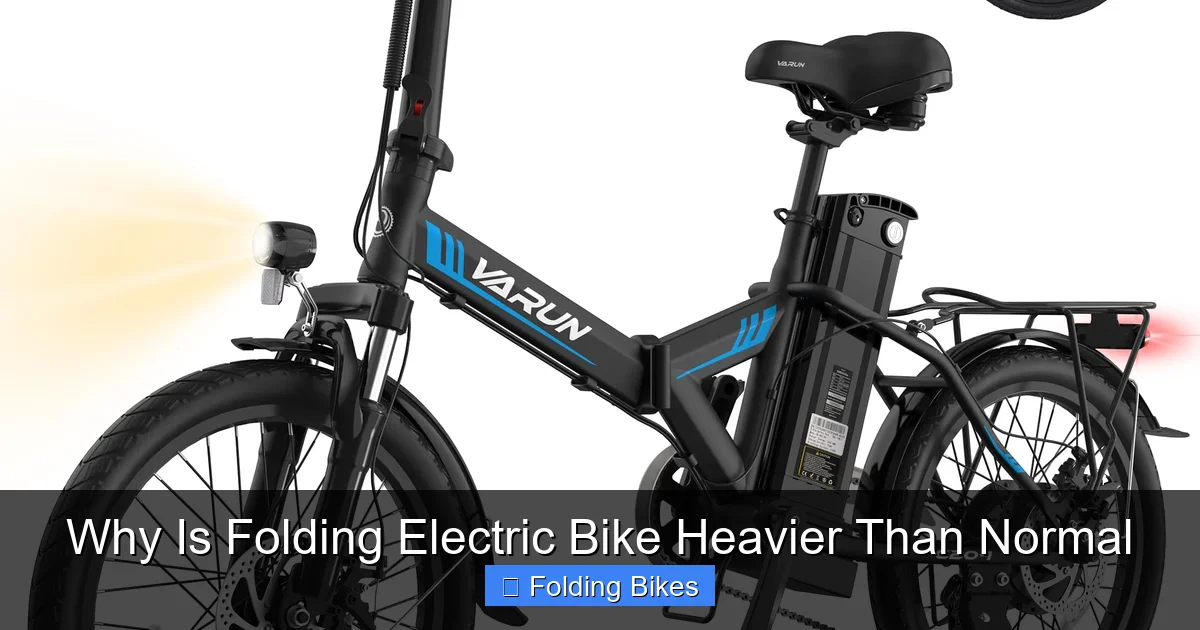
Visual guide about Why Is Folding Electric Bike Heavier Than Normal
Image source: m.media-amazon.com
Why Can’t Batteries Be Lighter?
Lithium-ion cells are energy-dense, but they still require protective casings, wiring, and thermal management systems. In folding bikes, space is at a premium, so batteries are often custom-shaped to fit into slim frames or under seats. This customization limits the use of ultra-lightweight materials. Plus, higher-capacity batteries (which give longer range) naturally weigh more—there’s no free lunch when it comes to energy storage.
Real-World Example
Take the popular Best Foldable Fat Tire Electric Bike. It includes a 48V 12.5Ah battery that weighs nearly 8 pounds. That’s almost as much as a full-size helmet! While it delivers impressive range (up to 50 miles), that battery alone adds noticeable heft when lifting the folded bike.
Motor Systems Add Bulk and Mass
Every electric bike needs a motor to provide pedal assist or full throttle power. On folding e-bikes, motors are usually hub-based (in the front or rear wheel) because they’re simpler to integrate into compact designs. However, even small hub motors add 3–6 pounds compared to a standard wheel.
Power vs. Weight Trade-Off
Higher-wattage motors (like 500W or 750W) deliver more torque and hill-climbing ability but are heavier. Folding e-bikes designed for urban commuting might use 250W–350W motors to save weight, while off-road or cargo-focused models go bigger. Unfortunately, there’s no way around it: more power means more metal, magnets, and copper wire—all adding mass.
Mid-Drive Motors Are Rare (and Heavier)
Some premium folding e-bikes experiment with mid-drive motors mounted near the pedals. These are more efficient but significantly heavier and complex. Most manufacturers avoid them in folding designs to keep the bike compact and affordable.
Folding Mechanisms Require Reinforced Frames
This is where folding bikes differ most from traditional e-bikes. The hinge points, latches, and locking systems must withstand repeated stress without failing. To ensure safety and durability, manufacturers use thicker steel or high-grade aluminum alloys—materials that are strong but not lightweight.
Double the Joints, Double the Concern
A standard bike has one main frame tube. A folding e-bike may have three or four pivot points, each needing reinforced brackets, bolts, and safety locks. These aren’t just cosmetic—they’re critical for preventing catastrophic failure while riding. As a result, even if the rest of the bike were made of carbon fiber, the folding joints would still add pounds.
Example: Frame Material Choices
Many budget folding e-bikes use steel frames because they’re cheap and strong. Premium models switch to aluminum to cut weight, but even then, the folding hardware adds back some of what was saved. For instance, the Best Electric Bike For Adults category includes several folding models that weigh 45–50 lbs—far above a typical 25-lb road bike.
Smaller Wheels = Denser Construction
Folding bikes almost always use smaller wheels (typically 16″ to 20″) to reduce folded size. But smaller wheels need stronger rims and spokes to handle the same loads as larger wheels. This leads to thicker, heavier components.
Why Smaller Wheels Aren’t Lighter
Physics plays a role here: smaller wheels have less rotational inertia, which is good for acceleration, but they also transmit more road shock to the frame. To compensate, manufacturers build sturdier forks, hubs, and tires—adding weight back into the system. Plus, fat-tire folding e-bikes (great for sand or snow) use even heavier rubber and inner tubes.
Practical Impact
If you’re considering a folding e-bike for rough terrain, check out models like those reviewed in our Best Electric Bike For Rough Terrain guide. These often weigh 55+ lbs due to reinforced frames and wide tires—but they’re built to handle trails, not just sidewalks.
Integrated Features Add Hidden Weight
Many folding e-bikes come loaded with extras: built-in LED lights, USB charging ports, rear racks, fenders, and even suspension seats. While convenient, each feature adds ounces that quickly become pounds.
Convenience Comes at a Cost
For example, a rear rack might add 1.5 lbs, fenders another 1 lb, and a suspension seatpost up to 2 lbs. Lights and wiring? Another half-pound. Individually minor, but collectively significant—especially when you’re carrying the bike up stairs or onto a bus.
Tip: Choose Wisely
If maximum portability is your goal, look for models with removable accessories or minimalist designs. Some brands let you strip down to essentials for travel, then reattach features at home.
Troubleshooting Common Weight Concerns
Still worried about the weight? Here’s how to manage it:
Use a Bike Cover or Bag
A padded carrying bag distributes weight better than gripping bare frame points. It also protects the bike during transport.
Check Local Regulations
Some public transit systems limit carried items over 50 lbs. If your folding e-bike hits that mark, consider lighter alternatives or plan routes with elevators.
Maintain Your Bike
Dirt, rust, and worn parts can add unnecessary weight over time. Regular cleaning and lubrication keep things running smoothly—and lightly.
Conclusion: Weight Is a Trade-Off—Not a Flaw
Yes, folding electric bikes are heavier than normal bikes—but that’s by design. The added weight comes from essential components that deliver electric assist, compact storage, and reliable folding mechanics. Rather than seeing weight as a downside, view it as the price of versatility. With smart choices—like prioritizing aluminum frames, moderate battery sizes, and only necessary accessories—you can find a folding e-bike that balances heft with functionality.
Ultimately, the best folding electric bike for you is one that fits your commute, storage space, and lifting ability. Don’t let weight scare you away from the convenience and freedom these bikes offer. Just understand what’s causing it—and how to work with it.



