
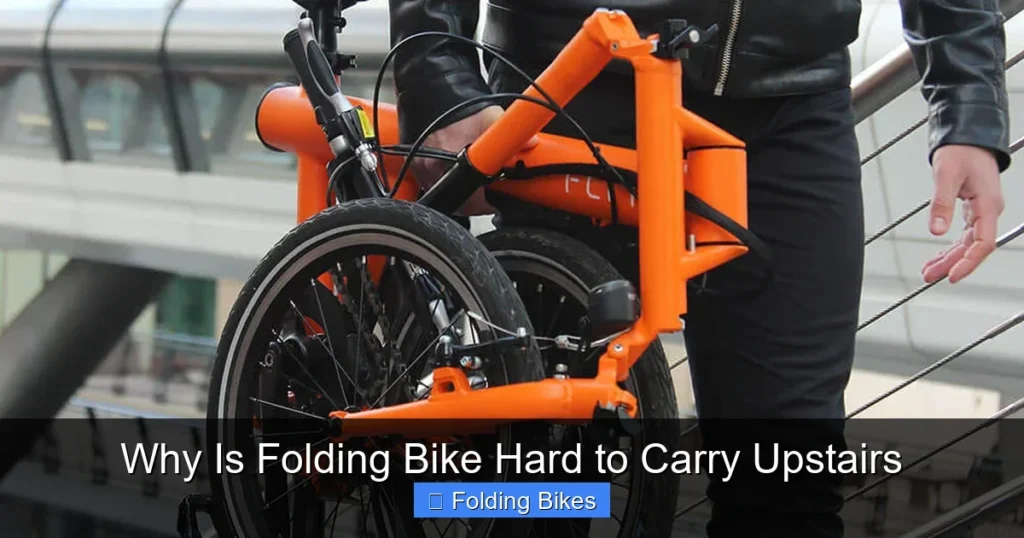
Folding bikes are designed for portability, but carrying them upstairs can still be surprisingly difficult. This guide explains the main reasons—weight distribution, awkward shape, and lack of handles—and offers actionable solutions to make stair climbing easier.
Key Takeaways
- Weight is unevenly distributed: Most folding bikes have heavier components like batteries or motors near the rear, making them hard to balance when lifted.
- Awkward shape when folded: Even when compact, folded bikes often lack ergonomic grips or balanced proportions for comfortable carrying.
- No built-in carrying handles: Many models don’t include dedicated handles, forcing riders to grip tires, frames, or cables—risking damage or injury.
- Stairs amplify the challenge: Steps require lifting, pivoting, and stabilizing—all harder with an unbalanced load.
- Accessories add bulk and weight: Panniers, locks, lights, or spare batteries increase strain when carrying up stairs.
- Proper technique reduces risk: Using two hands, bending knees, and keeping the bike close to your body minimizes strain and improves control.
- Upgrades and tools help: Adding a shoulder strap, using a carrying bag, or choosing a lighter model can significantly ease the burden.
Introduction: Why Carrying a Folding Bike Upstairs Feels Harder Than It Should Be
Folding bikes are marketed as portable, convenient, and ideal for commuters who need to combine cycling with public transit or apartment living. But if you’ve ever tried carrying one up a flight of stairs, you know the reality can be frustrating—even painful. Despite their compact size when folded, many riders struggle with the weight, balance, and awkward shape of their bike during stair climbs.
In this guide, we’ll break down exactly why folding bikes are hard to carry upstairs, from physics and design flaws to real-world usage challenges. More importantly, we’ll give you step-by-step strategies to make it easier—whether you’re heading into your apartment building, boarding a train, or navigating a subway station. You’ll learn how to lift safely, what accessories can help, and how to choose a bike that’s truly stair-friendly.
Understanding the Core Challenges
1. Weight Distribution Is Off-Balance
Even though folding bikes are lighter than full-sized bikes, their weight isn’t evenly spread. Most of the heaviest parts—like the battery (on e-folders), motor, drivetrain, and wheels—are concentrated toward the rear. When you lift the bike by the front, it tilts backward, making it feel top-heavy and unstable.
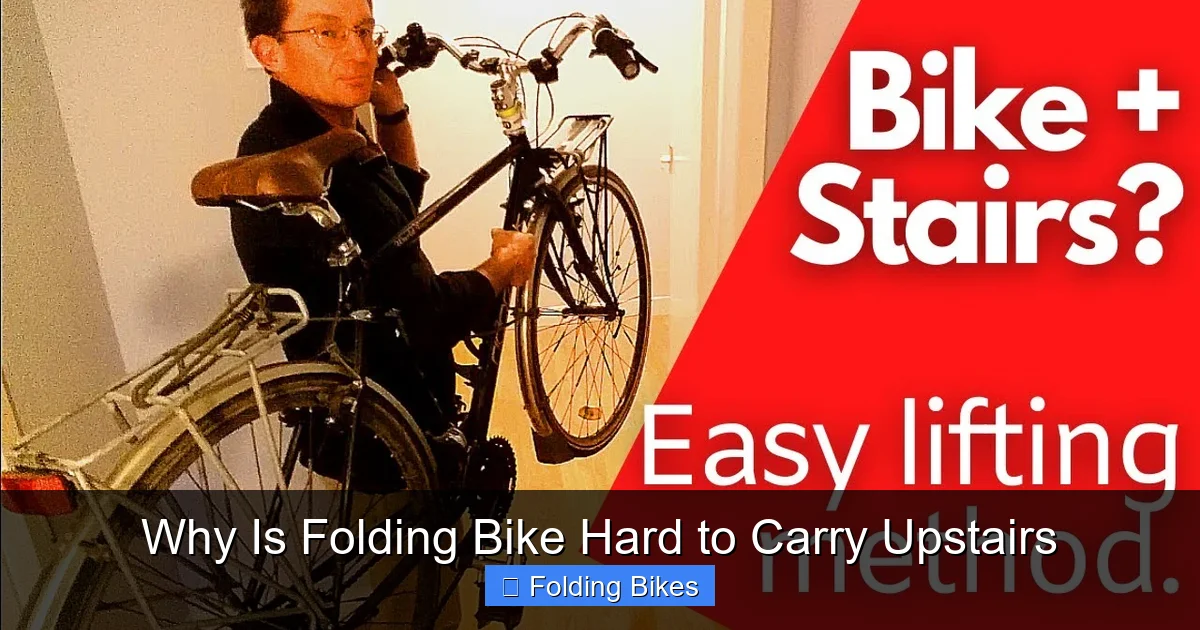
Visual guide about Why Is Folding Bike Hard to Carry Upstairs
Image source: i.ytimg.com
For example, a typical electric folding bike might weigh 40–50 pounds, with 60% of that weight behind the center of gravity. This imbalance forces you to constantly adjust your grip and posture while climbing, increasing fatigue and the risk of dropping the bike.
2. The Folded Shape Isn’t Designed for Carrying
Manufacturers focus on making folding bikes small—not necessarily easy to carry. When folded, many models form a long, narrow rectangle or L-shape that’s hard to grip securely. There’s often no natural “handle zone,” so riders end up grabbing the seat post, handlebars, or even the tires.
This leads to two problems: first, you’re putting pressure on delicate parts that aren’t meant to bear weight; second, your hands slip or tire quickly because there’s no ergonomic support. Imagine trying to carry a suitcase without a handle—that’s what many folding bikes feel like when folded.
3. Lack of Dedicated Carrying Handles
Unlike luggage or backpacks, most folding bikes don’t come with built-in handles. Some premium models include a small loop or strap near the frame hinge, but these are often too small or poorly placed to provide real support.
Without a proper handle, you’re forced to improvise—which can damage your bike or strain your wrists. For instance, gripping the chainstay or bottom bracket risks bending components or getting grease on your clothes.
4. Stairs Multiply the Difficulty
Flat surfaces are one thing—stairs are another. Each step requires you to lift the bike higher, shift your weight, and maintain balance while moving upward. The repetitive motion strains your shoulders, back, and arms, especially if you’re carrying groceries or a backpack at the same time.
And let’s not forget narrow stairwells, low ceilings, or crowded landings—these environmental factors make maneuvering even harder. A bike that folds neatly in a hallway can become a clumsy obstacle on stairs.
Step-by-Step: How to Carry Your Folding Bike Upstairs Safely
Step 1: Prepare Before You Lift
Before heading up, take a moment to secure loose parts. Fold the pedals, tuck in cables, and make sure the seat is lowered. If you have accessories like lights or a bike lock, remove them or fasten them tightly to avoid snagging on railings.
Tip: Use a bungee cord or Velcro strap to bundle the folded bike neatly. This keeps it compact and reduces shifting during carry.
Step 2: Use the Right Grip Technique
Never lift by the handlebars or seat—these aren’t load-bearing points. Instead, place one hand under the frame near the rear wheel (where most of the weight is) and the other hand on the top tube or stem for balance.
Keep the bike vertical and close to your body. This lowers your center of gravity and gives you better control. Think of it like carrying a heavy box—you wouldn’t hold it out in front of you.
Step 3: Bend Your Knees, Not Your Back
When lifting off the ground or stepping up, bend at the knees and hips—not the waist. Engage your core muscles to support your spine. This reduces lower back strain, which is a common injury among commuters who carry bikes daily.
If the bike feels too heavy, don’t hesitate to take breaks between flights. Better to go slow than risk a fall.
Step 4: Use Two Hands—and Ask for Help if Needed
Always use both hands when carrying upstairs. If the bike is especially heavy (like an e-folding bike), consider asking someone to assist you—or use a shoulder strap (see below).
For long staircases, alternate your grip every few steps to prevent muscle fatigue. And never rush—momentum can cause you to lose balance.
Practical Upgrades to Make Carrying Easier
Add a Shoulder Strap or Carrying Bag
One of the best investments you can make is a padded shoulder strap designed for folding bikes. These attach to the frame and distribute weight across your shoulder and back, freeing up your hands for balance or holding railings.
Alternatively, use a bike carrying bag with reinforced handles and padding. Some bags even convert into backpacks, making them perfect for multi-modal commutes.
Choose a Lighter Model or Remove the Battery
If you ride an electric folding bike, consider removing the battery before carrying upstairs. Most e-bike batteries are removable and can be carried separately in a small bag. This can reduce total weight by 8–12 pounds—a huge difference on stairs.
When buying a new folding bike, prioritize models under 30 pounds. Lightweight alloys, smaller wheels, and non-motorized designs are easier to manage.
Install Aftermarket Handles
Some riders DIY a solution by attaching a small handle or grip pad to the frame near the center of mass. Use rubberized foam or a bicycle-specific handle kit to avoid damaging the frame.
Just ensure it doesn’t interfere with folding mechanisms or get caught on obstacles.
Troubleshooting Common Issues
Problem: The bike keeps swinging or hitting the wall
Solution: Hold the bike tighter against your body and walk slightly sideways on the stairs. This gives the bike clearance while keeping it stable.
Problem: My wrists hurt after carrying
Solution: You’re likely gripping too tightly or using poor hand placement. Switch to a shoulder strap or adjust your grip to use your palms instead of fingers.
Problem: Accessories keep falling off
Solution: Secure all add-ons before folding. Use zip ties, Velcro, or dedicated mounts. For spare batteries, check out our guide on how to carry spare batteries for bike lights—many of the same principles apply.
Conclusion: Smart Carrying Makes Folding Bikes Truly Portable
Yes, folding bikes can be hard to carry upstairs—but that doesn’t mean they’re impractical. With the right technique, a few smart upgrades, and awareness of your bike’s design limitations, stair climbing becomes manageable—even comfortable.
Remember: portability isn’t just about size. It’s about how easily you can move your bike through real-world environments like apartment buildings, transit hubs, and narrow corridors. By understanding why folding bikes feel awkward on stairs—and applying the tips in this guide—you’ll get the most out of your investment and enjoy a smoother, safer commute.



