

Folding bikes can feel unstable at first due to their smaller wheels, compact frame, and unique geometry. This guide explains the reasons behind the initial balancing challenge and offers step-by-step solutions to help you ride with confidence.
Key Takeaways
- Smaller wheels reduce gyroscopic stability: The compact wheels on folding bikes provide less rotational inertia, making them more sensitive to shifts in weight and terrain.
- Compact frame affects center of gravity: The shorter wheelbase and folded design alter balance dynamics, requiring quicker adjustments from the rider.
- Lightweight build increases sensitivity: Folding bikes are designed to be portable, but their lighter frames react more to bumps and rider movements.
- Proper tire pressure is critical: Underinflated tires reduce responsiveness and increase wobble, making balance harder to maintain.
- Practice and technique build confidence: Learning proper body positioning and starting techniques helps overcome initial instability.
- Regular maintenance ensures smooth handling: Checking wheel alignment, bearings, and frame locks prevents mechanical issues that worsen balance.
- Use the right accessories: A reliable pump and proper storage tools help maintain optimal performance and safety.
Why Is Folding Bike Hard to Balance Initially?
If you’ve just bought a folding bike or are considering one, you might have noticed something surprising: they can be tricky to balance at first. Unlike standard bicycles with larger wheels and longer frames, folding bikes have a unique design that prioritizes portability over traditional ride stability. This doesn’t mean they’re unsafe—far from it—but it does mean there’s a learning curve.
In this guide, you’ll learn exactly why folding bikes feel harder to balance when you start riding. More importantly, you’ll get practical, step-by-step advice to help you gain confidence and control. Whether you’re commuting, traveling, or just exploring the city, mastering your folding bike’s balance will make every ride smoother and more enjoyable.
Understanding the Design Differences
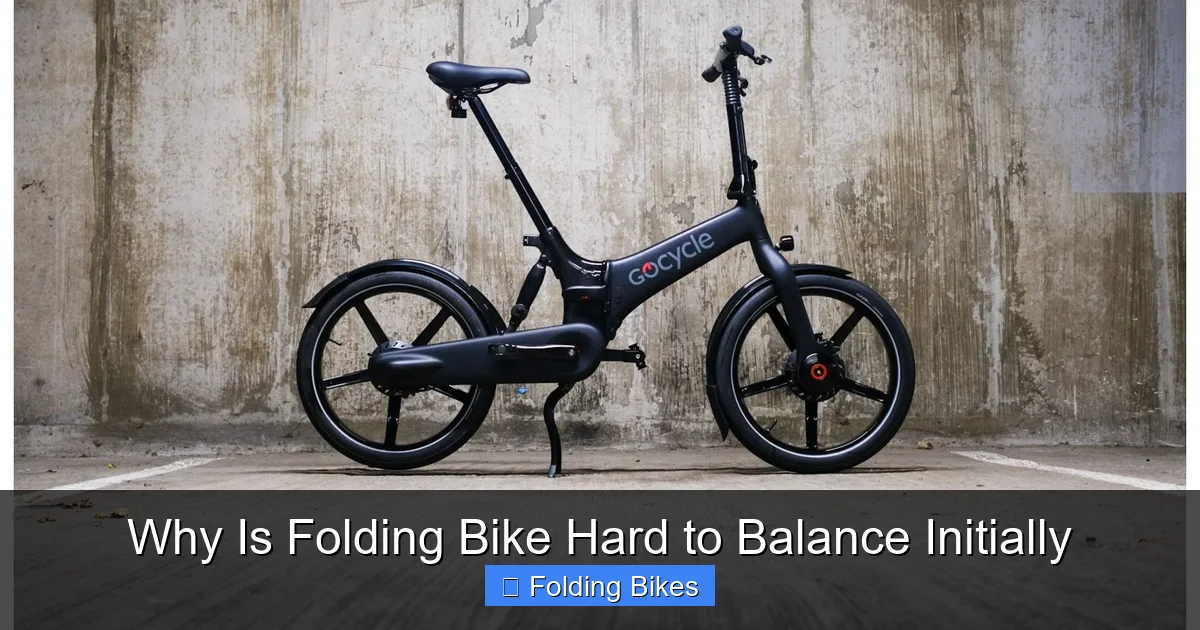
Visual guide about Why Is Folding Bike Hard to Balance Initially
Image source: cdn.mos.cms.futurecdn.net
Folding bikes are built for convenience. They’re lightweight, compact, and can be stored in small spaces—perfect for urban living or travel. But these advantages come with trade-offs that affect how the bike handles, especially when it comes to balance.
Smaller Wheels and Reduced Gyroscopic Effect
One of the biggest reasons folding bikes are harder to balance is their smaller wheels. Most folding bikes use 16” to 20” wheels, compared to the 26” or 700c wheels on standard bikes. Smaller wheels have less mass and rotate more slowly, which reduces the gyroscopic effect—the natural stability that spinning wheels provide.
Imagine spinning a top: the faster it spins, the more stable it becomes. The same principle applies to bike wheels. Larger wheels spin with more momentum, helping keep the bike upright. Smaller wheels don’t generate as much of this stabilizing force, so the bike feels twitchier and more responsive to small movements.
Shorter Wheelbase and Compact Geometry
Folding bikes have a shorter distance between the front and rear wheels—known as the wheelbase. This compact design makes them highly maneuverable in tight spaces, but it also means the bike reacts faster to steering inputs. A slight turn of the handlebars can shift your balance more dramatically than on a full-sized bike.
Additionally, the frame geometry is often more upright, which changes how your weight is distributed. This can feel unfamiliar if you’re used to leaning forward on a road or mountain bike.
Lightweight Frame and Sensitivity to Movement
To make folding bikes easy to carry, manufacturers use lightweight materials like aluminum or carbon fiber. While this helps with portability, it also means the bike is more sensitive to bumps, wind, and rider movements. A heavier bike tends to plow through minor disturbances, but a light folding bike will react more noticeably.
This sensitivity can make the bike feel “nervous” at low speeds, especially when starting from a stop or riding on uneven surfaces.
Common Challenges Riders Face
Now that you understand the design factors, let’s look at the real-world challenges new folding bike riders often encounter.
Difficulty Starting and Stopping
Starting from a standstill is one of the hardest parts of riding a folding bike. Because the bike is light and the wheels are small, it’s easy to tip over if you don’t shift your weight correctly. Many beginners struggle with timing their pedal stroke and body position, leading to wobbles or falls.
Similarly, stopping can be tricky. The short wheelbase means the bike stops more abruptly, and if your weight is too far back, the front wheel can lift or the bike can skid.
Wobbling at Low Speeds
At speeds under 8 mph, folding bikes can develop a side-to-side wobble, especially if the wheels aren’t perfectly aligned or the tires are underinflated. This is often mistaken for a mechanical issue, but it’s usually a combination of design and rider technique.
Feeling Unstable on Bumps or Slopes
Because the frame is compact and the suspension (if any) is minimal, folding bikes transmit more road vibrations to the rider. Hitting a pothole or riding uphill can feel jarring and destabilizing, especially if you’re not used to the bike’s responsiveness.
Step-by-Step: How to Improve Balance on a Folding Bike
The good news? With practice and the right techniques, you can master your folding bike’s balance. Here’s how.
1. Check Tire Pressure Regularly
Proper tire inflation is one of the easiest ways to improve stability. Underinflated tires increase rolling resistance, reduce responsiveness, and make the bike more prone to wobbling. Overinflated tires, on the other hand, reduce grip and comfort.
Use a reliable pump to check your tire pressure before every ride. Most folding bikes recommend a pressure between 60–80 PSI, but always check the sidewall of your tires for the exact range. If you don’t have a pump handy, learn how to inflate bike tires without a pump using portable CO2 cartridges or hand pumps.
2. Practice Proper Starting and Stopping
To start smoothly:
– Stand over the bike with one foot on the ground and the other on a pedal in the 2 o’clock position.
– Push down on the pedal while leaning slightly forward to shift your weight over the rear wheel.
– Keep your head up and look ahead—not down at the pedals.
To stop safely:
– Gradually apply both brakes (front brake provides more stopping power, but use it gently).
– Shift your weight back slightly to prevent the front wheel from lifting.
– Put your dominant foot down first when coming to a complete stop.
Practice these motions in a quiet, flat area like a parking lot or empty bike path.
3. Adjust Your Riding Posture
Your body position plays a big role in balance. Keep your back straight, elbows slightly bent, and shoulders relaxed. Avoid gripping the handlebars too tightly—this can make the bike feel jerky.
Lean slightly forward when accelerating and shift back when braking. This helps maintain a balanced center of gravity.
4. Ride at a Steady, Moderate Speed
Folding bikes are most stable at moderate speeds—around 10–15 mph. At very low speeds, they’re more prone to tipping. At high speeds, crosswinds and road imperfections can feel more intense.
Try to maintain a consistent pace, especially in traffic or on uneven terrain. Avoid sudden accelerations or sharp turns until you’re more confident.
5. Perform Regular Maintenance
A well-maintained bike handles better. Check these components regularly:
– **Wheel alignment:** If your wheels wobble, they may be out of true. Learn how to fix bike wheel wobble or take it to a shop.
– **Bearings:** Loose or worn wheel bearings can cause instability. Use our guide on how to check bike wheel bearings to inspect them.
– **Frame locks:** Ensure all folding mechanisms are securely locked before riding. A loose hinge can make the bike feel unsafe.
6. Use the Right Accessories
Invest in a good-quality folding bike pump to keep your tires properly inflated. A compact pump like the ones reviewed in our best folding bike pump guide ensures you’re never caught with flat tires.
Also, consider adding reflective tape or lights if you ride in low-light conditions. Better visibility helps you react faster to obstacles, improving overall control.
Troubleshooting Common Balance Issues
Even with good technique, you might still face challenges. Here’s how to address them.
Bike Feels Wobbly at Low Speeds
This is usually due to tire pressure or wheel alignment. Check your tire pressure first. If it’s correct, inspect the wheels for wobbling. Spin each wheel and watch for side-to-side movement. If you see any, refer to our guide on how to fix bike wheel wobble.
Difficulty Balancing When Carrying Loads
Folding bikes aren’t designed for heavy loads. If you’re carrying a backpack or panniers, make sure the weight is evenly distributed. Avoid overloading the rear rack—this shifts your center of gravity and makes the bike harder to control. For tips, see how to balance weight on bike rack.
Bike Feels Unstable on Hills
Climbing hills on a folding bike requires good technique. Shift to a lower gear before the incline, keep your weight centered, and pedal smoothly. If the bike feels like it’s tipping backward, lean slightly forward over the handlebars.
Conclusion
Folding bikes are harder to balance initially because of their small wheels, compact frames, and lightweight design. These features make them incredibly portable but also more sensitive to rider input and road conditions. However, with the right techniques—proper tire pressure, good posture, regular maintenance, and practice—you can overcome these challenges and enjoy a smooth, confident ride.
Remember, every new bike feels unfamiliar at first. Give yourself time to adapt, and don’t be discouraged by early wobbles. With patience and the tips in this guide, you’ll soon be navigating city streets and bike paths with ease.



