
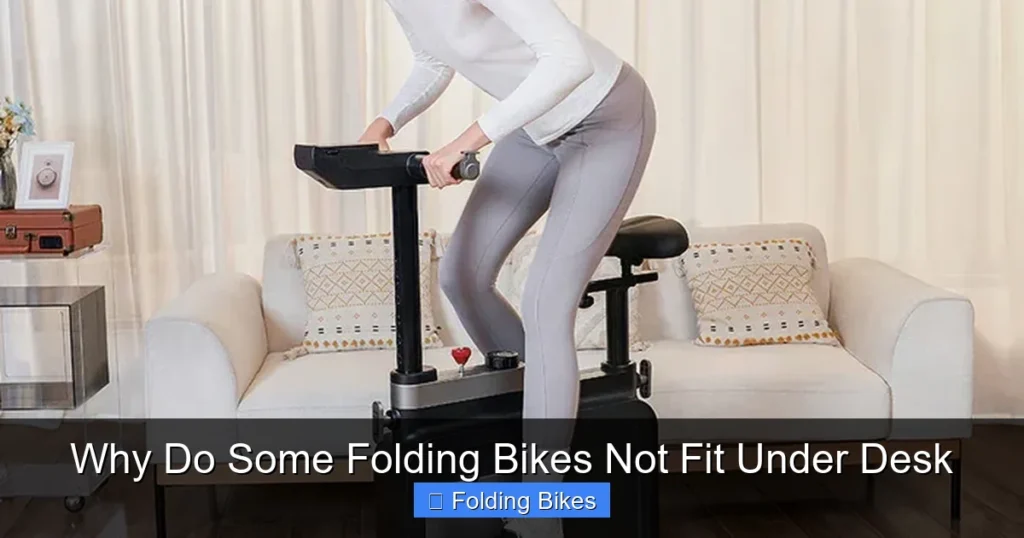
Not all folding bikes are created equal—especially when it comes to fitting under a desk. This guide explains the design, size, and storage factors that prevent some models from sliding neatly beneath your workspace, and offers practical tips to help you pick a truly desk-friendly foldable bike.
Key Takeaways
- Bike dimensions matter: Wheel size, folded height, and handlebar width all affect whether a bike fits under a standard desk.
- Folding mechanism impacts clearance: Some designs leave protruding parts like pedals or handlebars that block under-desk storage.
- Desk height is a limiting factor: Most office desks are 28–30 inches high, so bikes over 26 inches tall won’t fit comfortably.
- Weight and balance influence maneuverability: Heavier bikes are harder to slide in and out, even if they technically fit.
- Accessories can interfere: Rear racks, fenders, or baskets may add bulk that prevents under-desk storage.
- Smart storage alternatives exist: Wall mounts, rolling stands, or compact bike bags offer solutions when under-desk space isn’t an option.
- Test before you buy: Always check folded dimensions and, if possible, test the bike in your actual workspace.
Why Do Some Folding Bikes Not Fit Under Desk?
If you’re considering a folding bike for city commuting or office use, you’ve probably imagined the convenience of stashing it neatly under your desk at work. But here’s the reality: not every folding bike actually fits under a standard desk. Despite their compact claims, many models fall short—literally—when it comes to under-desk storage.
In this guide, we’ll break down exactly why some folding bikes don’t fit under desks, what design features cause the problem, and how you can avoid buying a bike that ends up taking up valuable floor space. You’ll also learn smart alternatives for storing your bike when under-desk space isn’t an option.
By the end, you’ll know how to choose a truly desk-friendly folding bike—or find a creative workaround that keeps your ride close without cluttering your workspace.
Understanding Standard Desk Dimensions
Before blaming the bike, let’s look at the desk. Most office desks—especially in corporate or shared workspaces—have a standard height of 28 to 30 inches (71 to 76 cm) from the floor to the underside of the desktop. This clearance is what determines whether a folded bike can slide underneath.
Some modern or adjustable desks may offer more space, but many cubicles and fixed-height desks stick to this range. That means any folded bike taller than about 26 inches (66 cm) will likely bump into the desk or not fit at all.
Additionally, desk legs, crossbars, and cable trays can reduce usable space. Even if a bike is short enough, these obstacles may block it from sliding all the way in.
Key Bike Design Factors That Affect Under-Desk Fit
Not all folding bikes are designed with under-desk storage in mind. Several engineering choices directly impact whether your bike will tuck away neatly.
1. Folded Height and Overall Dimensions
The most obvious factor is the bike’s folded height. While many brands advertise “compact” folding, they often focus on length and width—not height. A bike might fold down to 30 inches long but still stand 28 inches tall, making it too tall for most desks.
For example, the popular Brompton M6L folds to about 28.5 x 58.5 x 26 inches (H x W x L). While compact in length, its 28.5-inch height means it won’t fit under a standard 28-inch desk without tilting or removing wheels.
2. Wheel Size
Smaller wheels generally mean a lower folded profile. Bikes with 16-inch or 20-inch wheels (like the Dahon Mariner D8 or Tern Link D8) tend to fold flatter than those with 24-inch or 26-inch wheels.
Larger wheels improve ride quality and stability but increase the bike’s overall height when folded. If under-desk storage is a priority, opt for models with 20-inch wheels or smaller.
3. Folding Mechanism and Protruding Parts
How a bike folds matters just as much as its final size. Some designs leave parts sticking out:
– Handlebars that don’t tuck fully: Many bikes fold the handlebars down, but if they don’t collapse completely or swing out sideways, they can extend beyond the bike’s main body.
– Pedals that don’t fold: Non-folding pedals add width and can catch on desk legs.
– Seatpost that remains extended: Some bikes don’t allow the seatpost to drop low enough, increasing height.
Bikes with integrated folding pedals and low-profile handlebars (like the Brompton or Birdy) perform better in tight spaces.
4. Accessories and Add-Ons
Even a perfectly sized bike can fail the under-desk test if it’s loaded with gear. Common accessories that interfere include:
– Rear racks (like those discussed in our guide to the best rack for hybrid bikes)
– Front or rear baskets
– Fenders or mudguards
– Battery packs on electric models
These add bulk and can prevent the bike from sliding fully under the desk. If you need accessories, consider removable ones or models with built-in, low-profile mounts.
Weight and Maneuverability: The Hidden Challenge
Even if a bike fits under your desk, its weight and balance affect how easily you can move it in and out. A heavy bike (over 30 lbs) may be too awkward to slide smoothly, especially if you’re doing it multiple times a day.
Lightweight aluminum frames help, but some ultra-compact models sacrifice durability for weight savings. Aim for a balance—under 28 lbs is ideal for easy handling.
Also consider wheel type: bikes with built-in roller wheels (like the Brompton) make it easier to roll the bike in and out without lifting.
Desk Layout and Workplace Constraints
Your workspace setup plays a big role. Open-plan offices with clear floor space are ideal, but many workplaces have:
– Desk legs that narrow the opening
– Cable management trays underneath
– Shared aisles with limited clearance
– Security policies that restrict bike storage
In these cases, even a perfectly sized bike might not be practical. Always assess your specific environment before committing to under-desk storage.
How to Choose a Bike That Fits Under Your Desk
Follow these steps to find a folding bike that truly works for your workspace.
Step 1: Measure Your Desk Clearance
Use a tape measure to check the height from the floor to the bottom of your desk. Also measure the width between desk legs and any obstacles. Note these numbers—they’re your storage limits.
Step 2: Check the Bike’s Folded Dimensions
Look beyond marketing claims. Find the exact folded dimensions (height, width, length) in the product specs. Prioritize height—it’s the most critical for under-desk fit.
Step 3: Prioritize Compact Folding Features
Choose bikes with:
– 16″ or 20″ wheels
– Fully folding pedals
– Low-rise handlebars that tuck tightly
– Seatposts that drop below the frame
Models like the Brompton, Tern Link C7, or Dahon Mu EX are known for their compact folds.
Step 4: Test Before You Buy (If Possible)
If you can, visit a local bike shop and bring a tape measure. Fold the bike and simulate sliding it under a desk. Better yet, bring a photo of your workspace to compare proportions.
Step 5: Consider Alternatives If It Doesn’t Fit
If no folding bike fits your desk, don’t despair. Explore other storage options:
– Wall-mounted racks: Keep the bike off the floor and out of the way. Our guide on how to fit a rack on a small bike frame offers useful tips.
– Rolling bike stands: These let you wheel the bike into a corner or storage closet.
– Bike storage bags with wheels: Some models, like the best folding bike pump compatible bags, include built-in wheels for easy transport.
Troubleshooting Common Under-Desk Storage Issues
Even with the right bike, you might run into problems. Here’s how to solve them.
Problem: Bike is too tall
Solution: Remove the front wheel (if quick-release) or tilt the bike diagonally. Some riders also lower the seatpost all the way and remove it temporarily.
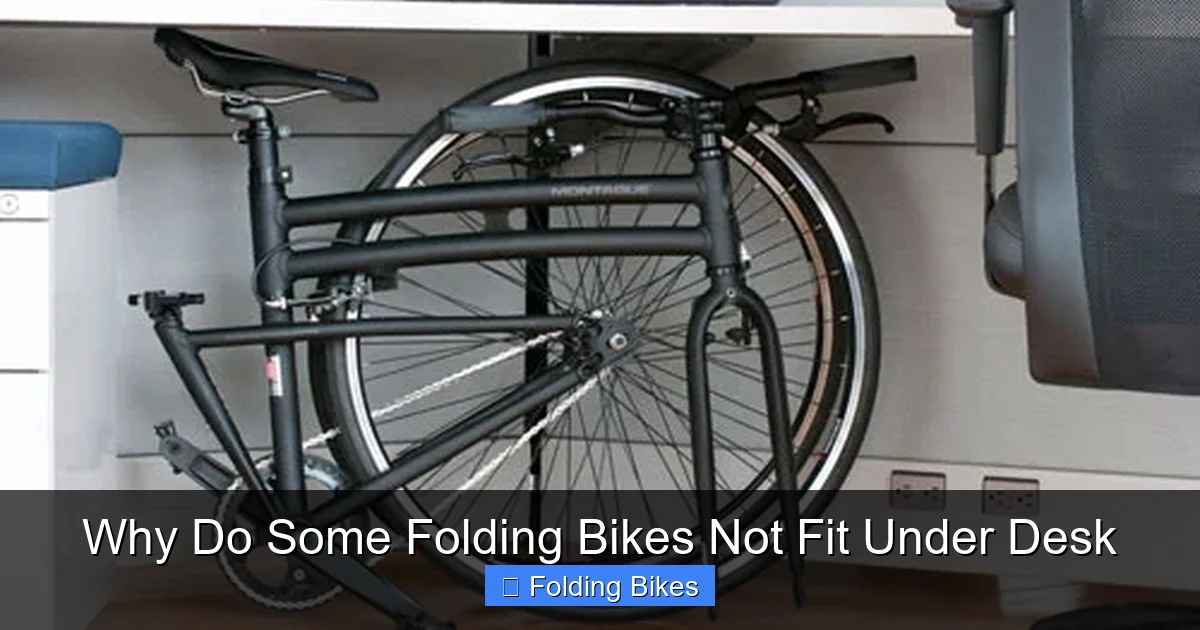
Visual guide about Why Do Some Folding Bikes Not Fit Under Desk
Image source: montague-bikes.de
Problem: Handlebars hit the desk
Solution: Rotate the handlebars 90 degrees before folding, if the design allows. Or choose a model with telescoping or fully collapsing bars.
Problem: Pedals catch on desk legs
Solution: Use folding pedals or remove them during storage. Practice a smooth sliding motion to avoid snags.
Problem: Bike won’t stay put
Solution: Use a small bungee cord or Velcro strap to secure it to a desk leg. Avoid blocking walkways or emergency exits.
Final Thoughts: Smart Storage Starts with Smart Choices
Just because a bike folds doesn’t mean it fits under your desk. Wheel size, folding design, accessories, and desk height all play a role. By understanding these factors, you can avoid the frustration of a bike that looks compact but doesn’t deliver on convenience.
Remember: the best folding bike for your commute is one that fits your lifestyle—not just your garage. If under-desk storage is essential, prioritize height and maneuverability. If not, explore creative alternatives that keep your ride accessible without sacrificing space.
With the right bike and a little planning, you can enjoy the freedom of folding bikes—without tripping over them at work.



