
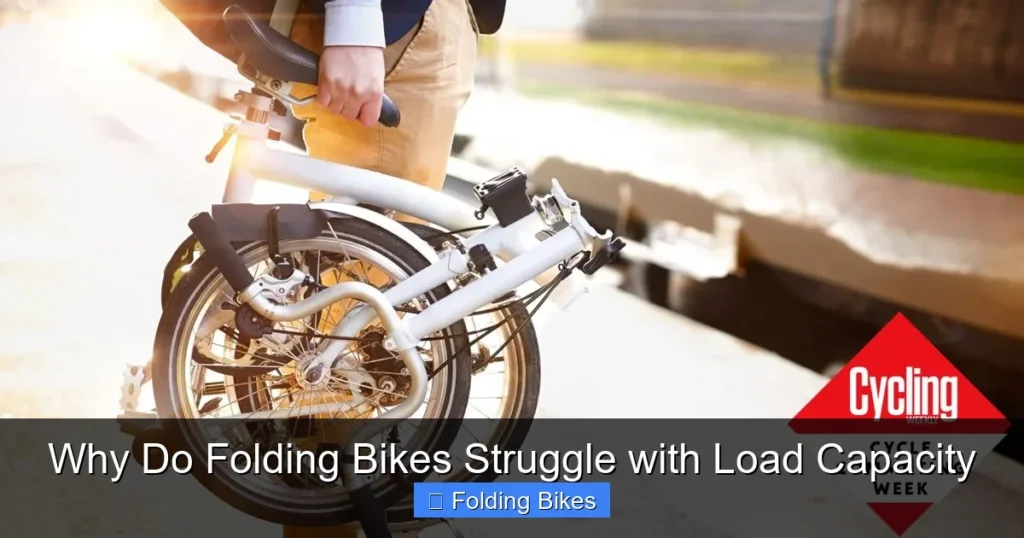
Folding bikes are built for portability, not heavy loads. Their compact frames, small wheels, and hinged joints limit how much weight they can safely carry. This guide explains the engineering trade-offs and offers practical solutions.
Key Takeaways
- Compact frame design reduces structural strength: Folding mechanisms and smaller tubing weaken the frame, limiting how much weight it can support without flexing or failing.
- Small wheels struggle with heavy loads: Smaller wheels have less contact area and reduced shock absorption, making them less stable under extra weight.
- Hinges and joints create weak points: Folding hinges, even when locked, aren’t as rigid as solid frames, increasing the risk of flex or failure under load.
- Weight distribution is harder to manage: Adding cargo to a folding bike shifts the center of gravity, affecting balance and handling, especially at speed.
- Manufacturers set conservative load limits: Most folding bikes are rated for 220–275 lbs total, including rider and gear—lower than standard bikes.
- Proper accessories help but have limits: Racks, panniers, and reinforced frames can improve capacity, but pushing beyond design limits risks safety.
- E-folding bikes offer better options: Electric folding bikes often have stronger frames and higher weight ratings, making them better for carrying gear.
Introduction: Why Load Capacity Matters on Folding Bikes
Folding bikes are perfect for city commuters, travelers, and apartment dwellers who need a bike that stows easily. But if you’re planning to carry groceries, a laptop, or camping gear, you might notice your folding bike feels shaky or sluggish. That’s not just in your head—folding bikes are inherently limited in how much weight they can safely carry.
In this guide, you’ll learn exactly why folding bikes struggle with load capacity. We’ll break down the engineering compromises behind their compact design, explain how weight affects performance, and share smart tips to carry more without risking safety. Whether you’re commuting with a backpack or planning a weekend trip, understanding these limits helps you ride smarter and safer.
1. The Frame: Built for Portability, Not Payload
The biggest reason folding bikes can’t handle heavy loads is their frame design. Unlike traditional bikes with solid, continuous tubing, folding bikes use hinges, clamps, and smaller-diameter tubes to allow compact folding.
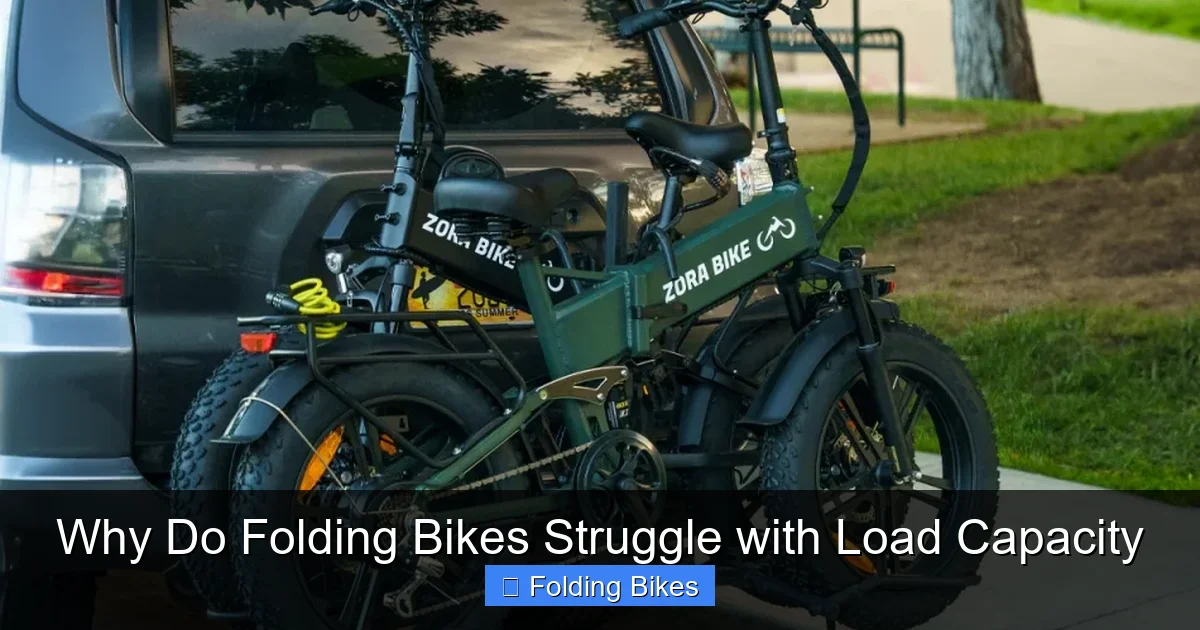
Visual guide about Why Do Folding Bikes Struggle with Load Capacity
Image source: birdzpedia.com
Hinges Create Structural Weak Points
Every folding bike has at least one main hinge—usually near the middle of the frame—that lets the bike fold in half. Even when locked, these hinges aren’t as rigid as a solid frame. Under heavy loads, especially when hitting bumps or accelerating, the frame can flex. This flexing reduces control and, over time, can lead to metal fatigue or hinge failure.
Smaller Tubing = Less Strength
To save weight and space, folding bikes use slimmer frame tubes. While this helps with portability, it reduces the frame’s ability to resist bending and torsional stress. A standard road bike frame might use 30–35mm diameter tubing, while many folding bikes use 20–25mm. That’s a significant drop in structural strength.
Example: Comparing Frame Load Limits
Consider the popular Brompton folding bike. It has a maximum load capacity of 220 lbs (100 kg), including the rider. In contrast, a typical hybrid bike can handle 300+ lbs. That’s a 35% difference—just because of frame design.
2. Small Wheels: Stability and Shock Absorption Trade-Offs
Most folding bikes use 16″ or 20″ wheels to keep the folded size small. While great for storage, these wheels come with performance compromises when loaded.
Reduced Contact Patch and Traction
Smaller wheels have a shorter contact patch with the ground. When you add weight—say, a 20-lb backpack and a front basket—the tires compress more, reducing grip. This makes the bike feel less stable, especially on wet or uneven surfaces.
Poorer Shock Absorption
Small wheels can’t roll over bumps as easily as larger ones. Under load, every pothole or crack transmits more shock to the frame and rider. This not only makes the ride uncomfortable but also increases stress on the frame and joints.
Tip: Upgrade Your Tires
Switching to wider, puncture-resistant tires (like 1.75″ or 2.0″) can improve grip and comfort. Just make sure your frame and fenders have clearance. For example, some 20″ folding bikes can fit wider tires if you remove the stock fenders—check your model’s specs.
3. Weight Distribution: The Hidden Challenge
Even if your folding bike can technically support the weight, where you put that weight matters a lot. Poor distribution can make the bike hard to steer or prone to tipping.
Front vs. Rear Loading
Loading the front basket might seem convenient, but it shifts weight forward, reducing rear wheel traction. This can cause the back wheel to skid during braking. Rear racks are generally safer, but on a folding bike, the rear triangle is often smaller and less reinforced.
High vs. Low Cargo Placement
Placing heavy items high up (like on a tall rack) raises the center of gravity, making the bike feel tippy in turns. Always pack heavy items low and centered over the rear wheel.
Practical Tip: Use Panniers, Not Backpacks
Carrying weight on your back transfers stress to your body, not the bike—but it also affects balance. Using rear panniers keeps weight on the bike and low to the ground. For folding bikes, look for lightweight, narrow panniers that don’t interfere with the fold. The Best Rear Basket for Bikes guide offers great options that work well with compact frames.
4. Manufacturer Load Ratings: Don’t Ignore the Fine Print
Every folding bike comes with a maximum load rating—usually found in the manual or on the manufacturer’s website. These ratings include the rider, clothing, and all gear.
Typical Load Limits
- Brompton: 220 lbs (100 kg)
- Tern Link series: 275 lbs (125 kg)
- Dahon Mariner: 250 lbs (113 kg)
Compare that to a standard mountain bike, which often rates for 300+ lbs. Even some folding mountain bikes designed for bikepacking top out around 275–300 lbs.
Why Are Limits So Low?
Manufacturers set conservative limits to account for real-world conditions: potholes, sudden stops, uneven terrain. Exceeding the limit voids warranties and increases the risk of frame or component failure.
5. How to Safely Increase Load Capacity
You don’t have to give up on carrying gear—just do it smartly. Here’s how to maximize your folding bike’s load potential without compromising safety.
Use a Reinforced Rear Rack
Standard racks may not be strong enough. Look for racks specifically designed for folding bikes, with extra bracing and high weight ratings (30–40 lbs). The Best Rack with Integrated Lock is a great choice—it’s sturdy and adds security.
Distribute Weight Evenly
Use two panniers instead of one heavy bag. Balance the load side-to-side and front-to-back. A well-balanced bike handles better and reduces stress on the frame.
Upgrade Your Seatpost and Stem
Some folding bikes use lightweight aluminum seatposts that can bend under heavy loads. Consider upgrading to a steel or reinforced aluminum post. Similarly, a sturdy stem improves front-end stability.
Check Your Tire Pressure
Underinflated tires sag under weight, increasing rolling resistance and pinch-flat risk. Always inflate to the recommended PSI—usually printed on the tire sidewall. For loaded rides, aim for the higher end of the range.
Consider an Electric Folding Bike
E-folding bikes like the RadPower RadMini or Tern Vektron have stronger frames and higher load capacities (often 300+ lbs). The motor also helps with acceleration and climbing, reducing strain on the frame. Check out our guide on Best Electric Bikes for City Commuting for top picks.
Troubleshooting Common Load-Related Issues
Even with precautions, you might run into problems. Here’s how to spot and fix them.
Bike Feels Wobbly or Flexes
Cause: Frame or hinge flex under load.
Solution: Reduce cargo weight. Check that all folding locks are fully engaged. Avoid sudden accelerations or hard braking.
Rear Wheel Skids When Braking
Cause: Too much weight on the front or rear wheel losing traction.
Solution: Shift weight to the rear. Use rear panniers instead of a front basket. Practice gradual braking.
Rack or Panniers Interfere with Folding
Cause: Poorly designed accessories.
Solution: Choose low-profile racks and panniers. Some racks fold or detach for storage. The How to Prevent Load Shifting on Bike Rack guide offers tips for secure, fold-friendly setups.
Conclusion: Ride Smart, Not Heavy
Folding bikes are engineering marvels—compact, convenient, and perfect for urban life. But their design prioritizes portability over payload. Understanding why they struggle with load capacity helps you make safer, smarter choices.
By respecting weight limits, using the right accessories, and distributing cargo wisely, you can carry what you need without risking damage or accidents. Whether you’re commuting with a laptop or packing for a weekend trip, a little planning goes a long way. And if you regularly carry heavy loads, consider upgrading to a stronger e-folding bike or a dedicated cargo model.
Remember: a folding bike’s strength isn’t in how much it can carry—it’s in how easily it fits into your life.



