
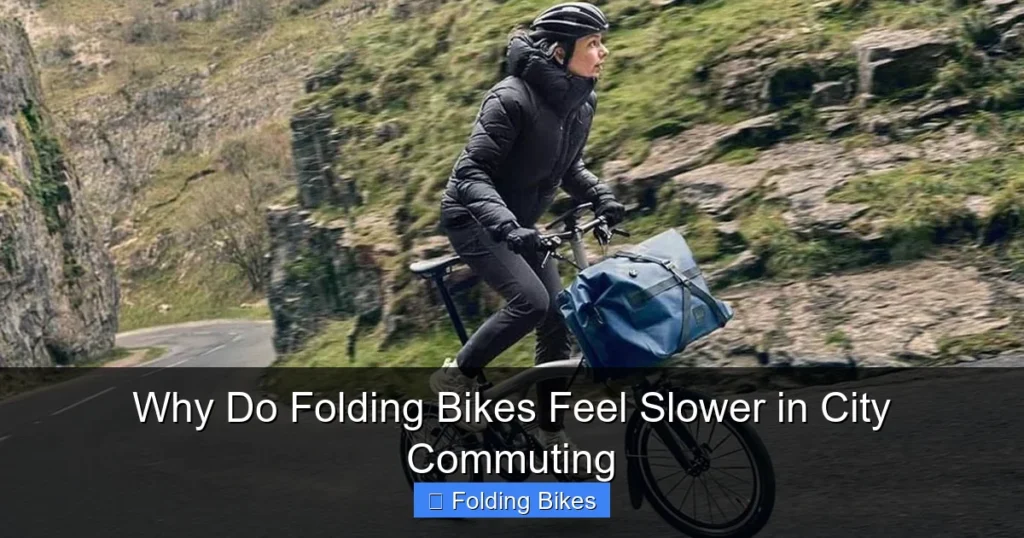
Folding bikes often feel slower in city commuting due to smaller wheels, upright geometry, and weight distribution. This guide explains the key factors behind that sensation and offers actionable solutions to improve your ride.
Key Takeaways
- Smaller wheels increase rolling resistance: Folding bikes typically use 16″ to 20″ wheels, which require more rotations to cover the same distance as larger wheels, making them feel sluggish on smooth pavement.
- Upright riding position creates wind drag: The relaxed posture common on folding bikes increases frontal area, reducing aerodynamics—especially noticeable at higher speeds or in windy conditions.
- Heavier frame and components add inertia: The folding mechanism and reinforced joints add weight, making acceleration slower and reducing responsiveness in stop-and-go traffic.
- Lower gear ratios limit top speed: Many folding bikes come with compact drivetrains optimized for climbing, not speed, which can leave you spinning out on flat stretches.
- Tire pressure and tread matter more than you think: Underinflated or knobby tires drastically reduce efficiency—switching to high-pressure, slick tires can make a noticeable difference.
- Proper fit and setup improve perceived speed: Adjusting saddle height, handlebar angle, and even adding a rear rack can enhance comfort and control, making the bike feel faster.
- Electric assist can bridge the gap: Adding a conversion kit or choosing an e-folding bike significantly boosts speed and reduces fatigue in urban environments.
Why Do Folding Bikes Feel Slower in City Commuting?
If you’ve ever ridden a folding bike through city streets, you’ve probably noticed it doesn’t zip along like a road bike or even a standard hybrid. Instead, it feels… slower. Not broken—just not as quick or responsive as you’d expect. This isn’t just in your head. There are real engineering and design reasons why folding bikes often feel less speedy during urban commutes.
In this guide, we’ll break down the main factors contributing to that “slow” sensation, explain how each one affects your ride, and give you practical, actionable tips to make your folding bike feel faster, smoother, and more efficient—without sacrificing its compact convenience.
Whether you’re navigating crowded sidewalks, dodging potholes, or racing to catch a train, understanding these dynamics will help you get the most out of your folding bike.
Understanding the Physics Behind the “Slow” Feeling
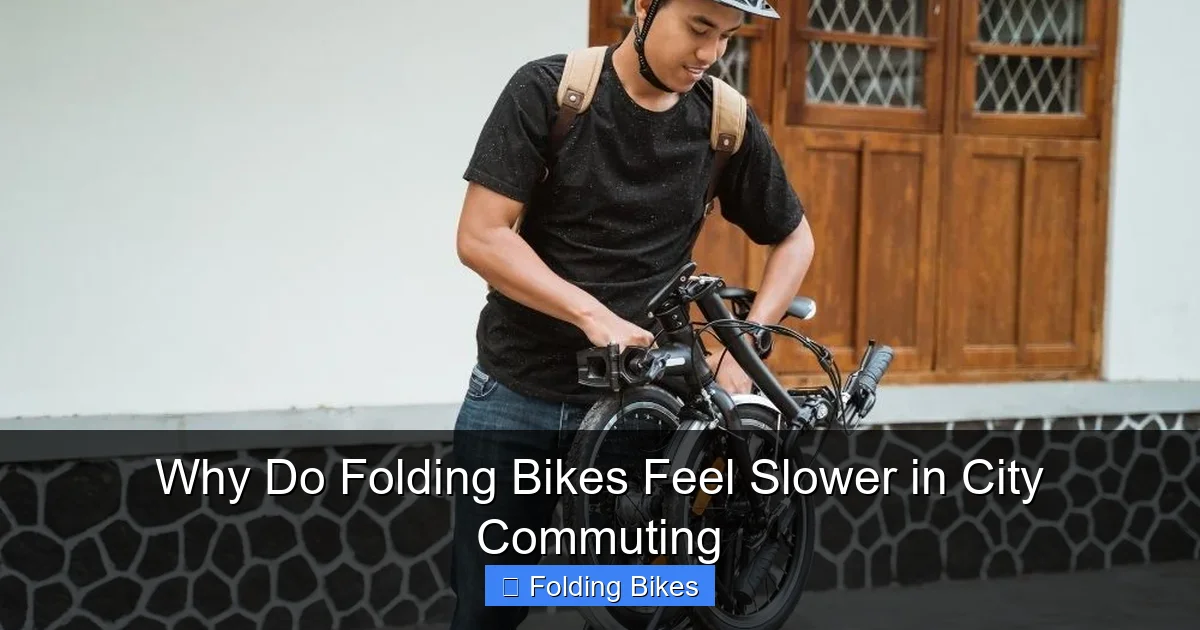
Visual guide about Why Do Folding Bikes Feel Slower in City Commuting
Image source: discerningcyclist.com
Before we dive into fixes, let’s look at why folding bikes feel slower in the first place. It’s not that they’re poorly made—many are excellent machines. But their design priorities differ from traditional commuter bikes.
Folding bikes are built for portability, compactness, and versatility. That means they often trade off some speed and efficiency to achieve those goals. Here’s how:
1. Smaller Wheels = More Rolling Resistance
Most folding bikes use wheels between 16 and 20 inches in diameter—much smaller than the 26″ or 700c wheels on standard bikes. While smaller wheels make the bike easier to fold and store, they also increase rolling resistance.
Every time your wheel hits a bump, crack, or seam in the pavement, a smaller wheel has to “climb” over it more abruptly. This constant micro-adjustment wastes energy and slows you down. On smooth roads, the difference is subtle. But in cities—where manhole covers, tram tracks, and uneven sidewalks are common—the effect adds up.
2. Upright Geometry Increases Wind Drag
Folding bikes are designed for comfort and ease of use, which usually means an upright riding position. Your back is straighter, your hands are higher, and your torso is more vertical.
While this is great for visibility and reducing strain on your neck and wrists, it also increases your frontal area—the amount of your body exposed to wind. Even at moderate speeds (15–20 mph), aerodynamic drag becomes a major force slowing you down. On a road bike, you tuck in. On a folding bike, you’re basically a sail.
3. Added Weight from Folding Mechanisms
The hinges, latches, and reinforced joints that allow a bike to fold add weight. A typical folding bike weighs between 25 and 30 pounds—significantly more than a lightweight road bike (15–18 lbs) or even many hybrids.
Extra weight means more inertia. It takes more effort to accelerate from a stop, and you lose momentum faster when coasting. In city commuting, where you’re constantly stopping at lights and intersections, this weight penalty is especially noticeable.
4. Gear Ratios Favor Climbing, Not Speed
Many folding bikes come with compact drivetrains—small chainrings and limited gear ranges. These are great for tackling hills or carrying loads, but they often lack the high gears needed to maintain speed on flat terrain.
You might find yourself spinning your legs rapidly just to keep up with traffic, only to “spin out” (reach maximum cadence) before reaching a comfortable cruising speed. This makes the bike feel underpowered, even if you’re pedaling hard.
How to Make Your Folding Bike Feel Faster
The good news? You don’t need to buy a new bike to fix these issues. With a few smart upgrades and adjustments, you can dramatically improve your folding bike’s performance in the city.
Step 1: Upgrade Your Tires
One of the easiest and most effective upgrades is switching to high-pressure, slick tires.
– Why it works: Knobby or low-pressure tires create more friction with the road. Slick tires reduce rolling resistance, and higher pressure (within the tire’s recommended range) minimizes deformation, letting you roll faster with less effort.
– What to look for: Choose tires labeled “urban,” “commuter,” or “slick.” Aim for a pressure rating of 65–100 PSI, depending on your weight and tire size.
– Example: The Best Tires For Commuting guide recommends models like the Schwalbe Marathon Plus or Continental Contact Urban for durability and low rolling resistance.
Step 2: Inflate Tires to the Correct Pressure
Even the best tires won’t help if they’re underinflated. Check your tire pressure weekly—city riding wears down air faster due to frequent stops and starts.
– Use a reliable floor pump with a pressure gauge.
– Inflate to the maximum PSI listed on the tire sidewall (unless you’re carrying a heavy load, in which case adjust slightly lower for comfort).
– A Best Folding Bike Pump is a great investment for on-the-go top-ups.
Step 3: Adjust Your Riding Position
You can’t fully tuck like on a road bike, but small changes help.
– Lower the handlebars slightly (if adjustable) to reduce your frontal profile.
– Slide your saddle forward to tilt your torso slightly downward.
– Keep elbows slightly bent to absorb bumps without locking your arms.
These tweaks won’t make you aerodynamic, but they’ll reduce drag and improve control.
Step 4: Optimize Your Gearing
If your bike feels sluggish on flats, consider a gear upgrade.
– Swap to a larger chainring (if compatible) for higher top-end speed.
– Install a wider-range rear cassette to give you both low gears for hills and high gears for speed.
– For extreme cases, consider an internal gear hub (like a Shimano Nexus or Rohloff), which offers smooth, wide-ranging gearing in a compact package.
Step 5: Reduce Weight Where Possible
Every pound counts in city riding.
– Remove unnecessary accessories (heavy baskets, thick locks, etc.).
– Use a lightweight lock like a folding lock—check out How To Use A Folding Lock for secure, portable options.
– Replace heavy components (e.g., steel fenders with aluminum ones).
Step 6: Consider Electric Assist
If you’re still struggling, an electric conversion kit or an e-folding bike can transform your commute.
– Mid-drive or hub motors provide smooth, powerful assistance.
– You’ll maintain higher speeds with less effort, especially on hills or into headwinds.
– For recommendations, see our guide on the Best Electric Bikes For City Commuting, which includes several folding models.
Troubleshooting Common Issues
Even with upgrades, you might still notice sluggishness. Here’s how to diagnose and fix common problems:
Bike Feels Heavy to Accelerate?
– Check tire pressure—low pressure is the #1 culprit.
– Inspect wheel bearings—grit or wear can create drag.
– Ensure the chain is clean and lubricated.
Hard to Maintain Speed on Flats?
– You may need higher gears. Consider a gear upgrade or e-assist.
– Check for brake rub—misaligned brakes can slow you down without you noticing.
Uncomfortable at Higher Speeds?
– Your frame may be too small or the geometry too upright.
– Try a shorter stem or adjustable handlebars to fine-tune your position.
Final Thoughts: Speed Is Relative
Let’s be honest—folding bikes aren’t built to win races. They’re built to fit under your desk, hop on a train, or stash in a closet. But that doesn’t mean they can’t be fast, efficient, and fun for city commuting.
By understanding why they feel slower—and taking steps to address those factors—you can turn your folding bike into a nimble, responsive urban machine. Focus on tires, pressure, gearing, and aerodynamics, and you’ll be surprised how much faster your ride becomes.
Remember: speed isn’t just about how fast you go. It’s about how smoothly, comfortably, and confidently you get where you’re going. And with the right setup, your folding bike can do all three.



