
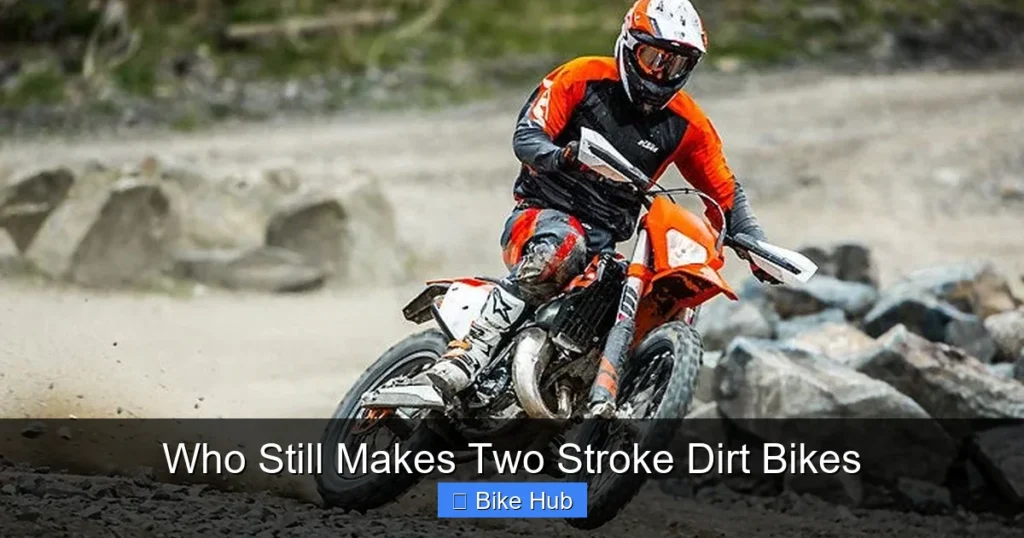
Two stroke dirt bikes are still alive and kicking, with several major manufacturers continuing to produce high-performance models. This guide reveals who makes them, why they’re worth riding, and how to choose the right one for your needs.
Key Takeaways
- KTM, Husqvarna, and GasGas still produce new two stroke dirt bikes: These European brands offer competitive, race-ready 2-stroke models in 2024.
- Yamaha and Kawasaki have discontinued most 2-strokes: While they once dominated the market, both now focus almost exclusively on 4-stroke engines.
- Two strokes deliver lightweight power and simplicity: Ideal for trail riding, enduro, and motocross due to their high power-to-weight ratio and responsive throttle.
- Used 2-strokes remain popular and affordable: Brands like Suzuki, Honda, and older Yamaha models are widely available secondhand.
- Maintenance is different but manageable: Requires premixing fuel and more frequent top-end rebuilds, but fewer moving parts mean less complexity overall.
- Electric alternatives are emerging: While not 2-strokes, electric dirt bikes offer similar instant torque and low maintenance—worth considering as a modern alternative.
- Choosing the right model depends on riding style: Motocross, enduro, and trail riding each benefit from different 2-stroke engine sizes and setups.
Who Still Makes Two Stroke Dirt Bikes in 2024?
If you’ve been wondering whether two stroke dirt bikes are extinct, rest assured—they’re not. While the golden era of 2-strokes peaked in the 1990s and early 2000s, these lightweight, high-revving machines never fully disappeared. In fact, a handful of manufacturers continue to build and refine 2-stroke dirt bikes for both competitive racing and recreational trail riding.
In this guide, you’ll learn exactly which brands still produce new two stroke dirt bikes, why they remain a favorite among enthusiasts, and how to pick the right model for your riding style. Whether you’re a seasoned rider or just getting into off-road motorcycling, understanding the current 2-stroke landscape will help you make a smart, informed decision.
Why Two Strokes Are Still Relevant
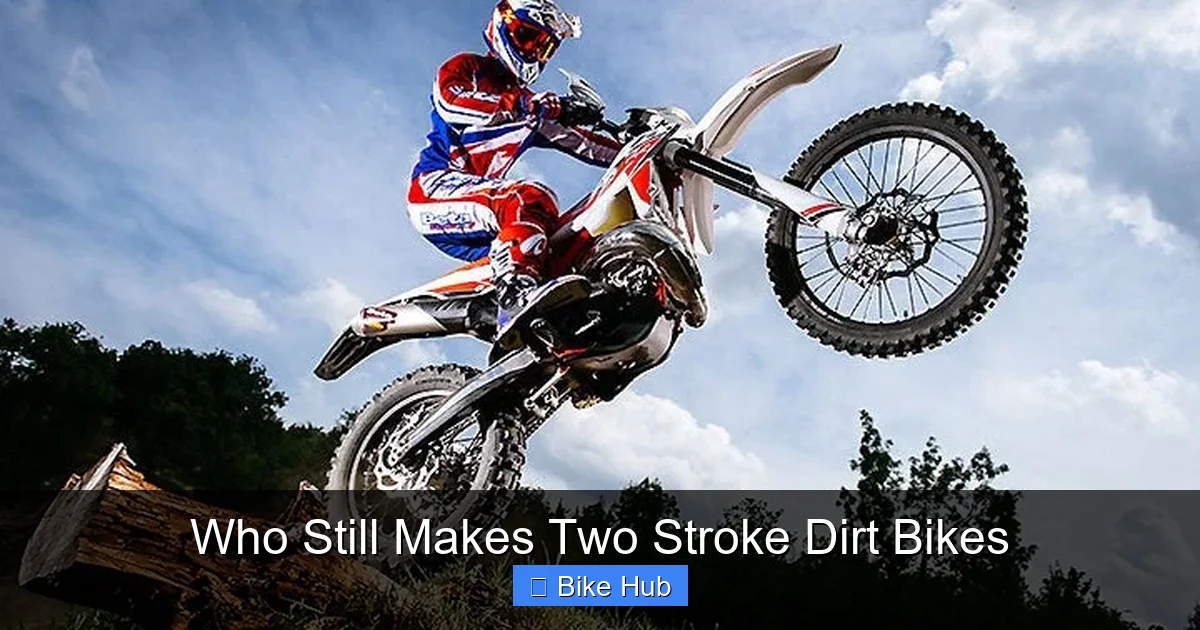
Visual guide about Who Still Makes Two Stroke Dirt Bikes
Image source: dirtbikes.com
Before diving into who makes them, it’s worth asking: Why do two strokes still matter? After all, four strokes have dominated the market for over two decades thanks to their smoother power delivery, better fuel efficiency, and cleaner emissions.
But 2-strokes offer something unique: raw, instant power in a lightweight package. With fewer moving parts, they’re simpler to work on, cheaper to maintain (in some ways), and incredibly fun to ride. They scream through corners, climb steep hills with ease, and respond instantly to throttle input—perfect for aggressive trail riding or motocross.
They also appeal to riders who enjoy hands-on maintenance. Unlike 4-strokes, which often require valve adjustments and complex electronics, 2-strokes are mechanically straightforward. If you like tinkering in the garage, a 2-stroke can be deeply satisfying.
Brands That Still Make New Two Stroke Dirt Bikes
Visual guide about Who Still Makes Two Stroke Dirt Bikes
Image source: dirtbikedynasty.com
As of 2024, only a few manufacturers continue to produce new two stroke dirt bikes. Here’s a breakdown of the key players:
KTM
KTM remains the undisputed leader in modern 2-stroke dirt bikes. The Austrian brand offers a full lineup under its SX (motocross) and EXC (enduro) series. Models like the KTM 250 SX and KTM 300 EXC TPI are legendary for their performance and reliability.
What sets KTM apart? Their TPI (Transfer Port Injection) technology, which eliminates the need for premixing fuel by injecting oil directly into the intake. This makes refueling easier and reduces emissions—without sacrificing that classic 2-stroke feel.
Husqvarna
Husqvarna, now under the same parent company as KTM (Pierer Mobility), shares much of its technology but offers a slightly different aesthetic and tuning. Their TC 250 (motocross) and TE 250/300 (enduro) models are direct competitors to KTM’s offerings.
Husqvarna’s 2-strokes are known for their smooth power delivery and premium components, including WP suspension and Magura brakes. If you prefer Swedish design with Austrian engineering, Husqvarna is a top choice.
GasGas
Acquired by KTM in 2019, GasGas has been revitalized with updated 2-stroke models. The GasGas MC 250 and EC 250/300 are now built on the same platform as KTM and Husqvarna bikes, offering similar performance at a slightly lower price point.
GasGas focuses on simplicity and value, making their 2-strokes ideal for riders who want race-ready performance without the premium branding.
Brands That No Longer Make New 2-Strokes
It’s important to note that several iconic brands have exited the new 2-stroke market:
– Yamaha: Discontinued its YZ125 and YZ250 motocross bikes after 2021. While rumors of a return circulate, nothing official has been announced.
– Kawasaki: Stopped production of the KX125 and KX250 in the mid-2000s. No plans for a comeback.
– Suzuki: Ended its RM125 and RM250 lines years ago.
– Honda: Officially retired the CR125 and CR250 after 2007.
While these brands no longer build new 2-strokes, their legacy lives on in the used market—and many riders still swear by well-maintained examples.
Should You Buy New or Used?
This is a common dilemma. New 2-strokes from KTM, Husqvarna, or GasGas offer cutting-edge tech, warranty coverage, and reliability. But they come at a premium—expect to pay $9,000–$11,000 for a new model.
On the other hand, a used Yamaha YZ250 or Honda CR250 from the late 2000s can be found for $2,500–$4,500. These bikes are proven performers and often easier to modify or rebuild.
Tip: If you’re new to 2-strokes, consider starting with a used bike to learn the basics of premixing, jetting, and maintenance before investing in a new machine.
For beginners looking for an entry point, check out our guide on the best starter dirt bike for adults, which includes options for both 2-stroke and 4-stroke riders.
Understanding 2-Stroke Engine Sizes
Two stroke dirt bikes come in several engine displacements, each suited to different riding styles:
125cc
Lightweight and nimble, 125cc 2-strokes are perfect for younger riders or those who prioritize agility over raw power. Great for motocross tracks and tight trails.
250cc
The sweet spot for many riders. Offers a balance of power and control, ideal for intermediate to advanced motocross and trail use.
300cc
Found mainly in enduro models (like the KTM 300 EXC), these big-bore 2-strokes deliver torque-rich power perfect for long-distance trail riding and technical terrain.
Choosing the right size depends on your experience, weight, and intended use. A heavier rider may prefer a 300cc for better low-end pull, while a lighter rider might enjoy the flickability of a 125cc.
Maintenance Tips for Two Stroke Dirt Bikes
Owning a 2-stroke means embracing a different maintenance routine. Here’s what you need to know:
Premix Your Fuel
Unless you have a TPI model, you’ll need to mix oil with gasoline (typically 32:1 or 40:1 ratio). Use high-quality 2-stroke oil and measure carefully—too little oil can destroy the engine; too much causes carbon buildup.
Rebuild the Top End Regularly
Piston and ring wear is normal in 2-strokes. Most experts recommend a top-end rebuild every 20–30 hours of hard riding. This involves replacing the piston, rings, and inspecting the cylinder.
Clean the Air Filter Often
Dirt is the enemy of 2-strokes. Check and clean your air filter after every ride, especially in dusty conditions.
Use Fresh Fuel
2-stroke fuel doesn’t store well. Use it within 30 days, or add a fuel stabilizer if storing longer.
For more detailed care tips, including how to choose the right stand for storage and maintenance, visit our guide on the best dirt bike stand.
Troubleshooting Common 2-Stroke Issues
Even well-maintained 2-strokes can run into problems. Here are a few common ones and how to fix them:
Bike Won’t Start
Check the spark plug—fouled plugs are common. Also verify fuel mixture and ensure the carburetor isn’t clogged.
Loss of Power at High RPM
Usually a sign of a worn piston or incorrect jetting. Try rejetting the carb or inspecting the top end.
Excessive Smoke
Too much oil in the mix or a clogged exhaust. Adjust your fuel ratio and clean the silencer.
Hard Starting When Hot
Often caused by vapor lock or a lean condition. Let the bike cool, then check carb settings.
Remember: 2-strokes are sensitive machines. Small changes in fuel, air, or temperature can affect performance. Keep a log of your jetting and maintenance to track what works.
Are Electric Dirt Bikes a Viable Alternative?
With the rise of electric motorcycles, some riders wonder if 2-strokes are becoming obsolete. While electric bikes like the Mototec 36V Pro offer instant torque and zero emissions, they don’t replicate the high-RPM scream or mechanical simplicity of a 2-stroke.
However, for casual trail riding or backyard practice, electric models can be a quiet, low-maintenance alternative. They’re especially great for beginners or those riding in noise-restricted areas.
That said, if you crave the raw thrill of a smoking, roaring 2-stroke, nothing beats the real thing.
Final Thoughts: Is a Two Stroke Right for You?
Two stroke dirt bikes may not be as common as they once were, but they’re far from dead. With KTM, Husqvarna, and GasGas leading the charge, riders still have access to some of the most exciting off-road machines on the planet.
Whether you’re chasing motocross glory, exploring remote trails, or just enjoying the simplicity of a lightweight bike, a 2-stroke can deliver an unmatched riding experience.
Before you buy, consider your skill level, riding goals, and willingness to maintain a high-strung engine. If you’re ready for the challenge—and the fun—a two stroke dirt bike might just be your perfect match.



