
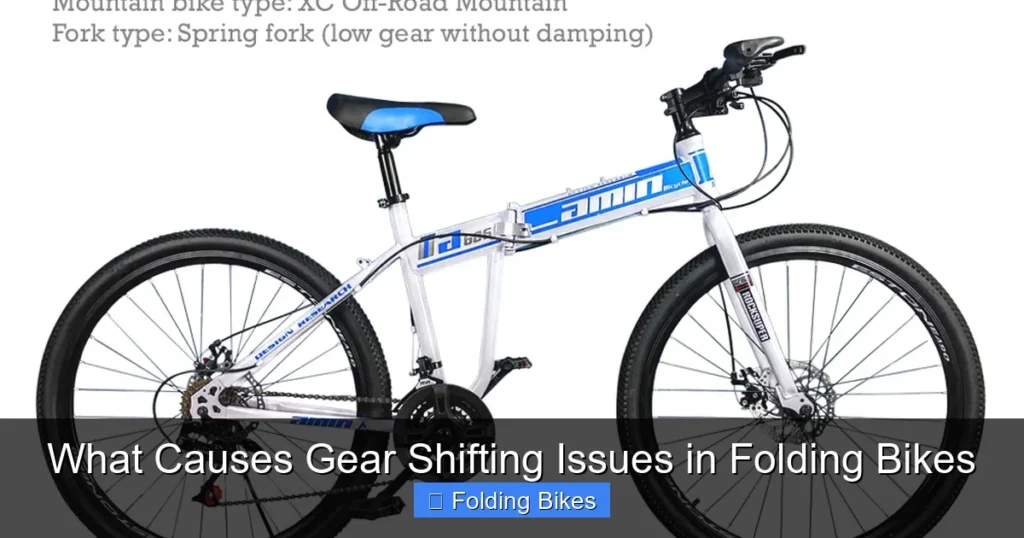
Gear shifting problems in folding bikes often stem from cable tension, derailleur alignment, or wear—but they’re usually fixable with basic maintenance. This guide walks you through diagnosing and resolving the most frequent culprits, so you can shift smoothly on every ride.
Key Takeaways
- Cable tension issues are the top cause of poor shifting—too loose or too tight cables prevent accurate gear changes.
- Derailleur misalignment from folding/unfolding can throw off indexing, especially on compact drivetrains.
- Worn chains and cassettes reduce shifting precision; replace them together for best performance.
- Dirt and lack of lubrication increase friction, making shifts sluggish or inconsistent.
- Improperly adjusted limit screws cause chain drop or prevent reaching extreme gears.
- Bent hangers or damaged components from impacts compromise alignment and require careful inspection.
- Regular maintenance prevents 90% of shifting issues—clean, lube, and check adjustments monthly.
Introduction: Why Your Folding Bike Won’t Shift Smoothly
If your folding bike hesitates, skips, or refuses to shift gears, you’re not alone. These compact bikes are engineered for portability, but their unique design—especially frequent folding and compact drivetrains—makes them more prone to gear shifting issues than standard bicycles. The good news? Most problems are easy to fix once you know what to look for.
In this guide, you’ll learn the most common causes of gear shifting problems in folding bikes, how to diagnose them, and step-by-step solutions to get your ride back to buttery-smooth performance. Whether you’re a daily commuter or weekend explorer, understanding these fixes will save you time, money, and frustration.
1. Cable Tension: The #1 Culprit Behind Poor Shifting
Cable tension is the heartbeat of your shifting system. If it’s off—even slightly—your bike won’t shift accurately. Folding bikes are especially vulnerable because cables can stretch or loosen over time, and the frequent folding action may subtly affect routing.
Visual guide about What Causes Gear Shifting Issues in Folding Bikes
Image source: acko-cms.ackoassets.com
How to Check Cable Tension
- Shift into the smallest rear cog (highest gear).
- Turn the pedals and try shifting up one gear. If it hesitates or doesn’t move, tension is likely too low.
- Shift down to the largest cog (lowest gear). If it won’t go all the way or rubs badly, tension may be too high.
Adjusting Cable Tension
Most folding bikes have a barrel adjuster on the derailleur or shifter. Turn it counterclockwise to increase tension (if shifting up is slow) or clockwise to reduce it (if shifting down is problematic). Make small turns—1/4 at a time—and test after each adjustment.
Pro Tip: If the barrel adjuster is maxed out and shifting still fails, your cable may be stretched or corroded. Replace the inner cable and housing for a permanent fix.
2. Derailleur Misalignment from Folding
Folding bikes are designed to collapse, but this convenience comes with a trade-off: the rear derailleur and dropout can get knocked out of alignment during folding or transport. Even a slight bend in the derailleur hanger can ruin shifting precision.
Signs of Misalignment
- Chain rubs in multiple gears.
- Shifting is inconsistent—works in some gears but not others.
- You hear a clicking or grinding noise when pedaling.
How to Fix It
First, inspect the derailleur hanger (the part that connects the derailleur to the frame). It should be straight and parallel to the cassette. Use a derailleur hanger alignment tool if you have one—or take it to a shop if you’re unsure.
Next, check the derailleur itself. Make sure it’s not bent and that the jockey wheels (the small wheels near the chain) spin freely. If the derailleur is damaged, replace it. For minor bends, gentle realignment with pliers may work—but proceed carefully to avoid breaking the part.
Internal Link: If you’re riding off-road or carrying heavy loads, consider upgrading to a more robust setup. Check out our guide on the best folding mountain bikes for bikepacking for models built to handle rough terrain without compromising shifting performance.
3. Worn Chains and Cassettes: The Silent Shifting Killers
Over time, chains stretch and cassettes wear down. This wear reduces the precision of your drivetrain, causing skipping, slipping, or missed shifts—especially under load. Folding bikes often have shorter chains and tighter gear ratios, which can accelerate wear.
How to Check for Wear
Use a chain checker tool (or a ruler: a 12-inch section should measure exactly 12 inches). If it’s stretched beyond 0.5% (12 + 1/16 inch), replace the chain. A worn chain will also accelerate cassette wear, so inspect the cassette teeth—they should be symmetrical, not hooked or pointed.
Replacement Tips
Always replace the chain and cassette together if the cassette shows significant wear. Installing a new chain on a worn cassette will cause immediate skipping. Most folding bikes use standard 8- or 9-speed systems, so compatible parts are widely available.
Pro Tip: Keep a spare chain link or quick-link in your toolkit—folding bikes are great for travel, and a broken chain shouldn’t ruin your trip.
4. Dirt, Grime, and Lack of Lubrication
A dirty drivetrain is a sluggish drivetrain. Mud, dust, and old grease build up on the chain, derailleur, and cassette, increasing friction and making shifts feel rough or unresponsive. Folding bikes used in urban or wet environments are especially prone to this.
Cleaning Your Drivetrain
- Use a degreaser and a stiff brush to clean the chain, cassette, and derailleur pulleys.
- Rinse with water (avoid high-pressure sprays that can force water into bearings).
- Dry thoroughly with a clean rag.
- Apply a light, bike-specific lubricant to the chain—wipe off excess to prevent attracting dirt.
Internal Link: For riders in rainy or muddy conditions, proper weatherproofing is key. Learn how to protect your bike with our weatherproofing tips for mountain bikes—many apply to folding bikes too.
5. Limit Screws: Preventing Chain Drop and Gear Lockouts
Derailleurs have two small screws labeled “H” (high) and “L” (low). These set the limits of derailleur movement, preventing the chain from falling off the cassette. If these are misadjusted, your bike may not shift into the highest or lowest gear—or worse, the chain could drop mid-ride.
Adjusting Limit Screws
Shift to the smallest cog. If the chain won’t move onto it or rubs badly, turn the “H” screw clockwise to limit outward movement. For the largest cog, shift down and adjust the “L” screw counterclockwise if the chain tries to go past the cassette.
Test each adjustment by pedaling and shifting. The goal is smooth, quiet operation in all gears without overtravel.
6. Bent Hangers or Damaged Components
Drops, bumps, or improper storage can bend the derailleur hanger or damage the shifter mechanism. Even a small bend can throw off indexing and cause persistent shifting issues.
Inspection Steps
- Visually inspect the hanger for bends or cracks.
- Spin the rear wheel and watch the derailleur—it should stay parallel to the cassette.
- Check the shifter cables for fraying or kinks, especially near fold points.
If you find damage, replace the hanger or cable. Many folding bike brands sell replacement hangers online. For cable issues, re-route the cable to avoid sharp bends near the hinge.
Troubleshooting Common Scenarios
Problem: Shifting works in some gears but not others.
Solution: Likely derailleur misalignment or worn components. Check hanger alignment and inspect chain/cassette wear.
Problem: Chain skips under load.
Solution: Worn chain or cassette. Replace both if necessary.
Problem: Shifter feels stiff or sticky.
Solution: Dirty or dry cables. Lubricate or replace the cable and housing.
Problem: Bike won’t shift after folding.
Solution: Check cable tension and derailleur alignment—folding may have shifted something loose.
Prevention: Keep Your Folding Bike Shifting Like New
The best fix is prevention. Follow this simple maintenance routine:
- Clean and lube your chain every 100–200 miles or after wet rides.
- Check cable tension monthly.
- Inspect the derailleur and hanger after any impact.
- Store your bike in a dry place to prevent rust.
- Use a protective case when traveling to avoid damage.
Internal Link: Need a reliable pump for on-the-go adjustments? Pair your maintenance kit with the best folding bike pump—compact, efficient, and perfect for travel.
Conclusion: Smooth Shifting Starts with Awareness
Gear shifting issues in folding bikes are rarely serious—but they can ruin your ride if ignored. By understanding the root causes—cable tension, alignment, wear, and cleanliness—you can diagnose and fix most problems in minutes. Regular maintenance not only improves performance but extends the life of your bike.
Remember: a well-tuned folding bike is a joy to ride. With these tips, you’ll keep shifting smooth, whether you’re dodging city traffic or exploring country lanes. Happy riding!



