

If you have a loved one with cerebral palsy, you know how important it is to find ways to help them move more easily and enjoy life to the fullest. Adaptive bikes for cerebral palsy are designed just for that – to support mobility, build confidence, and bring joy through cycling.
But what exactly makes these bikes different? And how can they make a real difference for you or someone you care about? Keep reading to discover how adaptive bikes can open new doors to freedom and fun in ways you might not have imagined.
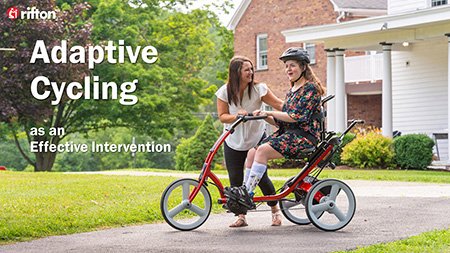
Credit: www.rifton.com
Adaptive Bikes Basics
Adaptive bikes help children with cerebral palsy enjoy cycling. They support different needs and abilities.
These bikes improve movement, balance, and confidence for riders.
Types Of Adaptive Bikes
There are several types of adaptive bikes made for children with cerebral palsy. Each type fits different needs.
- Tricycles with extra stability and wider bases
- Recumbent bikes that support a reclined sitting position
- Tandem bikes for riding with a helper
- Handcycles that use hand pedals instead of foot pedals
- Balance bikes without pedals to build balance skills
Key Features
Adaptive bikes have special features to meet riders’ physical needs. These features make riding easier and safer.
- Adjustable seats and handlebars for comfort
- Supportive harnesses or belts for stability
- Easy-to-use brakes and pedal systems
- Wide tires for better balance and grip
- Lightweight frames for easy control
Benefits For Cerebral Palsy
Adaptive bikes help children with cerebral palsy improve their physical and mental health. They offer many benefits.
- Build stronger muscles and improve coordination
- Enhance balance and motor skills
- Boost confidence and independence
- Encourage outdoor activity and social interaction
- Support therapy goals in a fun way
Choosing The Right Bike
Adaptive bikes help children with cerebral palsy enjoy riding safely. Choosing the right bike is important for comfort and support.
Look at different factors before picking a bike. The right choice improves mobility and confidence.
Assessing Mobility Needs
Check how much movement the child has. Some children need extra support to balance and pedal.
Think about muscle strength and control. Choose a bike that matches these needs for easier riding.
- Does the child need help balancing?
- Can the child pedal on their own?
- Is there a need for hand or foot controls?
- Should the bike allow for different seating positions?
Size And Fit Considerations
Pick a bike that fits the child’s height and weight. A good fit helps with control and comfort.
Adjustable parts let the bike grow with the child. Check seat height, handlebar position, and pedal reach.
- Measure the child’s inseam for seat height
- Ensure feet reach the pedals without strain
- Check handlebar reach for easy steering
- Look for adjustable seats and handlebars
Safety Features To Look For
Safety is a top priority. Choose bikes with strong brakes and stable frames to prevent falls.
Extra supports help protect the child. Look for harnesses, straps, and padding for comfort and safety.
- Reliable hand or foot brakes
- Wide tires for better balance
- Secure straps or harnesses
- Soft padding on seat and handlebars
- Helmet use is always recommended
Customization Options
Adaptive bikes for cerebral palsy offer many customization options. These options help meet the rider’s unique needs. They make riding safer and more comfortable.
Families and therapists can adjust the bike to fit the rider’s size and abilities. Custom features improve support and control during riding.
Adjustable Components
Adaptive bikes include parts that adjust as the child grows or changes needs. These parts make the bike flexible and easy to use.
- Seat height and angle can be changed for comfort.
- Handlebars adjust for reach and grip.
- Pedal straps or footrests adapt for better foot placement.
- Frame size can be altered for stability.
Supportive Accessories
Supportive accessories help improve balance and posture. They provide extra safety and assist in riding.
| Accessory | Purpose |
| Chest harness | Keeps upper body stable |
| Headrest | Supports the head during riding |
| Knee pads | Protect legs and aid leg alignment |
| Custom grips | Help hold handlebars securely |
Technology Integration
Technology can improve the riding experience with adaptive bikes. Some bikes include smart features to assist the rider.
Examples of technology in adaptive bikes:
- Electronic pedal assist to help with pedaling effort.
- Bluetooth controls for adjusting settings remotely.
- GPS tracking for safety and route planning.
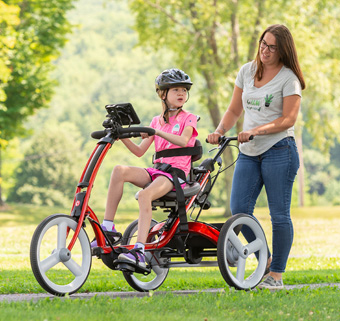
Credit: www.rifton.com
Therapeutic Advantages
Adaptive bikes help children with cerebral palsy gain physical and mental benefits. These bikes are designed to meet individual needs and support therapy goals.
Using adaptive bikes regularly can improve key skills and boost overall well-being in young riders.
Improving Balance And Coordination
Adaptive bikes provide safe support that helps children practice balance. The design allows gradual improvement in coordination while riding.
- Helps maintain upright posture
- Supports controlled steering
- Encourages smooth pedaling motion
- Reduces risk of falls
Enhancing Muscle Strength
Riding adaptive bikes strengthens key muscle groups needed for walking and other activities. The exercise targets legs, core, and arms.
| Muscle Group | Benefit |
| Leg muscles | Improves endurance and power |
| Core muscles | Supports better posture |
| Arm muscles | Aids in balance and control |
Boosting Confidence And Independence
Adaptive bikes help children feel proud as they learn new skills. This builds confidence and encourages more active play.
The ability to ride independently supports self-esteem and social interaction with peers.
Training And Usage Tips
Adaptive bikes help children with cerebral palsy improve balance and strength. Using them safely and correctly is important for progress.
These tips guide you through starting, maintaining, and using adaptive bikes in therapy sessions.
Getting Started Safely
Begin with a simple introduction to the adaptive bike. Let the child explore it without pressure to ride immediately.
Use a helmet and safety gear every time. Choose a flat, open area free from obstacles for practice.
- Check bike fit before each use
- Adjust seat and handlebars properly
- Start with short sessions to avoid fatigue
- Supervise the child closely during riding
Maintenance And Care
Keep the adaptive bike in good condition to ensure safe use. Regular checks prevent accidents and improve performance.
Clean the bike after each use and store it indoors to protect it from weather damage.
- Inspect tires for wear and proper inflation
- Check brakes and chains regularly
- Tighten loose bolts and screws
- Lubricate moving parts monthly
Incorporating Bikes Into Therapy
Adaptive bikes can be part of therapy to build muscle strength and coordination. Use them as a fun exercise tool.
Work with a therapist to create goals. Include biking in warm-ups or cool-downs to increase motivation.
- Set small, achievable biking goals
- Encourage regular practice sessions
- Combine biking with balance and stretching exercises
- Track progress to adjust therapy plans
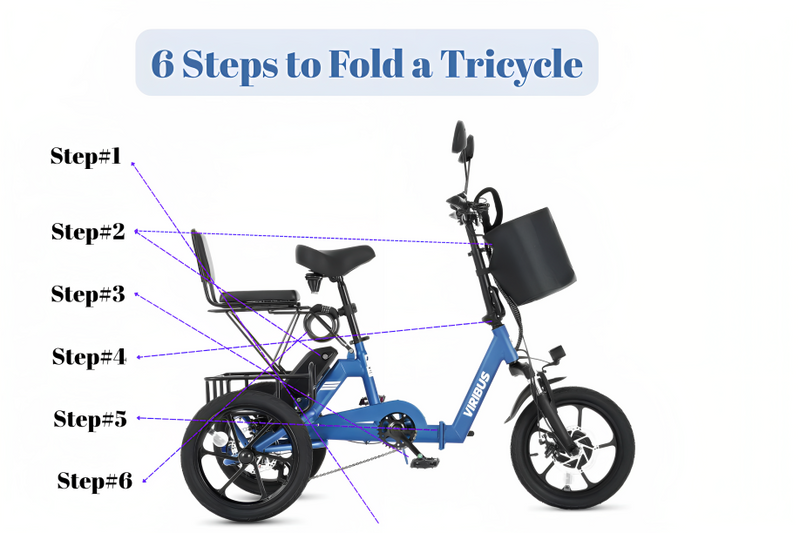
Credit: viribusbikes.com
Resources And Support
Adaptive bikes help children with cerebral palsy enjoy cycling safely. They offer support and improve mobility for many users.
Finding the right bike and getting support can be a challenge. This guide covers where to find adaptive bikes, community help, and funding options.
Where To Find Adaptive Bikes
Adaptive bikes come in many types, including tricycles, handcycles, and tandem bikes. You can find them through specialized retailers or local programs.
- Local bike shops with adaptive equipment
- Nonprofit organizations focused on mobility aids
- Online stores specializing in adaptive sports
- Therapy centers that offer equipment trials
Community And Professional Support
Support from professionals and community groups helps families choose and use adaptive bikes safely.
- Physical and occupational therapists guide bike fitting
- Support groups share user experiences and tips
- Local adaptive sports clubs organize biking activities
- Online forums provide advice and product reviews
Funding And Assistance Programs
Adaptive bikes can be expensive. Many programs help with costs through grants and loans.
| Program Type | Description | Where to Apply |
|---|---|---|
| Government Grants | Funds for medical equipment including bikes | Local health departments |
| Nonprofit Assistance | Charities offer financial help or donated bikes | Disability support organizations |
| Insurance Coverage | Some plans cover adaptive equipment | Health insurance providers |
| Community Fundraising | Events to raise money for adaptive bikes | Local groups and schools |
Frequently Asked Questions
What Are Adaptive Bikes For Cerebral Palsy?
Adaptive bikes are specially designed bicycles to meet the needs of individuals with cerebral palsy. They provide extra support and stability. These bikes help improve mobility, coordination, and confidence while ensuring safety during riding.
How Do Adaptive Bikes Help Cerebral Palsy Patients?
Adaptive bikes improve muscle strength, balance, and coordination. They encourage physical activity and outdoor engagement. This promotes independence and enhances overall quality of life for cerebral palsy patients.
What Features Make Adaptive Bikes Suitable For Cerebral Palsy?
Key features include adjustable seats, extra support straps, and wider tires. Many models have low centers of gravity for stability. These features accommodate different physical abilities and ensure comfort and safety.
Who Can Benefit From Using Adaptive Bikes?
Individuals with cerebral palsy of all ages can benefit. Adaptive bikes are useful for children and adults with varying mobility levels. They support physical therapy goals and promote an active lifestyle.
Conclusion
Adaptive bikes make cycling possible for those with cerebral palsy. They offer freedom and joy. Each bike supports individual needs and abilities. Families find these bikes beneficial and inclusive. Riding improves physical health and mental well-being. It’s more than exercise; it’s empowerment.
Communities become more aware and accepting. Engaging in outdoor activities becomes accessible. Adaptive bikes promote social interaction and fun. They make a positive impact on lives. Consider exploring adaptive bikes today. They open doors to new experiences. Enjoy the journey and the ride.



