
Imagine standing at the edge of a trail, your mountain bike ready, and the path ahead promising both adventure and challenge. But wait—do you know what you’re getting into?
Understanding mountain bike trail difficulty levels is crucial for your safety and enjoyment. Whether you’re a seasoned rider or just starting out, knowing these levels can make or break your biking experience. You might be missing out on trails perfectly suited for you, or worse, tackling ones that are too advanced.
This knowledge empowers you to make smarter choices, ensuring every ride is both thrilling and safe. Curious to know more? Let’s dive into the details that could change the way you ride forever.
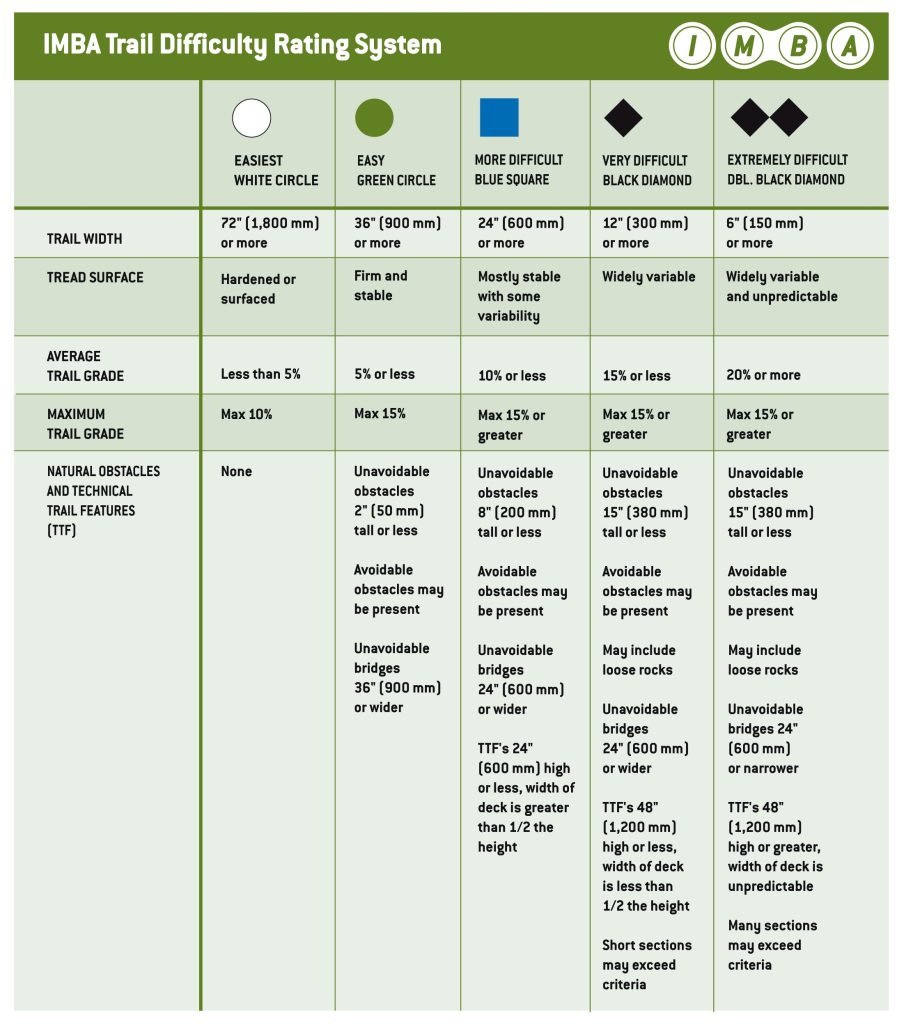
Trail Difficulty Rating System
Trail difficulty is marked with symbols and colors. Easy trails use a green circle. Intermediate trails have a blue square. Advanced trails show a black diamond. The symbols help riders choose suitable trails. Colors make it easier to spot the trails.
Trails are rated by terrain, steepness, and obstacles. Easy trails are flat and smooth. Intermediate trails may have some rocks and hills. Advanced trails have steep slopes and many obstacles. Ratings help riders find trails matching their skill. They ensure safety and fun.
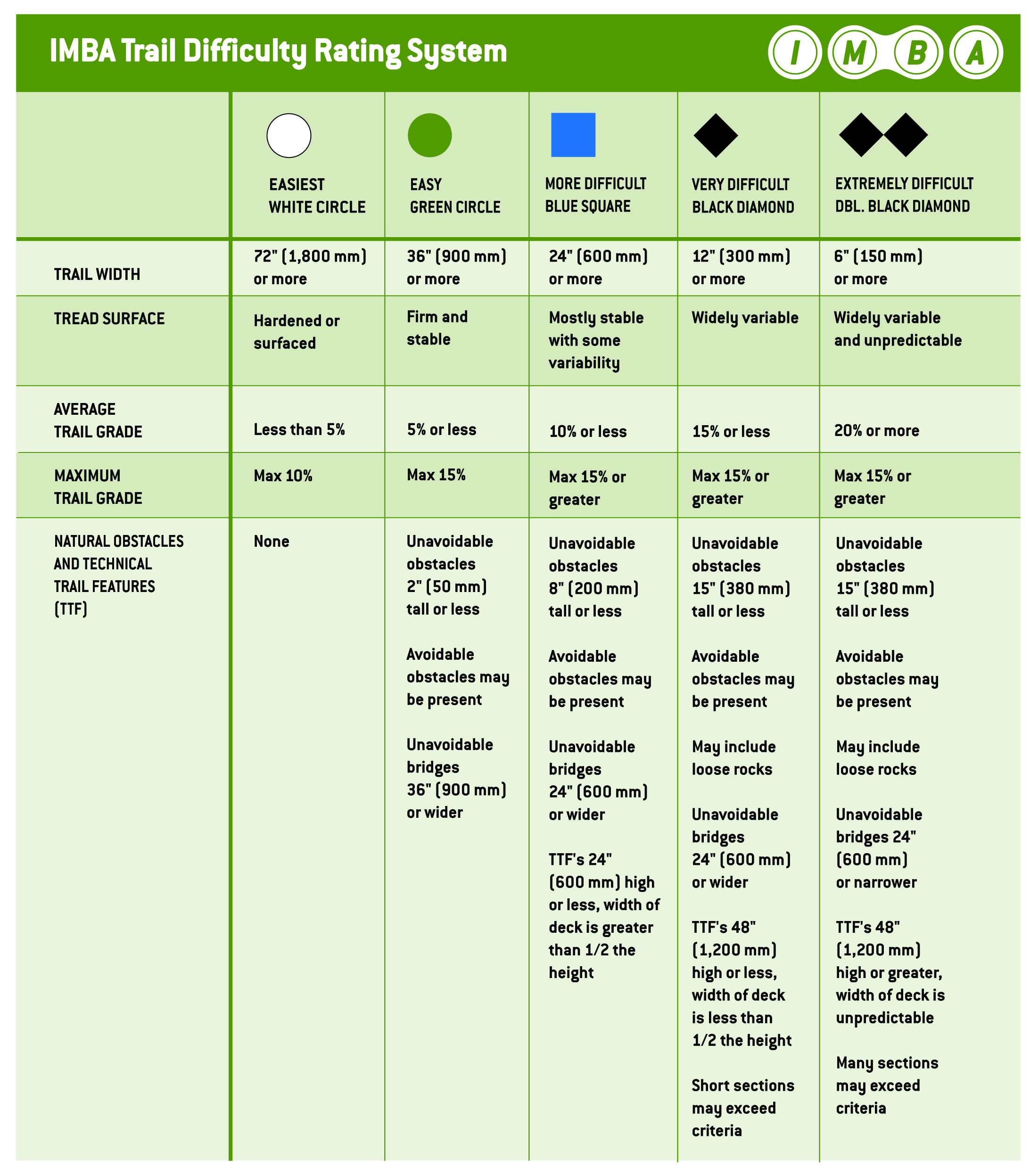
Credit: www.imba.com
Easy Trails
Easy trails are perfect for new riders. These trails have gentle slopes and smooth paths. Beginners can enjoy the ride without much worry. The paths are usually wide and clear. Riders can learn without fear of falling. Easy trails help build confidence and skills.
Easy trails often have clear signs. They guide riders on the right path. These trails are mostly in open areas. Riders can see ahead easily. Many trails have rest spots for breaks. Riders can take it slow and enjoy the view. Easy trails are fun and safe for all ages.
Intermediate Trails
Intermediate trails need good riding skills Trails often have rocks and roots

Credit: pedalchile.com
Advanced Trails
Advanced trails offer steep climbsand sharp turns. Rocks and roots make paths tricky. Riders need strong balanceand good control. Some trails have narrow ridges. One wrong move can lead to trouble. Quick reflexeshelp in tight spots. Riding skills must be at their best.
Safety gear is very important. Wear a helmetand gloves. Knee pads and elbow pads protect joints. Check your bike before starting. Make sure the brakes work well. Carry a first aid kit. Let someone know your route. Bring enough water. Stay alert and watch for wild animals.
Expert Trails
Expert trails are not for beginners. These trails can be very steep. There are rocks and roots everywhere. Extreme conditions need special skills. Riders need to be very careful.
Riders need strong mountain bikes for expert trails. A good helmet is a must for safety. Gloves help grip the handlebars. Knee and elbow pads protect from falls. A water bottle keeps you hydrated.
Preparing For Different Levels
Building strong leg muscleshelps in biking. Practice on easy trails first. Balance is key. Learn to shift your weight. This helps with control. Ride with friends who are better. They can give tips. Watch videos of expert riders. Copy their moves. Practice makes perfect.
A good bike is important. Choose one that fits you. Wear a helmetfor safety. Gloves protect your hands. They also help with grip. Get a water bottle holder. Hydration is essential. A basic repair kit is a must. It includes a pump and patch kit. Always check your brakes before riding.
Tips For Mastering Trails
Navigating mountain bike trails requires understanding their difficulty levels. Beginner trails offer smooth rides with gentle slopes. Intermediate paths introduce varied terrain and steeper climbs. Advanced routes challenge with rugged landscapes and complex obstacles, demanding skill and precision.
Mental Preparation
Stay calm and focused. Think positive thoughts. Fear can make you fall. Imagine yourself riding well. Breathe deeply to stay relaxed. Visualize the trail in your mind. See every turn and hill. Prepare for challenges ahead. Stay aware of your surroundings. Trust in your skills and bike. Believe you can do it.
Physical Conditioning
Exercise regularly to build strength. Ride your bike often. Practice on different trails. Train your legs for climbs. Work on balance and agility. Stretch before and after rides. Eat healthy foods for energy. Drink water to stay hydrated. Rest is important too. Your body needs time to recover. Keep fit and ready.

Credit: pedalchile.com
Frequently Asked Questions
What Is The Difficulty Scale For Mtb Trails?
MTB trails are rated from easy to extremely difficult. Difficulty levels include green (easy), blue (intermediate), black (advanced), and double black (expert). Trail ratings help riders choose paths that match their skill level. Always check trail signs for the most accurate difficulty rating.
What Are The Mountain Bike Trail Ratings?
Mountain bike trails are rated by difficulty: Green (easy), Blue (moderate), Black Diamond (hard), Double Black Diamond (expert). Each rating reflects terrain challenges, technical features, and required skill level. Riders should choose trails matching their abilities for safety and enjoyment.
Always check local trail guidelines for specific ratings.
What Do The Colors Mean On Mountain Bike Trails?
Mountain bike trail colors indicate difficulty levels. Green means easy, blue is moderate, and black signifies advanced. Red trails are for experts. These colors help riders choose trails matching their skill level. Proper trail selection ensures safety and an enjoyable biking experience.
What Do The Trail Difficulty Ratings Mean?
Trail difficulty ratings indicate the challenge level, considering terrain, elevation, and technicality. Easy trails suit beginners. Moderate trails require some experience and stamina. Difficult trails demand advanced skills and physical fitness. Choose trails based on your ability and preparation to ensure a safe, enjoyable hiking experience.
Conclusion
Understanding mountain bike trail difficulty is key to a great ride. Choose trails that match your skill level. Beginners should start with easy paths. Intermediate riders can handle moderate challenges. Experts need advanced routes for thrill and skill. Knowing trail levels helps prevent accidents.
It ensures fun and safety. Always check trail signs and maps. Wear protective gear and ride responsibly. Respect the environment and other riders. Enjoy the adventure and the beauty of nature. Happy biking!



