
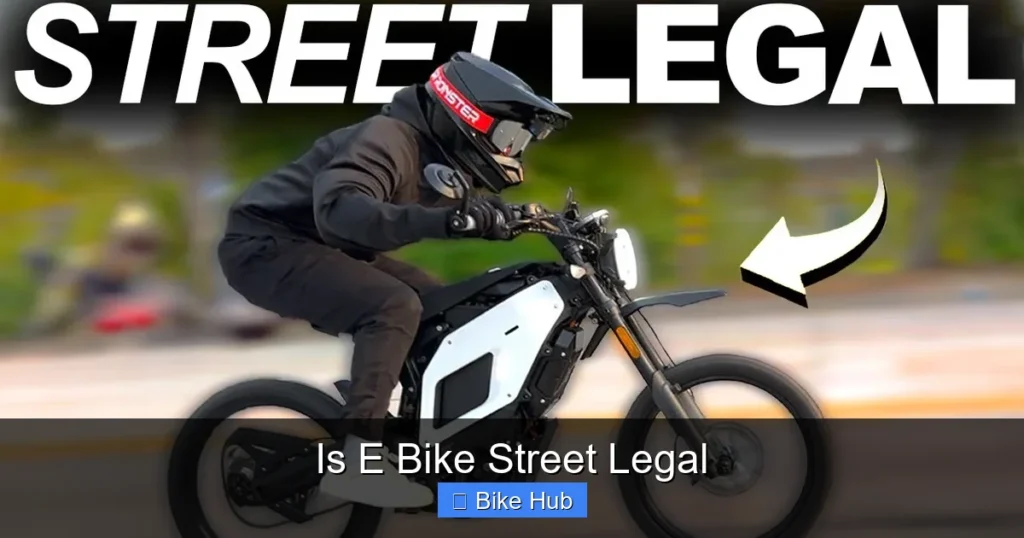
Yes, most e bikes are street legal—but only if they meet specific federal and state regulations. Understanding speed limits, motor power, and local laws is key to riding safely and legally in your area.
So, you’ve got an e bike—or you’re thinking about getting one—and you’re wondering: *Is e bike street legal?* It’s a great question, and the short answer is: **yes, in most cases, e bikes are street legal**, but only if they follow certain rules. The catch? Those rules aren’t the same everywhere. What’s legal in California might not be in Texas, and what’s fine on a bike path in Portland could get you a ticket in Miami.
E bikes, or electric bicycles, have exploded in popularity over the past few years. They’re eco-friendly, fun to ride, and perfect for commuting, errands, or just cruising around town. But because they blend the features of a regular bike with motor assistance, they fall into a gray area between bicycles and motor vehicles. That’s why understanding the laws is so important—not just to avoid fines, but to ride safely and responsibly.
In this guide, we’ll walk you through everything you need to know about e bike street legality in the U.S., from federal guidelines to state-specific rules, safety tips, and what to look for when buying an e bike. Whether you’re a daily commuter or a weekend explorer, knowing the rules will help you ride with confidence.
Key Takeaways
- Federal law defines e bikes as bicycles: Under U.S. federal law, e bikes with motors under 750 watts and speeds under 20 mph are classified as bicycles, not motor vehicles.
- State laws vary widely: Each state sets its own rules for where you can ride, age requirements, and whether helmets or licenses are needed.
- Class 1, 2, and 3 e bikes have different rules: Class 1 and 2 e bikes are generally more widely allowed on bike paths, while Class 3 may be restricted to roads.
- Helmets and safety gear are often required: Many states require helmets, especially for younger riders or on certain types of e bikes.
- You usually don’t need a license or registration: Unlike mopeds or motorcycles, most e bikes don’t require registration, insurance, or a driver’s license.
- Local ordinances matter: Cities and counties can add extra restrictions, so always check local rules before riding.
- Know your e bike’s specs: Check motor power, top speed, and throttle type to ensure your e bike fits the legal definition in your area.
Quick Answers to Common Questions
Do I need a license to ride an e bike?
No, in most states you do not need a license to ride a street legal e bike, as long as it meets federal and state requirements (under 750 watts, under 20 mph, etc.).
Can I ride my e bike on the sidewalk?
It depends on local laws. In many cities, e bikes are not allowed on sidewalks, especially Class 2 and 3 models. Always check city ordinances before riding on sidewalks.
Are e bikes allowed on bike paths?
Generally, Class 1 and 2 e bikes are allowed on bike paths, but Class 3 may be restricted. Some trails and parks ban all motorized vehicles, so look for signs.
What happens if my e bike isn’t street legal?
If your e bike exceeds power or speed limits, it may be classified as a motor vehicle, requiring registration, insurance, and a license. You could also face fines or be banned from bike paths.
Can children ride e bikes?
Yes, but age restrictions vary by state. Some states require riders to be at least 14 or 16 years old, especially for Class 3 e bikes. Helmets are often required for younger riders.
📑 Table of Contents
What Makes an E Bike Street Legal?
At the federal level, the U.S. government treats e bikes like regular bicycles—**as long as they meet certain criteria**. According to the Consumer Product Safety Commission (CPSC), an e bike is considered a bicycle (and not a motor vehicle) if it:
– Has a motor with a maximum power output of 750 watts (about 1 horsepower)
– Can’t go faster than 20 miles per hour (mph) on motor power alone
– Has fully functional pedals (so it can be ridden without the motor)
If your e bike meets these standards, it’s classified as a “low-speed electric bicycle” under federal law. That means you don’t need a license, registration, or insurance to ride it—just like a regular bike.
But here’s the thing: **federal law sets the baseline, but states and cities can add their own rules**. So even if your e bike is federally compliant, you still need to check local regulations.
E Bike Classes Explained
To make things clearer, the U.S. uses a three-class system to categorize e bikes based on how they’re powered and how fast they go:
– Class 1: Pedal-assist only. The motor kicks in only when you’re pedaling and cuts off at 20 mph. These are the most widely accepted on bike paths and trails.
– Class 2: Throttle-assisted. You can use a throttle (like on a scooter) to move without pedaling, but the motor stops helping at 20 mph. These are also common on roads and bike lanes.
– Class 3: Pedal-assist only, but with a higher speed limit—up to 28 mph. These are often treated more like mopeds and may be restricted from bike paths.
Knowing your e bike’s class helps you understand where you can legally ride it.
State-by-State E Bike Laws
This is where things get tricky. While federal law gives us a starting point, **each state has its own rules** about where e bikes can go, who can ride them, and what safety gear is required.
For example:
– In California, all three classes of e bikes are allowed on bike paths, but Class 3 e bikes require helmets and are restricted to riders 16 and older.
– In New York, e bikes are legal, but only Class 1 and 2 are allowed on bike lanes and paths. Class 3 e bikes are limited to roads.
– In Texas, e bikes are treated like regular bikes, but local cities can impose restrictions. Austin, for instance, allows all classes on bike paths, while Houston limits Class 3 to roads.
Some states, like Florida and Illinois, have adopted the three-class system and allow e bikes on most bike facilities. Others, like Alaska and Montana, have more relaxed rules with fewer restrictions.
Always check your state’s Department of Motor Vehicles (DMV) or transportation website for the latest info. Laws change fast, and what was legal last year might not be this year.
Age and Helmet Requirements
Many states require riders under a certain age to wear helmets. For example:
– In Oregon, all e bike riders under 16 must wear a helmet.
– In Washington, helmets are required for all Class 3 e bike riders, regardless of age.
– In Colorado, only riders under 18 need helmets on Class 1 and 2 e bikes, but all riders need one on Class 3.
Even if your state doesn’t require a helmet, it’s always a smart idea to wear one—especially at higher speeds.
Where Can You Ride a Street Legal E Bike?
Just because your e bike is street legal doesn’t mean you can ride it anywhere. **Location matters**—a lot.
In most states:
– Class 1 and 2 e bikes can be ridden on bike lanes, multi-use paths, and roads where bicycles are allowed.
– Class 3 e bikes are often restricted to roads and bike lanes, and may be banned from sidewalks and off-road trails.
Some cities have added extra rules. For example:
– In San Francisco, e bikes are not allowed on certain steep hills or in specific parks unless explicitly permitted.
– In Denver, e bikes are allowed on most trails, but only if they’re Class 1.
Always look for signs. If a path says “No Motorized Vehicles,” that usually includes e bikes—even if they’re street legal. When in doubt, stick to roads or designated bike lanes.
Safety Tips for Riding on the Street
Riding an e bike on the street is different from riding a regular bike. You’re faster, quieter, and sometimes harder for drivers to see. Here are a few tips to stay safe:
– Wear bright clothing and use front and rear lights, especially at dawn, dusk, or night.
– Use hand signals when turning or stopping.
– Stay in bike lanes when available, and ride with traffic—not against it.
– Be predictable—don’t swerve or make sudden moves.
– Keep your speed in check in crowded areas or near pedestrians.
Remember: just because you *can* go 20 mph doesn’t mean you *should* in every situation.
Do You Need a License, Registration, or Insurance?
Here’s the good news: **in most cases, no**. Because e bikes are classified as bicycles under federal law, you typically don’t need:
– A driver’s license
– Vehicle registration
– Insurance
This is true in states like New York, Illinois, and Virginia, where e bikes are treated just like regular bikes.
However, there are exceptions. Some states require registration for Class 3 e bikes, especially if they can go over 20 mph. For example:
– In Hawaii, e bikes with motors over 1,000 watts or speeds over 20 mph must be registered.
– In Alaska, e bikes are exempt from registration unless used for commercial delivery.
Always double-check your state’s rules. And while insurance isn’t required, some riders choose to get it for extra protection—especially if they use their e bike for work or delivery.
Renting or Sharing E Bikes
If you’re using a shared e bike from a company like Lime or Bird, the rules still apply. These bikes are usually Class 1 or 2 and are designed to be street legal. But you’re still responsible for following traffic laws, wearing a helmet if required, and riding in approved areas.
Many cities have specific zones where shared e bikes can be picked up and dropped off. Riding one outside those zones could result in fines or the bike shutting off.
What If Your E Bike Isn’t Street Legal?
Not all e bikes are created equal. Some models—especially high-performance or改装 (modified) ones—might exceed the legal limits. If your e bike has:
– A motor over 750 watts
– A top speed over 20 mph (for Class 1/2) or 28 mph (for Class 3)
– No pedals (like a scooter)
…then it may be classified as a motor vehicle, not a bicycle. That means you’d need a license, registration, and insurance—and you might not be allowed on bike paths at all.
If you’re unsure, check your e bike’s manual or contact the manufacturer. Many reputable brands clearly label their bikes as Class 1, 2, or 3 and confirm compliance with federal standards.
Modifying Your E Bike
Be careful about modifying your e bike. Adding a more powerful motor, removing the speed limiter, or upgrading the battery can push your bike out of legal territory. Even small changes can make a big difference in how the law sees your ride.
If you’re thinking about upgrades, ask yourself: *Will this keep my e bike street legal?* When in doubt, stick to factory settings.
Final Thoughts: Ride Smart, Ride Legal
So, is e bike street legal? **Yes—most of the time, as long as you follow the rules.** Federal law gives us a solid foundation, but state and local regulations can change the game. The key is to know your e bike’s class, understand your local laws, and ride responsibly.
E bikes are a fantastic way to get around—cleaner, faster, and more fun than driving. But with great power (literally) comes great responsibility. Stay informed, wear a helmet, and respect the rules of the road. That way, you can enjoy every mile of your ride—legally and safely.
Whether you’re commuting to work, exploring a new trail, or just enjoying the breeze, your e bike can be a game-changer. Just make sure you’re riding on the right side of the law.
Frequently Asked Questions
Are e bikes considered motor vehicles?
No, not if they meet federal standards. E bikes with motors under 750 watts and speeds under 20 mph are classified as bicycles, not motor vehicles.
Can I ride my e bike in the rain?
Yes, most e bikes are designed to handle light rain, but avoid deep puddles or heavy downpours. Always dry and inspect your bike after wet rides to prevent damage.
Do I need to register my e bike?
In most states, no. E bikes that meet federal guidelines do not require registration. However, some states have special rules for higher-speed models.
Can I take my e bike on public transit?
Many buses and trains allow e bikes, but policies vary. Some require folding bikes or restrict e bikes during peak hours. Check with your local transit authority.
What’s the difference between an e bike and a moped?
E bikes have pedals and limited motor assistance (under 750 watts, under 20–28 mph). Mopeds are motor vehicles with no pedals, higher speeds, and require registration and a license.
Can I modify my e bike to go faster?
You can, but doing so may make your e bike illegal on public roads and bike paths. Modified e bikes can be classified as motor vehicles, requiring registration and a license.



