
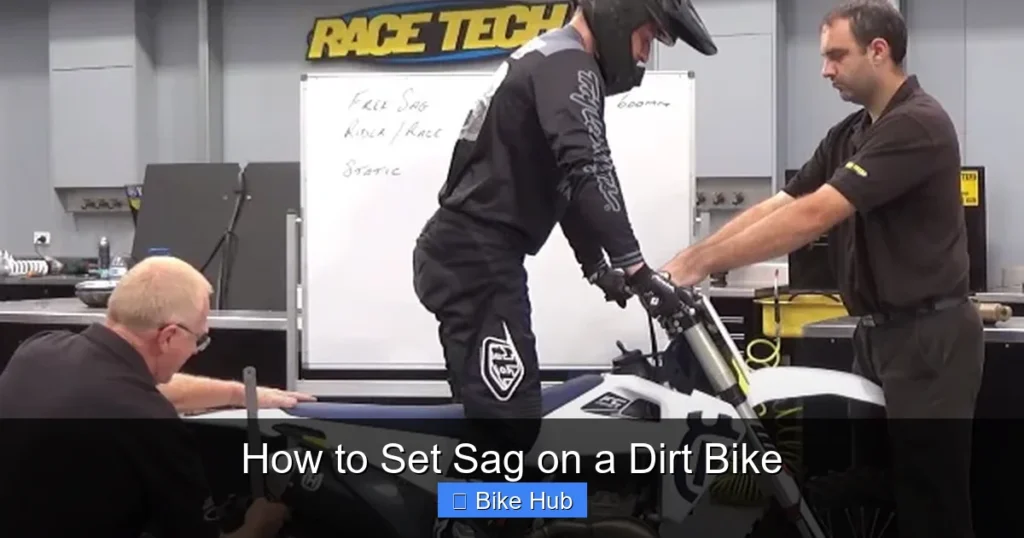
Setting sag correctly is essential for optimal dirt bike suspension and handling. This guide walks you through measuring, adjusting, and fine-tuning your bike’s sag to match your weight and riding style for a smoother, safer ride.
Key Takeaways
- What is sag? Sag is the amount your bike’s suspension compresses under the rider’s weight. It’s critical for proper shock absorption and control.
- Why set sag? Correct sag improves traction, stability, and comfort. It prevents bottoming out or riding too stiff.
- Two types of sag: Static sag (bike alone) and race sag (with rider). Both matter for full suspension tuning.
- Tools needed: A tape measure, zip ties, and a helper make the process quick and accurate.
- Adjust with preload: Use the spring preload collar on your shock or forks to increase or decrease sag.
- Ideal sag range: Most dirt bikes need 30–35% of total rear suspension travel as race sag.
- Test and repeat: Always test ride after adjustments and fine-tune based on feel and terrain.
How to Set Sag on a Dirt Bike
If you’ve ever felt your dirt bike bouncing too much on jumps or bottoming out in whoops, chances are your sag isn’t set right. Setting sag is one of the most important—and often overlooked—steps in tuning your bike’s suspension. It’s not complicated, but it does require patience and the right technique.
In this guide, you’ll learn exactly how to set sag on a dirt bike, including what sag is, why it matters, and how to adjust it step by step. Whether you’re a weekend trail rider or a competitive motocross racer, getting your sag dialed in will make your bike handle better, feel more planted, and reduce fatigue on long rides.
What Is Sag?
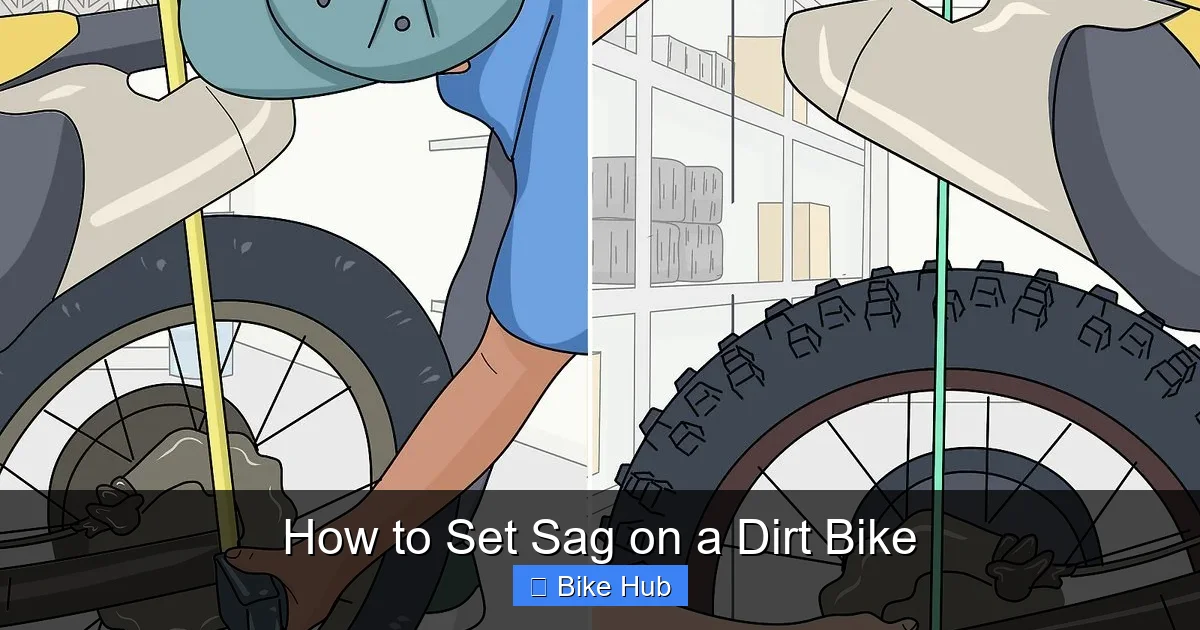
Visual guide about How to Set Sag on a Dirt Bike
Image source: dirtbikefixes.com
Sag refers to how much your bike’s suspension compresses when weight is applied. There are two types:
Static Sag
This is how much the suspension sags under the bike’s own weight—no rider. It’s measured when the bike is on a stand, then lowered to the ground. Most riders aim for 0–10mm of static sag. Too much means your spring is too soft; too little means it’s too stiff.
Race Sag (Rider Sag)
This is the sag measured with the rider in full gear, standing on the pegs in a normal riding position. This is the most important measurement because it reflects real-world conditions. For most dirt bikes, ideal race sag is 30–35% of the total rear suspension travel.
For example, if your rear shock has 300mm of travel, aim for 90–105mm of race sag.
Why Setting Sag Matters
Visual guide about How to Set Sag on a Dirt Bike
Image source: betterdirtbikeriding.com
Getting sag right isn’t just about comfort—it’s about control. When sag is set correctly:
- Your bike stays balanced over bumps and jumps.
- The suspension works through its full range, not just the top or bottom.
- Traction improves because the tire stays in contact with the ground.
- You reduce the risk of bottoming out or harsh impacts.
- Handling becomes more predictable, especially in corners and rough terrain.
Think of sag like the foundation of a house. If it’s off, everything else—handling, braking, cornering—feels unstable.
Tools You’ll Need
You don’t need fancy gear to set sag. Here’s what you’ll need:
- A tape measure (preferably a long one with mm markings)
- Zip ties (to mark suspension travel)
- A stand or lift (to raise the rear wheel off the ground)
- A helper (optional but helpful)
- Wrench or spanner (to adjust preload collars)
Most dirt bikes have adjustable preload on the rear shock and front forks. Check your owner’s manual if you’re unsure where the collars are.
Step-by-Step: How to Set Rear Sag
Let’s walk through setting rear sag—the most critical part of the process.
Step 1: Measure Total Suspension Travel
Start by measuring how far your rear suspension can move. With the bike on a stand (rear wheel off the ground), measure from the axle to a fixed point on the frame—like the swingarm pivot or a bolt near the shock.
Write down this “fully extended” measurement.
Now, compress the rear suspension fully (push down hard or bounce it) and measure again. The difference is your total travel.
Example:
Fully extended: 600mm
Fully compressed: 300mm
Total travel = 300mm
Step 2: Install Zip Ties
Slide a zip tie onto the shock shaft so it sits against the shock body. This will mark how far the shock compresses. Make sure it’s snug but can slide.
Do the same on the front forks if you’re setting front sag (we’ll cover that later).
Step 3: Measure Static Sag
Lower the bike off the stand so it’s resting on its wheels. Don’t sit on it yet.
Check the zip tie on the rear shock. It should now be pushed up slightly. Measure the distance from the zip tie to the shock body. This is your static sag.
Ideal static sag: 0–10mm.
If it’s more than 10mm, your spring is too soft. You’ll need to increase preload or consider a heavier spring.
Step 4: Measure Race Sag
Now, put on your full riding gear—helmet, boots, jersey, etc.—and stand on the pegs in your normal riding position. Have a helper hold the bike upright or use a center stand.
Let the suspension settle for a few seconds, then check the zip tie. Measure the distance from the zip tie to the shock body. This is your race sag.
Compare it to your total travel. For 300mm travel, aim for 90–105mm race sag.
Step 5: Adjust Preload
If race sag is too high (suspension sags too much), increase preload. Turn the preload collar clockwise (usually with a spanner or wrench). This compresses the spring, making it stiffer.
If race sag is too low (not enough sag), decrease preload by turning the collar counterclockwise.
Make small adjustments—1–2 full turns at a time—then remeasure. It’s better to go slow and get it right.
Step 6: Recheck and Test Ride
After adjusting, repeat the race sag measurement. Once you’re in the 30–35% range, take the bike for a test ride.
Hit some bumps, jumps, and corners. Does it feel planted? Does it bottom out? If yes, you may need a stiffer spring. If it feels too stiff and skips over bumps, try a softer spring.
How to Set Front Sag
Front sag works the same way but uses the forks.
Step 1: Measure Fork Travel
With the bike on a stand, measure from the axle to the lower triple clamp. Then compress the forks fully and measure again. The difference is your fork travel.
Step 2: Install Zip Ties on Forks
Slide zip ties onto the fork legs, just above the dust seals. Make sure they’re snug.
Step 3: Measure Static and Race Sag
Lower the bike and measure static sag (no rider). Aim for 0–10mm.
Then, with rider in full gear, standing on pegs, measure race sag. Ideal is 30–35% of total fork travel.
Step 4: Adjust Preload
Most dirt bike forks have preload adjusters at the top of each fork leg. Turn them clockwise to increase preload (less sag), counterclockwise to decrease (more sag).
Again, make small changes and retest.
Troubleshooting Common Sag Issues
Even with careful measuring, you might run into problems. Here’s how to fix them:
Sag Won’t Change After Adjustments
If turning the preload collar doesn’t affect sag, the spring may be worn or the wrong rate. Consider replacing the spring with one matched to your weight.
Bike Feels Too Bouncy
This usually means too much sag. Increase preload or switch to a stiffer spring.
Bike Feels Harsh or Skips Over Bumps
Too little sag. Reduce preload or use a softer spring.
One Side Sags More Than the Other
Check for leaks, worn seals, or uneven preload. Both forks should compress equally.
Pro Tips for Better Sag Setup
- Weigh yourself in full gear. Suspension springs are rated for rider weight including boots and helmet. Don’t skip this!
- Use a suspension calculator. Many online tools help you choose the right spring rate based on your weight and riding style.
- Check sag regularly. Springs wear out over time. Recheck sag every few months or after hard riding.
- Don’t ignore the front. Many riders only set rear sag, but front sag affects steering and braking. Balance is key.
- Consider professional tuning. For serious racing, a suspension shop can dial in your sag, damping, and spring rates perfectly.
Final Thoughts
Setting sag on your dirt bike is a simple but powerful way to improve performance. It takes less than 30 minutes and requires only basic tools. Once you’ve got it right, you’ll notice better handling, more comfort, and more confidence on the trails or track.
Remember: sag isn’t a one-time setup. As your riding style, terrain, or gear changes, so should your sag. Make it part of your regular maintenance routine.
And if you’re looking to further enhance your ride, consider how to choose a mountain bike that matches your suspension needs, or learn how to maintain a road bike for smoother performance. For those tackling rough terrain, proper suspension setup is just as important as knowing how to climb hills on a road bike.
Now go set that sag—and ride with confidence.



