
Biking 112 miles is a major endurance challenge that typically takes 6 to 10 hours, depending on your fitness level, terrain, and bike type. This guide breaks down the factors that affect ride time and offers step-by-step preparation tips to help you succeed.
Key Takeaways
- Ride time varies widely: Most riders complete 112 miles in 6 to 10 hours, but beginners may take longer.
- Fitness level matters most: Trained cyclists average 15–20 mph, while recreational riders go 10–14 mph.
- Terrain and weather play big roles: Hills, wind, and heat can significantly slow your progress.
- Proper bike setup is essential: A well-maintained road or touring bike improves speed and comfort.
- Nutrition and hydration are critical: Plan regular stops to refuel and avoid fatigue or cramps.
- Training beforehand is key: Build up your mileage gradually over 4–8 weeks before attempting 112 miles.
- Safety first: Always wear a helmet, carry repair tools, and let someone know your route.
How Long Does It Take to Bike 112 Miles?
If you’re wondering how long it takes to bike 112 miles, the short answer is: it depends. For most cyclists, this distance—often called a “metric double” or a classic century ride alternative—takes between 6 and 10 hours. But that range can shift dramatically based on your experience, the type of bike you’re riding, the terrain, and even the weather.
This guide will walk you through everything you need to know to estimate your own ride time, prepare properly, and finish strong. Whether you’re training for a long-distance event or just curious about what it takes to cover 112 miles on two wheels, you’ll find practical advice and real-world tips here.
Step 1: Understand the Factors That Affect Ride Time
Before you start training or planning your route, it’s important to understand what influences how long your 112-mile ride will take. Here are the main factors:
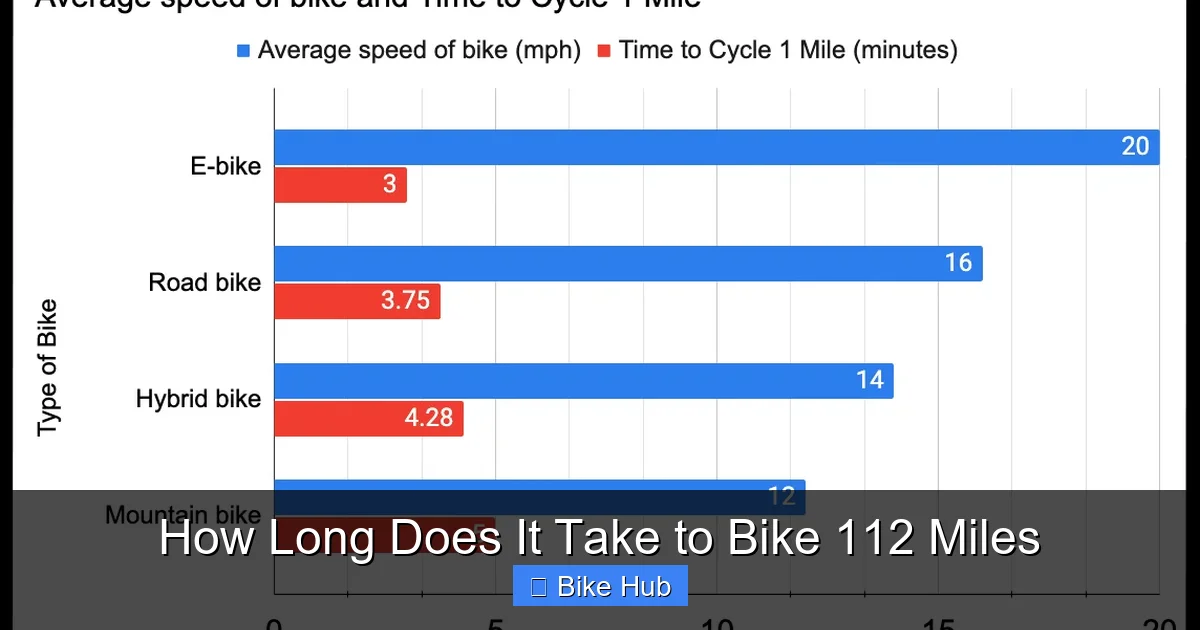
Visual guide about How Long Does It Take to Bike 112 Miles
Image source: bikelockwiki.com
Your Fitness Level
Your overall cycling fitness is the biggest predictor of speed. A well-trained cyclist might average 18–20 mph on flat terrain, while a recreational rider may hover around 12–14 mph. Beginners could average as low as 10 mph, especially if they’re not used to long rides.
Type of Bike
The bike you ride makes a big difference. A lightweight road bike with narrow tires is built for speed and efficiency, while a mountain bike or hybrid will slow you down due to heavier frames and wider, knobbier tires. If you’re using a recumbent bike, comfort may improve, but aerodynamics often reduce speed.
Terrain and Elevation
Flat routes are fastest. Rolling hills add time, and mountainous terrain can drastically increase your ride duration. For every 1,000 feet of elevation gain, expect to add 15–30 minutes to your total time, depending on steepness and your climbing ability.
Weather Conditions
Headwinds, heat, and rain all slow you down. A strong headwind can reduce your speed by 2–4 mph, while extreme heat increases fatigue and dehydration risk. Always check the forecast before heading out.
Rest and Refueling Stops
Even the fittest riders need breaks. Plan for 5–10 minute stops every 20–30 miles to eat, drink, stretch, and use the restroom. These stops add up—expect to lose 30–60 minutes total over 112 miles.
Step 2: Estimate Your Personal Ride Time
To get a realistic estimate, start with your average speed on long rides. Here’s a simple formula:
Total Time = Distance ÷ Average Speed + Rest Time
For example:
- If you average 15 mph and take 45 minutes of breaks:
112 ÷ 15 = 7.5 hours + 0.75 hours = 8.25 hours (8 hours 15 minutes) - If you average 12 mph with 1 hour of breaks:
112 ÷ 12 = 9.3 hours + 1 hour = 10.3 hours (10 hours 18 minutes)
Use a cycling app like Strava or Garmin to track your recent long rides and find your true average speed. This will give you the most accurate prediction.
Step 3: Train for the Distance
Don’t attempt 112 miles without proper training. Most experts recommend building up over 4–8 weeks. Here’s a simple training plan:
Weeks 1–2: Build Base Mileage
Start with 3–4 rides per week, including one long ride. Begin with 30–40 miles and increase by 10% each week. Focus on consistency, not speed.
Weeks 3–4: Increase Long Ride Distance
Your long ride should reach 60–80 miles by the end of week 4. Add hills if your target route has elevation. Practice eating and drinking on the bike.
Weeks 5–6: Simulate Race Conditions
Ride at your target pace for 80–100 miles. Test your gear, nutrition, and clothing. If possible, ride on a similar terrain to your 112-mile route.
Week 7: Taper
Reduce mileage slightly to rest your body. Keep one medium-length ride (40–50 miles) to stay sharp.
Week 8: Ride Day
You’re ready! Stick to your plan, stay fueled, and listen to your body.
Step 4: Prepare Your Bike
A well-maintained bike is safer and faster. Before your big ride, do a full check:
Tires and Wheels
Make sure your tires are in good condition and inflated to the correct pressure. Use a tire pressure guide to find the right PSI for your bike and weight. Consider switching to tubeless tires for fewer flats and better ride quality.
Drivetrain and Brakes
Clean and lubricate your chain. Check brake pads for wear and ensure they grip smoothly. A clean drivetrain reduces friction and improves efficiency.
Comfort Adjustments
Adjust your saddle height and handlebar position to avoid pain. If you’re using a recumbent bike, check the seat and pedal alignment. For long rides, consider a comfortable saddle or padded shorts.
Step 5: Plan Your Route and Supplies
Choose a safe, well-marked route with minimal traffic and access to water or stores. Use GPS or a cycling map app to plan rest stops.
Essential Gear to Bring
- Helmet (non-negotiable)
- Water bottles or hydration pack (2–3 liters minimum)
- Energy gels, bars, or snacks (aim for 200–300 calories per hour)
- Spare tube, tire levers, and mini pump
- Multi-tool and chain breaker
- Phone and ID
- Sunscreen and sunglasses
If you’re riding in remote areas, consider a GPS tracker or sharing your route with a friend.
Step 6: Fuel and Hydrate Properly
Nutrition is just as important as training. On long rides, your body burns 400–800 calories per hour. To avoid “bonking” (sudden fatigue), follow these tips:
Eat Early and Often
Start eating within the first 30 minutes. Aim for 30–60 grams of carbs per hour from gels, bananas, or energy bars.
Drink Regularly
Sip water every 15–20 minutes. In hot weather, add electrolyte tablets to prevent cramps.
Practice Your Nutrition Plan
Test your snacks and drinks during training rides. What works in theory might not sit well on a long ride.
Troubleshooting Common Issues
Flat Tire
Even with tubeless tires, flats happen. Carry a spare tube and know how to repair a flat. Practice at home so you’re confident on the road.
Muscle Cramps
Usually caused by dehydration or electrolyte imbalance. Slow down, stretch, and drink an electrolyte solution.
Chain Break or Mechanical Failure
Carry a chain tool and know basic repairs. If you can’t fix it, call for a ride or use a bike transport service.
Overheating
Wear breathable clothing, ride in shade when possible, and pour water on your neck and wrists to cool down.
Conclusion
Biking 112 miles is a challenging but achievable goal for most cyclists with proper preparation. While ride time varies—typically between 6 and 10 hours—your success depends more on training, nutrition, and bike maintenance than raw speed. Start slow, build your endurance, and respect the distance. With the right mindset and gear, you’ll not only finish but feel proud of what you’ve accomplished.
Remember: every long ride is a learning experience. Whether it takes you 7 hours or 10, the journey matters as much as the destination. So gear up, stay safe, and enjoy the ride.



