
Whether your dirt bike needs registration depends on where and how you ride it. This guide breaks down state laws, explains the registration process, and helps you stay legal—whether you’re hitting trails, tracks, or public roads.
Key Takeaways
- Registration is required for road use: If you plan to ride your dirt bike on public streets or highways, most states require registration, licensing, and insurance.
- Off-road riding often doesn’t need registration: Riding on private property or designated off-road trails usually doesn’t require registration—but check local rules.
- State laws vary widely: Some states like California and New York have strict requirements, while others like Texas and Florida are more lenient for off-road use.
- You’ll need proof of ownership: To register, you typically need a bill of sale, manufacturer’s certificate of origin (MCO), or title.
- Emissions and safety standards matter: Some states require dirt bikes to meet noise and emissions standards before registration.
- Trail passes may be needed instead: In many areas, you can skip registration but must buy an off-road vehicle (ORV) trail pass.
- Penalties for non-compliance can be steep: Riding unregistered on public land or roads can result in fines, impoundment, or legal trouble.
Do Dirt Bikes Need to Be Registered? A Complete How-To Guide
If you’re new to dirt biking—or even if you’ve been riding for years—you’ve probably asked: Do dirt bikes need to be registered? The short answer? It depends. But don’t worry—we’re here to clear up the confusion.
In this guide, you’ll learn exactly when and where your dirt bike needs to be registered, how to do it step by step, and how to avoid legal trouble while enjoying your ride. Whether you’re hitting the motocross track, exploring forest trails, or commuting on backroads, knowing the rules keeps you safe and legal.
Let’s dive in.
Understanding Dirt Bike Registration: The Basics
First, let’s define what we mean by “registration.” Registering a dirt bike means officially recording it with your state’s Department of Motor Vehicles (DMV) or equivalent agency. This usually gives you a license plate, registration sticker, and proof that the bike is legally allowed on public roads.
But here’s the catch: most dirt bikes are designed for off-road use only. That means they’re not built to meet street-legal standards like headlights, turn signals, mirrors, or emissions controls. Because of this, many states don’t allow dirt bikes on public roads unless they’re modified and registered.
So, the need to register depends on two main factors:
– Where you plan to ride (public roads vs. private/off-road trails)
– Your state’s specific laws
When Do You Need to Register Your Dirt Bike?
Riding on Public Roads or Highways
If you want to ride your dirt bike on public streets—even just to get to a trailhead—you’ll likely need to register it. This applies even for short trips.
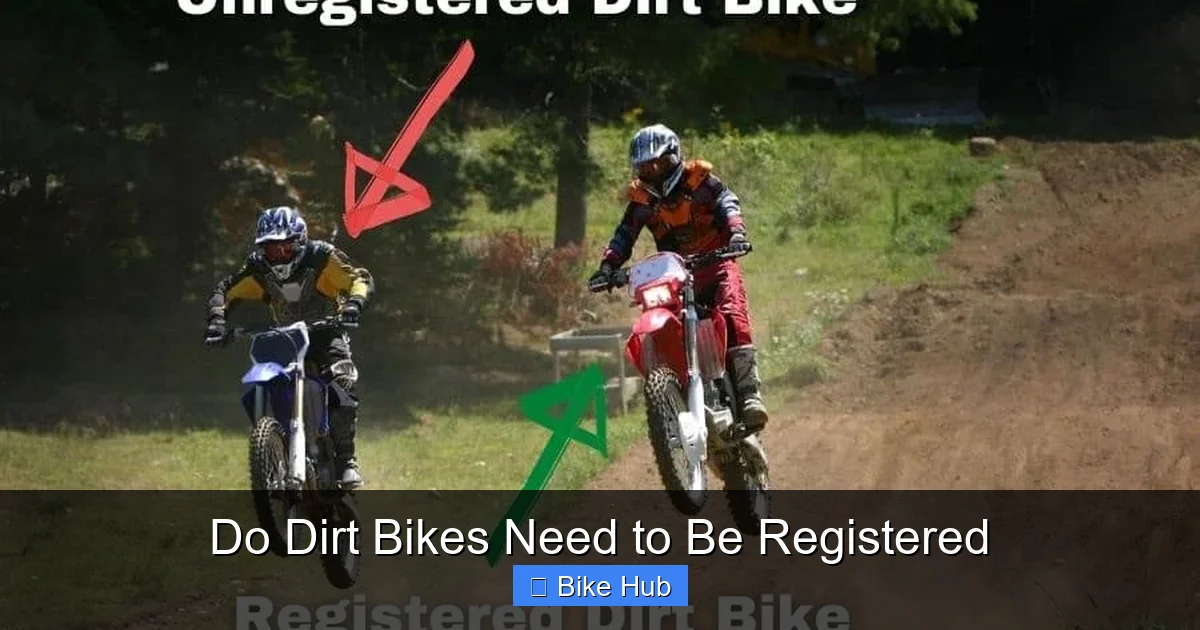
In most states, riding an unregistered dirt bike on public roads is illegal. You could face fines, have your bike impounded, or even get points on your driver’s license.
Crossing Public Land or Using Public Trail Access
Some trail systems require you to cross public roads or use state-maintained access points. Even if you’re not “driving” on the road, crossing it may count as public use—and that often requires registration.
Living in Strict States
States like California, New York, and New Jersey have strict vehicle codes. In California, for example, only street-legal dirt bikes (called “motorcycles”) can be registered. Off-road-only bikes must stay off public roads and can’t be registered for street use.
When Can You Skip Registration?
Riding on Private Property
If you own land or have permission to ride on private property, you usually don’t need to register your dirt bike. This is the most common exemption.
Designated Off-Road Trails and Parks
Many states allow unregistered dirt bikes on designated ORV (Off-Road Vehicle) trails. However, you may still need to purchase a trail pass or decal. For example, in Colorado, you can ride unregistered bikes on BLM land—but you must have a Colorado OHV permit.
Closed-Course Racing or Motocross Tracks
Private tracks and race events don’t require registration. These are considered controlled environments, so street legality doesn’t apply.
Step-by-Step: How to Register Your Dirt Bike
If you’ve decided your dirt bike needs registration, here’s how to do it.
Step 1: Check Your State’s Requirements
Visit your state’s DMV or transportation website. Look for “off-highway vehicle registration” or “motorcycle registration.” Each state has different rules.
For example:
– In Texas, you can register off-road bikes for limited street use if they meet safety standards.
– In Florida, you can register a dirt bike as a “motorcycle” if it passes inspection.
Step 2: Make Your Bike Street-Legal (If Required)
To register for road use, your bike may need:
– Headlights and taillights
– Turn signals
– Mirrors
– Horn
– Speedometer
– EPA-compliant exhaust (low noise and emissions)
– VIN verification
This can cost $500–$1,500 depending on the bike and modifications. Some riders convert older dirt bikes into “dual-sport” motorcycles for this purpose.
Step 3: Gather Required Documents
You’ll typically need:
– Proof of ownership (bill of sale, MCO, or title)
– Valid ID (driver’s license)
– Proof of insurance (if required)
– Completed registration application
– Payment for fees (usually $25–$100)
If you bought the bike used, make sure the title is properly transferred.
Step 4: Pass Inspection (If Required)
Some states require a safety or emissions inspection. This ensures your bike meets road-legal standards. Call your local DMV to find an approved inspection station.
Step 5: Submit Application and Get Your Plate
Submit your paperwork in person or online (if available). Once approved, you’ll receive:
– A license plate
– Registration card
– Sticker for the plate
Keep these with you when riding.
State-by-State Overview: Registration Rules
Here’s a quick look at how different states handle dirt bike registration:
- California: Only street-legal motorcycles can be registered. Off-road bikes must stay off public roads. You can get an OHV decal for trail use.
- Texas: You can register off-road bikes for limited street use if they pass inspection. Otherwise, ride only on private land or designated trails.
- Florida: Dirt bikes can be registered as motorcycles if they meet safety standards. Otherwise, use only off-road.
- New York: Strict rules. Only street-legal bikes can be registered. Off-road bikes need a permit for state trails.
- Colorado: No registration required for off-road use, but an OHV permit is needed for public trails.
- Arizona: Off-road bikes don’t need registration, but you must have a state-issued OHV decal to ride on public land.
Always check your local DMV website for the most current rules.
Alternative to Registration: Trail Passes and Decals
In many cases, you don’t need full registration—just a trail pass. These are cheaper and easier to get.
For example:
– In California, a $30 annual OHV decal lets you ride on state trails.
– In Michigan, you need an ORV license ($26.25) to ride on public land.
These passes fund trail maintenance and are required even if your bike isn’t registered. Think of them as a “user fee” for off-road access.
Practical Tips for Staying Legal
- Know your riding zones: Use apps like OnX Offroad or Trailforks to find legal riding areas.
- Carry proof of ownership: Even if you don’t need registration, rangers may ask for it.
- Insure your bike: Some states require liability insurance for registered bikes. Even if not required, it’s smart for theft or damage.
- Don’t assume “no one will notice”: Rangers and police patrol popular trailheads. Fines can exceed $500.
- Consider a dual-sport bike: If you want road access, buy a bike like the Honda CRF300L or Kawasaki KLX300—they’re street-legal from the factory.
Troubleshooting Common Registration Issues
Problem: My bike doesn’t have a VIN.
Some older or imported dirt bikes lack a VIN. You may need to get a state-assigned VIN through a DMV inspection. This can take time and paperwork.
Visual guide about Do Dirt Bikes Need to Be Registered
Image source: frontaer.com
Visual guide about Do Dirt Bikes Need to Be Registered
Image source: frontaer.com
Problem: I lost the title or MCO.
Contact the manufacturer or previous owner. Some states allow a “bonded title” process if you can’t prove ownership.
Problem: My state doesn’t allow off-road bike registration.
You may need to register it in a more lenient state (if you have an address there) or stick to private land and trail passes.
Conclusion: Ride Smart, Stay Legal
So, do dirt bikes need to be registered? The answer isn’t one-size-fits-all. It depends on where you ride and what your bike is capable of.
If you’re sticking to private land or off-road trails, registration may not be necessary—but you might still need a trail pass. If you plan to ride on public roads, registration is likely required, and your bike must meet street-legal standards.
The best approach? Check your state’s rules, prepare your bike, and carry the right documents. That way, you can focus on what matters: the ride.
And if you’re shopping for a new dirt bike, consider models that are easier to register or already street-legal. For example, the Best Electric Dirt Bikes for Adults often come with cleaner emissions and quieter operation—making them better candidates for registration.
Whether you’re a weekend warrior or a daily rider, staying informed keeps you safe, legal, and ready for adventure.



