
E-bikes are street legal in Illinois as long as they meet specific state requirements. This guide explains the three e-bike classifications, where you can ride, and what equipment is required to stay compliant.
Key Takeaways
- E-bikes are legal in Illinois: The state allows electric bicycles on roads and bike paths if they follow specific guidelines.
- Three e-bike classes exist: Class 1 (pedal-assist), Class 2 (throttle-powered), and Class 3 (speed-pedelec up to 28 mph) each have different rules.
- No license or registration required: Unlike motor vehicles, e-bikes don’t need a driver’s license, registration, or insurance in Illinois.
- Helmet use is required for Class 3 riders: Riders under 16 must wear helmets, and all Class 3 riders are strongly encouraged to do so.
- Restricted areas apply: E-bikes may be banned from certain trails, sidewalks, or parks—always check local ordinances.
- Proper equipment is essential: Lights, brakes, and reflectors are required for safe and legal nighttime riding.
- Know your local rules: Cities like Chicago may have additional regulations beyond state law.
Are E-Bikes Street Legal in Illinois? A Complete How-To Guide
If you’re considering buying or riding an electric bike in Illinois, you’re probably wondering: Are e-bikes street legal in Illinois? The short answer is yes—but with important conditions. Illinois has adopted a clear framework that defines what qualifies as a legal e-bike, where you can ride it, and what safety gear you need.
This guide will walk you through everything you need to know to ride your e-bike legally and safely across Illinois. Whether you’re commuting to work in Chicago, cruising through suburban neighborhoods, or exploring rural trails, understanding the rules ensures you stay on the right side of the law—and out of trouble.
Understanding Illinois E-Bike Laws: The Basics
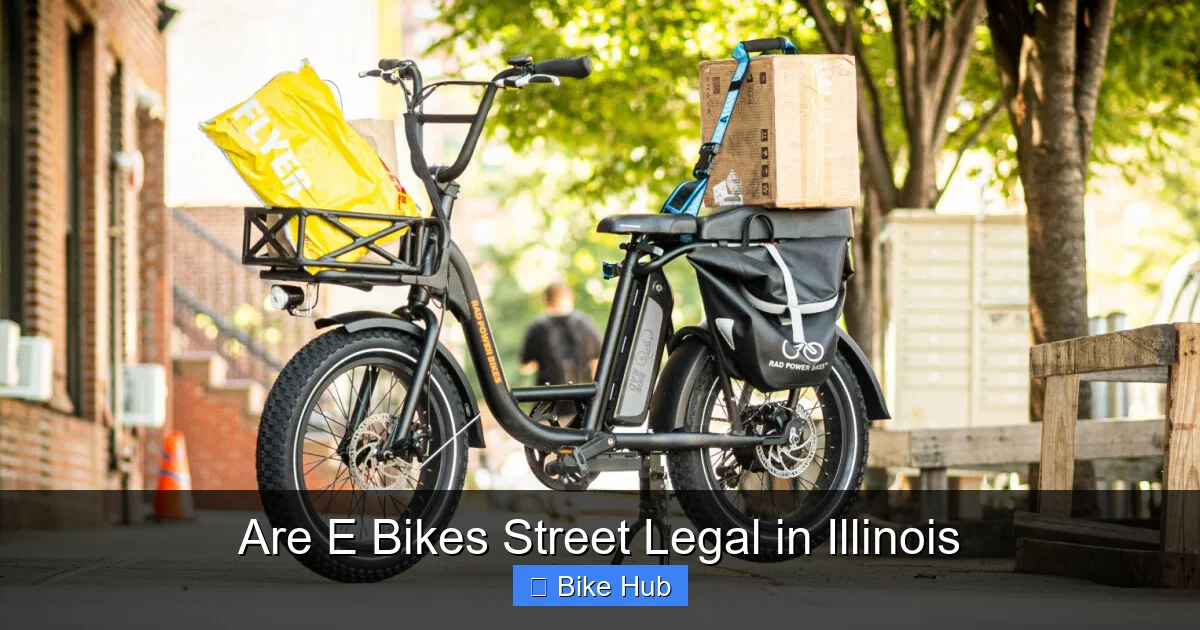
Visual guide about Are E Bikes Street Legal in Illinois
Image source: sp-ao.shortpixel.ai
Illinois follows the three-class system established by the federal government and adopted by many states. This system helps differentiate between low-speed electric bicycles and faster motorized vehicles.
To be street legal in Illinois, your e-bike must meet these criteria:
– Have fully operable pedals
– Have a motor with 750 watts (1 horsepower) or less
– Have a top speed of 20 mph when powered by the motor alone (for Classes 1 and 2)
– For Class 3, the motor can assist up to 28 mph, but only while pedaling
If your bike exceeds these limits, it may be classified as a moped or motorcycle—and that means you’ll need a license, registration, and insurance.
Step 1: Identify Your E-Bike Class
Illinois recognizes three e-bike classes. Knowing which one you have is the first step to riding legally.
Class 1: Pedal-Assist Only
These bikes provide electric assistance only when you’re pedaling, and the motor cuts off at 20 mph. They’re allowed on most bike lanes, paths, and roads.
Class 2: Throttle-Enabled
These bikes can be powered by a throttle (like a scooter) without pedaling, but still cut off at 20 mph. They’re treated similarly to Class 1 bikes in most areas.
Class 3: Speed Pedelec
These offer pedal-assist up to 28 mph. They’re subject to stricter rules—especially regarding helmet use and where they can be ridden.
Step 2: Check Local Ordinances
While state law sets the baseline, cities and counties can impose additional restrictions. For example:
– Chicago allows Class 1 and 2 e-bikes on bike lanes and multi-use trails, but Class 3 e-bikes are prohibited on most park trails.
– Some suburban communities ban e-bikes from sidewalks or require them to follow pedestrian rules.
– State parks and forest preserves may restrict e-bike access to certain trails.
Always check with your local municipality or park district before heading out. When in doubt, assume e-bikes are not allowed unless explicitly permitted.
Step 3: Equip Your E-Bike for Safety and Compliance
Illinois law requires that e-bikes meet basic safety standards, especially when riding at night or in low visibility.
Your e-bike must have:
– A white front headlight visible from 500 feet
– A red rear reflector (and ideally a red rear light)
– Functional brakes that allow you to stop within 20 feet from 10 mph
– Reflective sidewalls or pedal reflectors
These requirements align with standard bicycle safety laws. Investing in quality lights and brakes isn’t just about legality—it’s about staying safe. For example, upgrading to reliable disc brakes can make a big difference in wet conditions. Check out our guide on the best brakes for e-bikes to find models that enhance stopping power and durability.
Step 4: Wear the Right Gear
While Illinois doesn’t require helmets for all e-bike riders, there are exceptions:
– Riders under 16 must wear a helmet
– All Class 3 e-bike riders are strongly encouraged to wear helmets due to higher speeds
Even if it’s not mandatory, wearing a helmet is a smart move. At 20–28 mph, a fall can result in serious injury. A well-fitted helmet can be the difference between a minor scrape and a trip to the ER.
Other recommended gear includes bright or reflective clothing, gloves, and eye protection—especially if you’re riding in traffic or on gravel paths.
Step 5: Ride Responsibly and Respectfully
Just because e-bikes are legal doesn’t mean you can ride recklessly. Illinois law expects e-bike riders to follow the same rules as traditional cyclists:
– Ride in the same direction as traffic
– Obey traffic signals and signs
– Use hand signals when turning
– Yield to pedestrians
On shared paths, slow down near walkers and announce your presence with a bell or voice (“On your left!”). Remember: e-bikes are quieter than cars, so others may not hear you coming.
Where Can You Ride Your E-Bike in Illinois?
Visual guide about Are E Bikes Street Legal in Illinois
Image source: sp-ao.shortpixel.ai
Knowing where you can legally ride is just as important as knowing the technical requirements.
Roads and Bike Lanes
All three classes of e-bikes are allowed on roads and bike lanes unless posted otherwise. This makes e-bikes a great option for city commuting. In fact, many urban riders choose e-bikes to avoid traffic and reduce their carbon footprint. For city commuters, models like those featured in our roundup of the best electric bikes for city commuting offer comfort, range, and agility for navigating busy streets.
Multi-Use Trails and Parks
Most paved multi-use trails (like the Illinois Prairie Path or Lakefront Trail) allow Class 1 and 2 e-bikes. However, Class 3 bikes are often restricted due to their higher speed. Always look for signage at trailheads.
Natural surface trails (dirt, gravel, singletrack) may prohibit e-bikes entirely to protect trail integrity and user safety. When in doubt, stick to designated e-bike friendly routes.
Sidewalks
Sidewalk riding rules vary by city. In Chicago, e-bikes are generally not allowed on sidewalks in business districts. In residential areas, they may be permitted—but you must yield to pedestrians and ride at a safe speed.
Private Property
You can ride e-bikes on private property with the owner’s permission. This includes bike parks, campgrounds, and private trails.
Troubleshooting Common Issues
Even with the best preparation, you might run into problems. Here’s how to handle common scenarios:
“My E-Bike Was Confiscated by Park Rangers”
This usually happens when riding a Class 3 e-bike on a trail that only allows Class 1 or 2. Double-check trail rules before you go. If you believe the seizure was unjust, contact the managing authority with proof of your bike’s classification.
“I Got a Ticket for No Helmet”
If you’re over 16 and riding a Class 1 or 2 e-bike, you’re not required to wear a helmet under state law. However, local ordinances may differ. Fight the ticket only if you’re certain your ride was legal—and consider wearing a helmet anyway for safety.
“My E-Bike Doesn’t Have Reflectors or Lights”
You can be cited for riding without proper lighting at night. Purchase compliant lights and reflectors from any bike shop. For long-term storage or travel, learn how to properly pack your lights—our guide on how to store bike lights when not in use offers practical tips to keep them safe and functional.
Final Tips for Safe and Legal E-Biking in Illinois
– Know your bike’s class: Check the manufacturer’s label or manual.
– Stay updated: E-bike laws can change. Follow the Illinois Department of Transportation (IDOT) or local cycling coalitions for updates.
– Lock it up: E-bikes are theft targets. Use a high-quality U-lock and secure both wheels. For advice, read our guide on how to choose a lock for e-bikes.
– Maintain your ride: Regularly check brakes, tires, and battery health. A well-maintained e-bike is safer and more reliable.
Conclusion
So, are e-bikes street legal in Illinois? Absolutely—if you follow the rules. With clear classifications, no licensing requirements, and growing infrastructure support, Illinois is becoming increasingly e-bike friendly. Whether you’re using your e-bike for commuting, recreation, or fitness, understanding the laws helps you ride with confidence.
By identifying your e-bike class, equipping it properly, and respecting local regulations, you can enjoy all the benefits of electric cycling without legal worries. Stay safe, stay informed, and enjoy the ride!



