
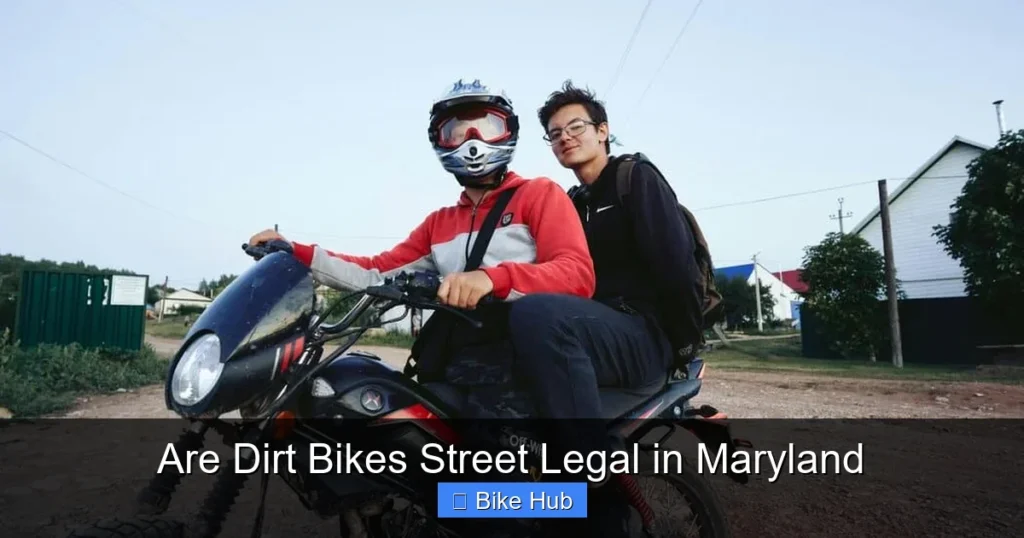
Dirt bikes are not automatically street legal in Maryland. To ride one legally on public roads, you must meet specific state requirements for equipment, registration, and licensing. This guide walks you through every step to get your dirt bike street-ready in Maryland.
Key Takeaways
- Most dirt bikes aren’t street legal by default: They lack required safety features like headlights, turn signals, and mirrors.
- Maryland requires registration and insurance: You must register your dirt bike with the MVA and carry liability insurance to ride on public roads.
- Equipment modifications are mandatory: Your bike needs DOT-compliant lights, brakes, mirrors, horn, and a muffler to meet state standards.
- You need a valid driver’s license or motorcycle endorsement: Operating a street-legal dirt bike requires proper licensing in Maryland.
- Off-road use is often a better option: Many riders use private trails or designated OHV areas instead of modifying bikes for street use.
- Electric dirt bikes may have an advantage: Some models come closer to street-ready specs and can be easier to legalize.
- Check local ordinances: Even if state law allows it, your city or county may have additional restrictions.
Are Dirt Bikes Street Legal in Maryland? A Complete How-To Guide
If you’re a dirt bike enthusiast in Maryland wondering whether you can take your off-road machine onto city streets or rural highways, the short answer is: not without modifications. Most standard dirt bikes are built for trails, not traffic—and Maryland law reflects that. But don’t worry—this guide will walk you through everything you need to know to legally ride your dirt bike on public roads in the Old Line State.
You’ll learn what makes a dirt bike “street legal,” the exact equipment requirements, how to register and insure your bike, and whether it’s even worth the effort. We’ll also cover alternatives like electric dirt bikes and off-road parks so you can make the best choice for your riding style.
Understanding Maryland’s Street Legal Dirt Bike Laws
In Maryland, a dirt bike is considered an “off-highway vehicle” (OHV) unless it meets specific criteria set by the Motor Vehicle Administration (MVA). According to state law, only motorcycles that comply with federal and state safety standards can operate on public roads.
That means your typical trail bike—with no headlight, turn signals, or speedometer—won’t cut it. To be street legal, your dirt bike must be converted into a compliant motorcycle. This process involves adding several components and passing inspections.
What Defines a Street Legal Motorcycle in Maryland?
Maryland follows the National Highway Traffic Safety Administration (NHTSA) guidelines for motorcycle compliance. To qualify, your dirt bike must have:
- Headlight (high and low beam)
- Tail light and brake light
- Turn signals (front and rear)
- Mirrors (at least one, but two are recommended)
- Horn
- Speedometer
- Muffler and emissions control (if applicable)
- DOT-approved tires
- Working brakes on both wheels
- License plate bracket and illumination
If your bike doesn’t have these, it’s not street legal—even if you’ve added a few parts yourself.
Step-by-Step: How to Make Your Dirt Bike Street Legal in Maryland
Converting a dirt bike for street use isn’t just about slapping on a headlight. It’s a detailed process that requires planning, parts, and paperwork. Here’s how to do it right.
Step 1: Choose a Convertible Dirt Bike Model
Not all dirt bikes can be easily converted. Start with a model that’s known for street-legal potential. Bikes like the Honda CRF450L, Kawasaki KLX250S, or Yamaha WR250R are popular choices because they come closer to meeting road requirements out of the box.
Avoid ultra-light or competition-only models—they often lack the frame strength or space for necessary components.
Step 2: Install Required Safety Equipment
This is the most time-consuming part. You’ll need to install or upgrade:
- Lighting system: Buy a DOT-compliant headlight kit with high/low beams, brake light, and turn signals. LED kits are energy-efficient and bright.
- Mirrors: Mount at least one mirror on the handlebars. Two are safer and often required during inspection.
- Horn: A standard automotive horn works fine—just wire it to a switch.
- Speedometer: Mechanical or digital options are available. Some kits include a tachometer too.
- Muffler: Ensure your exhaust meets noise and emissions standards. Stock mufflers are usually fine, but aftermarket ones must be EPA-compliant.
- Tires: Replace knobby off-road tires with DOT-approved street tires. Check out our guide on the best bike tires for hardpack dirt for hybrid options that work on both trail and pavement.
Wiring everything together can be tricky. Consider buying a complete street-legal conversion kit from brands like Trail Tech or Enduro Engineering. These include harnesses, switches, and instructions.
Step 3: Register Your Dirt Bike with the MVA
Once your bike is equipped, you must register it as a motorcycle. Here’s how:
- Visit your local MVA office with proof of ownership (bill of sale or title).
- Bring a completed Application for Certificate of Title (Form VR-1).
- Provide proof of insurance (see next step).
- Pay registration and titling fees (typically $80–$120 depending on engine size).
- Pass a safety inspection (see below).
Note: If your bike was never titled, you may need a bonded title or special affidavit—check with the MVA first.
Step 4: Get Motorcycle Insurance
Maryland requires all motor vehicles, including motorcycles, to carry liability insurance. Minimum coverage is:
- $30,000 for bodily injury per person
- $60,000 for bodily injury per accident
- $15,000 for property damage
Contact insurers that cover motorcycles—many offer policies for dual-sport or converted bikes. Keep your insurance card with you at all times while riding.
Step 5: Pass the MVA Safety Inspection
Maryland requires a safety inspection for all newly registered motorcycles. The inspector will check:
- Working lights and signals
- Brake function
- Tire condition and tread
- Mirror placement
- Horn operation
- License plate mount and light
Schedule your inspection at an authorized MVA station. If your bike fails, you’ll get a checklist of fixes needed.
Step 6: Obtain a Motorcycle Endorsement or License
You can’t legally ride your newly street-legal dirt bike without the proper license. In Maryland, you need either:
- A valid Class C driver’s license with a motorcycle endorsement (M), or
- A Class M motorcycle license
To get the endorsement, pass a written test and a skills test at the MVA. Training courses through the Maryland Motorcycle Safety Program can waive the skills test.
Should You Even Bother Making Your Dirt Bike Street Legal?
Let’s be honest: converting a dirt bike is expensive and time-consuming. Parts, labor, registration, and insurance can cost $1,500–$3,000—sometimes more than the bike itself.
Consider these alternatives:
Option 1: Buy a Bike That’s Already Street Legal
Save yourself the hassle by purchasing a dual-sport or adventure bike designed for both trail and street. Models like the Suzuki DR-Z400S or KTM 500 EXC-F come street-ready from the factory.
Check out our list of the best street legal dirt bikes for top picks that balance off-road capability with road compliance.
Option 2: Ride on Private Land or OHV Trails
Maryland has several off-highway vehicle areas where you can legally ride dirt bikes without street modifications. Popular spots include:
- Gambrill State Park (Frederick County)
- Green Ridge State Forest
- Piney Run Park (Carroll County)
These areas require permits (around $30/year) but allow full off-road use. No lights, mirrors, or insurance needed.
Option 3: Go Electric
Electric dirt bikes like the Sur Ron Light Bee or Cake Kalk are gaining popularity. Some models are easier to convert because they have built-in lighting and quieter operation. Plus, they’re eco-friendly and low-maintenance.
See our review of the best electric dirt bikes for adults to find a model that fits your needs.
Troubleshooting Common Issues
Problem: My bike failed the MVA inspection.
Double-check all lighting and brake functions. Make sure turn signals flash at the correct rate (60–120 flashes per minute). Replace any non-DOT parts with certified equivalents.
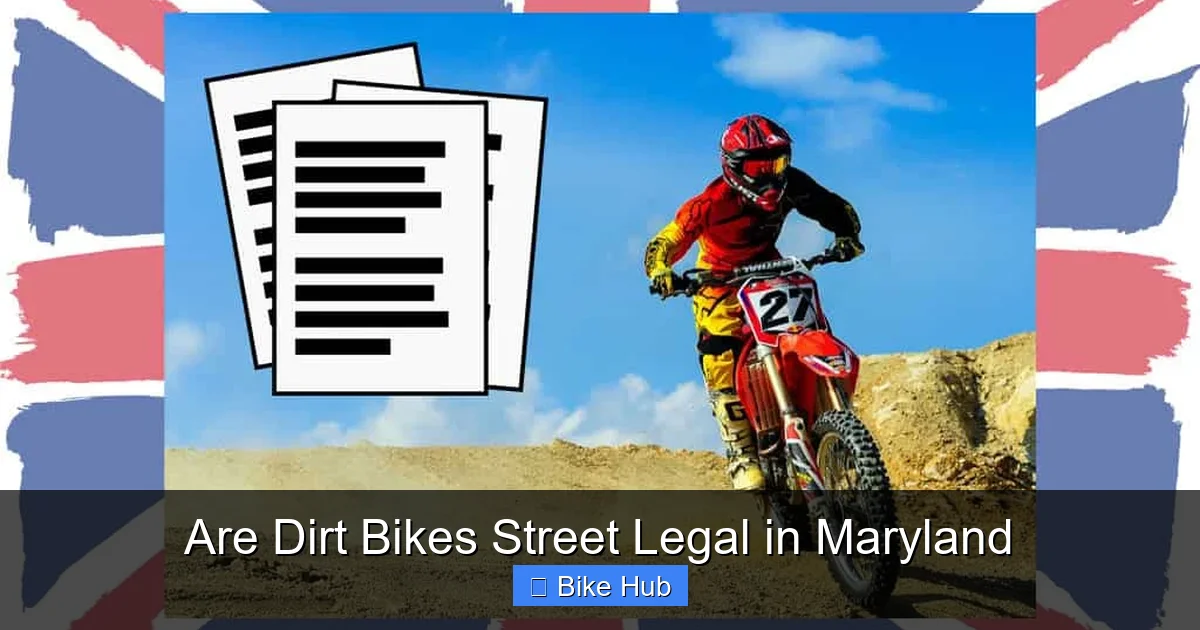
Visual guide about Are Dirt Bikes Street Legal in Maryland
Image source: projectdirtbike.com
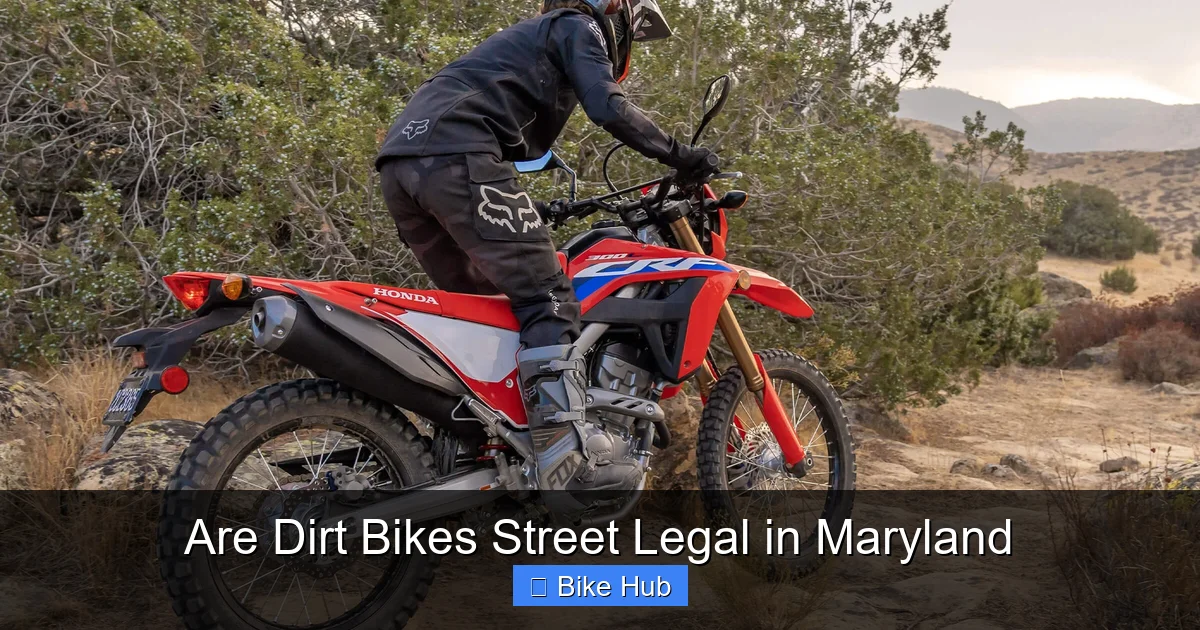
Visual guide about Are Dirt Bikes Street Legal in Maryland
Image source: motorbiscuit.com
Problem: I can’t find insurance for my converted bike.
Contact specialty insurers like Progressive, Geico, or Foremost. Explain that your bike is registered and inspected—many will cover it under a standard motorcycle policy.
Problem: Local police stopped me for riding without proper gear.
Even with a legal bike, you must wear a DOT-approved helmet, eye protection, and protective clothing. Carry your registration, insurance, and license at all times.
Final Thoughts: Is It Worth It?
Making a dirt bike street legal in Maryland is possible—but it’s not for everyone. If you plan to commute or ride long distances on roads, investing in a factory street-legal dual-sport bike is smarter and safer.
But if you’re passionate about customization and want the freedom to ride from your driveway to the trailhead, the conversion process can be rewarding. Just follow the steps carefully, stay compliant, and always prioritize safety.
Remember: riding illegally on public roads can result in fines, impoundment, or license suspension. When in doubt, stick to designated off-road areas or upgrade to a bike built for the street.
Whether you’re converting, buying new, or sticking to trails, Maryland offers plenty of ways to enjoy your dirt bike—just make sure you’re doing it the right way.



