
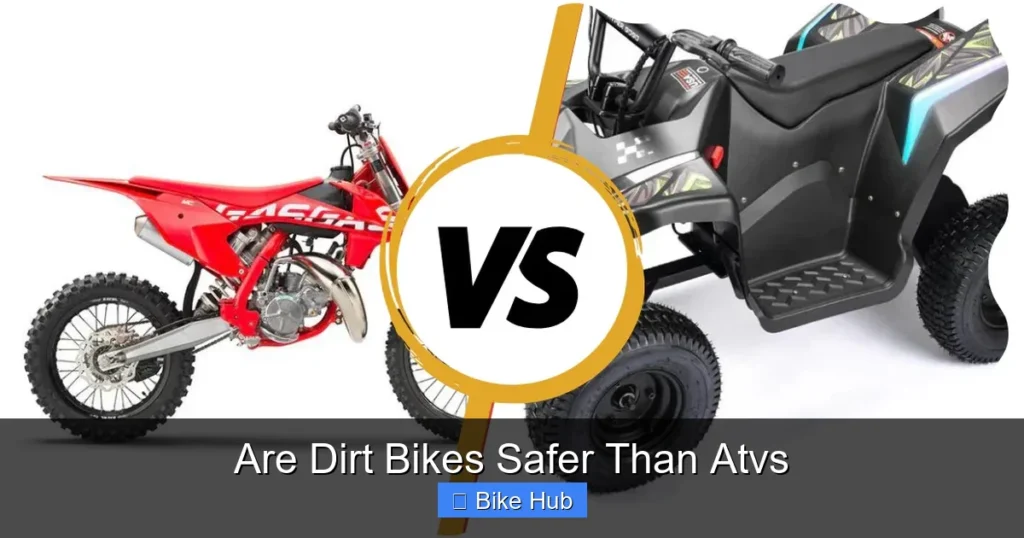
This guide breaks down the key safety differences between dirt bikes and ATVs. You’ll learn about stability, rider control, injury risks, and terrain suitability to help you make a smarter, safer choice.
Key Takeaways
- Dirt bikes require more skill but offer better maneuverability: They are lighter and more agile, making them ideal for skilled riders on technical trails.
- ATVs are more stable at low speeds: With four wheels and a lower center of gravity, ATVs are less likely to tip over during slow maneuvers or on flat terrain.
- Injury severity tends to be higher on ATVs: Despite their stability, ATV crashes often result in more serious injuries due to the vehicle’s weight and momentum.
- Proper training reduces risk for both vehicles: Beginners should take certified safety courses regardless of which vehicle they choose.
- Protective gear is non-negotiable: Helmets, gloves, boots, and body armor significantly reduce injury risk on both dirt bikes and ATVs.
- Terrain matters more than vehicle type: Riding within your skill level and on appropriate terrain is the biggest factor in staying safe.
- Electric dirt bikes are emerging as safer alternatives: Quieter, lighter, and with smoother power delivery, models like the Best Electric Dirt Bikes for Adults reduce accident risks for new riders.
Are Dirt Bikes Safer Than ATVs? A Complete Safety Comparison
If you’re new to off-road riding or thinking about upgrading your ride, you’ve probably asked: Are dirt bikes safer than ATVs? It’s a smart question—safety should always come first when choosing any motorized vehicle, especially one built for rough terrain.
In this guide, we’ll walk you through a detailed comparison of dirt bikes and ATVs from a safety standpoint. You’ll learn how each vehicle handles, what risks they carry, and how to minimize danger through training, gear, and smart riding habits. By the end, you’ll have the knowledge to pick the right machine—and ride it safely.
Understanding the Basics: Dirt Bikes vs. ATVs
Before diving into safety, let’s clarify what we’re comparing.
Dirt bikes are lightweight, two-wheeled motorcycles designed for off-road use. They’re built for speed, agility, and jumping, making them popular among trail riders, motocross racers, and stunt enthusiasts.
ATVs (All-Terrain Vehicles), also known as quads, have four wheels and a straddle seat. They’re heavier, more stable at low speeds, and often used for utility work, farming, or recreational trail riding.
While both are fun and capable off-road, their design differences lead to very different safety profiles.
Step 1: Compare Stability and Balance
One of the biggest factors in safety is how stable a vehicle is—especially for beginners.
ATVs: Built for Low-Speed Stability
ATVs win in stability at slow speeds. Their four wheels and wide stance make them less likely to tip over when idling, turning sharply, or climbing gentle hills. This makes them a popular choice for beginners, farmers, and families.
However, that stability can be misleading. ATVs have a high center of gravity when loaded or ridden aggressively. On steep inclines or during sharp turns at speed, they can roll over—often sideways—which can trap the rider underneath.
Dirt Bikes: Agile but Demand Skill
Dirt bikes are less stable at rest. You need to balance them manually, which takes practice. But once moving, they’re incredibly nimble. Their lightweight frame and two-wheel design allow quick direction changes, jumps, and tight trail navigation.
This agility is a double-edged sword. While skilled riders can avoid hazards easily, beginners may lose control during sudden maneuvers or on uneven ground.
Tip: If you’re new to off-road riding, consider starting with a Best Beginner Dirt Bike that has lower power and smoother throttle response.
Step 2: Analyze Injury Risks and Crash Data
Let’s look at the numbers. According to the U.S. Consumer Product Safety Commission (CPSC), ATVs are involved in more fatal accidents than dirt bikes—despite being perceived as “safer.”
Why ATV Crashes Are More Dangerous
ATVs are heavier—often 600–800 pounds—compared to dirt bikes (200–250 pounds). In a crash, that extra mass means more force is transferred to the rider. Rollovers are especially dangerous because the vehicle can land on top of the rider, causing crush injuries or suffocation.
Additionally, many ATV riders don’t wear full protective gear, assuming the vehicle’s stability makes it safer. This false sense of security increases injury severity.
Dirt Bike Injuries: Often Less Severe, But Still Risky
Dirt bike crashes usually involve high-speed falls or collisions. While broken bones, concussions, and road rash are common, the lighter weight means less crushing force. Riders are more likely to be thrown clear of the bike.
However, dirt bikes are often ridden on more technical terrain—steep hills, jumps, rocky trails—which increases the chance of high-impact accidents.
Example: A rider hitting a jump too fast on a dirt bike might overshoot the landing and crash. On an ATV, the same mistake could lead to a rollover down a ravine.
Step 3: Consider Rider Skill and Training
Safety isn’t just about the vehicle—it’s about the rider.
ATVs: Easier to Learn, Harder to Master
ATVs are simpler to operate for beginners. You sit in a seat, use handlebars like a motorcycle, and control speed with a thumb throttle. This makes them accessible to kids, teens, and casual riders.
But that ease can lead to overconfidence. Many ATV accidents happen because riders underestimate the vehicle’s power or take risks beyond their skill level.
Dirt Bikes: Steeper Learning Curve, Greater Reward
Dirt bikes require coordination, balance, and quick reflexes. You must use your body weight to steer, stand while riding, and modulate the clutch and throttle precisely.
This learning curve means more time is needed to become proficient. But once mastered, dirt bikes offer unmatched control and responsiveness.
Pro Tip: Take a certified safety course like those offered by the ATV Safety Institute or the Motorcycle Safety Foundation. Even experienced riders benefit from refresher training.
Step 4: Evaluate Terrain and Use Case
The safest vehicle depends heavily on where and how you ride.
Best for Technical Trails: Dirt Bikes
If you’re riding tight single-track trails, doing jumps, or navigating rocky terrain, a dirt bike is usually the better choice. Its lightweight and suspension system absorb bumps and allow precise control.
For example, riders tackling mountain trails or skatepark-style jumps often prefer Best Dirt Jump Bikes for Skateparks for their agility and responsiveness.
Best for Utility and Flat Terrain: ATVs
ATVs shine on flat or gently rolling terrain. They’re ideal for hauling gear, towing trailers, or exploring wide fire roads. Their stability makes them safer for carrying passengers or cargo.
However, avoid using ATVs on steep hills or uneven ground unless you’re highly experienced.
Step 5: Gear Up for Safety
No matter which vehicle you choose, protective gear is essential.
Must-Have Safety Equipment
- Helmet: A full-face DOT- or Snell-certified helmet is non-negotiable.
- Gloves: Protect hands from blisters, cuts, and impact.
- Boots: Sturdy, over-the-ankle boots prevent foot and ankle injuries. Check out Best Dirt Bike Boots for Trail Riding for top picks.
- Body Armor: Chest protectors, knee guards, and elbow pads reduce injury in falls.
- Goggles: Keep dirt, rocks, and debris out of your eyes.
Wearing gear doesn’t make you invincible—but it can turn a serious injury into a minor scrape.
Step 6: Consider Electric Options for Safer Riding
Electric dirt bikes are gaining popularity—and for good reason. They’re quieter, lighter, and deliver power more smoothly than gas-powered models.
This makes them ideal for beginners and younger riders. With less sudden torque, there’s less chance of accidental wheelies or loss of control.
Models like the RM7 Electric Dirt Bike Review show how electric bikes combine performance with safety features like adjustable power modes and regenerative braking.
Troubleshooting Common Safety Issues
Even with the best preparation, problems can arise. Here’s how to handle common safety concerns:
Problem: Losing Control on a Dirt Bike
Solution: Practice slow-speed maneuvers in an open area. Focus on clutch control and body positioning. Avoid sudden throttle bursts.
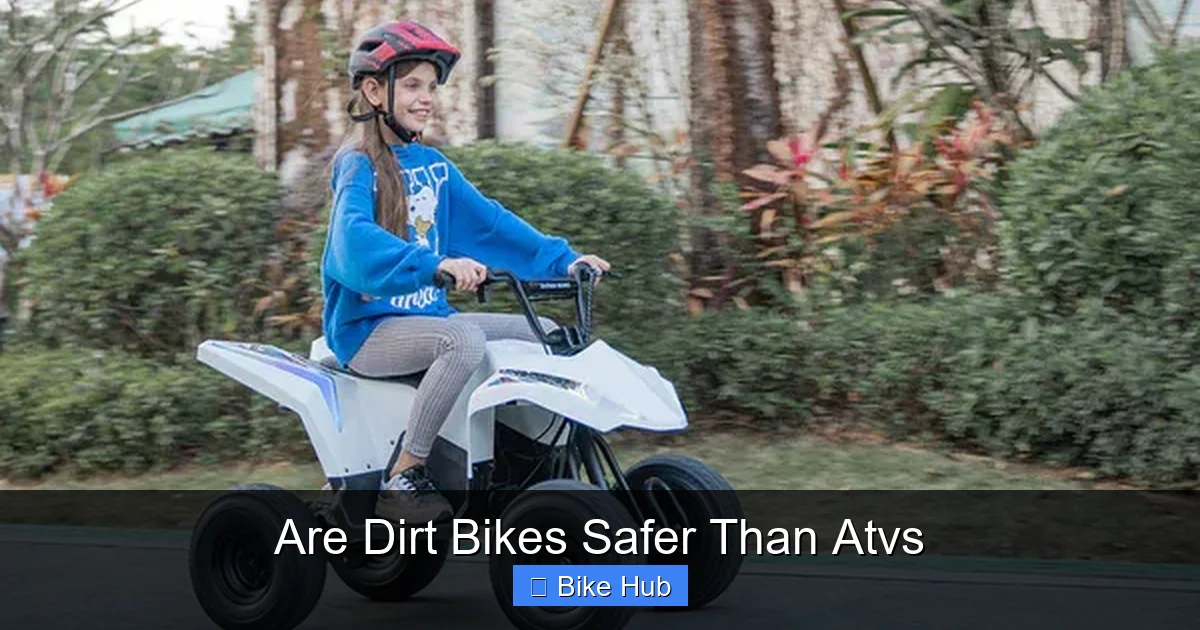
Visual guide about Are Dirt Bikes Safer Than Atvs
Image source: hypergogo.com
Problem: ATV Rollover on a Hill
Solution: Always ride straight up and down hills—never sideways. If you start to tip, lean into the hill and steer away from the edge.
Problem: Overconfidence After a Few Rides
Solution: Stay within your skill level. Just because you can ride doesn’t mean you should attempt advanced trails or stunts.
Conclusion: Which Is Safer?
So, are dirt bikes safer than ATVs? The answer isn’t black and white.
ATVs are more stable at low speeds and easier for beginners to operate, but their weight and rollover risk make crashes more dangerous.
Dirt bikes demand more skill and balance, but their lighter weight and agility can help avoid accidents—if ridden responsibly.
Ultimately, the safest vehicle is the one matched to your skill level, terrain, and commitment to safety. Whether you choose a dirt bike or ATV, always wear protective gear, get proper training, and ride within your limits.
And if you’re just starting out, consider a beginner-friendly model like the Best Starter Dirt Bike for Adults to build confidence safely.
Ride smart, stay protected, and enjoy the thrill of off-road adventure.



