
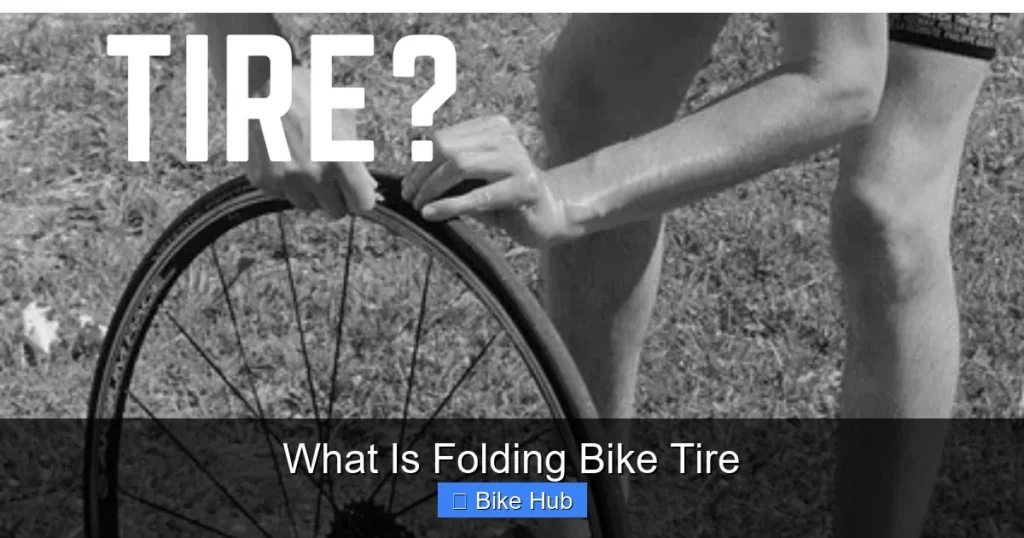
A folding bike tire is a lightweight, compact tire designed for easy storage and portability. Unlike traditional tires, it features a flexible bead that allows it to fold or roll up, making it ideal for travelers, commuters, and bikepackers who need space-saving gear.
If you’re into cycling—whether you’re a daily commuter, a weekend warrior, or a long-distance tourer—you’ve probably heard the term “folding bike tire.” But what exactly is a folding bike tire, and why are so many riders making the switch? Simply put, a folding bike tire is a type of bicycle tire designed with a flexible bead made from materials like Kevlar or aramid fiber, instead of the rigid steel wire found in traditional tires. This innovative design allows the tire to fold, roll, or pack down into a much smaller size, making it incredibly convenient for storage and transport.
Unlike standard tires that are stiff and bulky, folding tires give you the freedom to carry a spare without adding significant weight or taking up precious space. Imagine being able to stash a spare tire in your backpack, pannier, or even a jersey pocket—no more wrestling with a rigid, unwieldy tire when you’re on the go. Whether you’re hopping on a train, flying to a cycling destination, or just trying to keep your gear organized, folding tires offer a level of practicality that’s hard to beat.
Key Takeaways
- Folding bike tires use Kevlar or aramid fiber beads instead of steel, allowing them to bend and fold without damage.
- They are lighter than standard tires, reducing overall bike weight and improving ride efficiency.
- Perfect for commuters and travelers, folding tires take up less space in bags or panniers.
- Available in various sizes and treads, they suit road, gravel, and hybrid bikes.
- Easy to carry as spares—ideal for long rides or bike tours where space is limited.
- Comparable in performance to wire-bead tires, with added convenience and portability.
- Require proper inflation and care to maintain durability and prevent punctures.
Quick Answers to Common Questions
What makes a folding bike tire different from a regular tire?
A folding bike tire uses a flexible Kevlar or aramid fiber bead instead of a steel wire, allowing it to fold or roll up for easy storage and transport.
Are folding tires less durable than standard tires?
No, high-quality folding tires are just as durable as standard tires and often offer better ride quality due to supple casings and advanced materials.
Can I use folding tires on any bike?
Yes, as long as the tire size matches your rim (e.g., 700c, 26”), folding tires work on road, mountain, hybrid, and gravel bikes.
Do folding tires cost more?
They can be slightly more expensive due to advanced materials, but the added convenience and performance often justify the price.
How do I store a folding tire when not in use?
Store it loosely rolled or flat in a cool, dry place away from direct sunlight to preserve the bead and casing.
📑 Table of Contents
How Folding Bike Tires Work
At the heart of every folding bike tire is its bead—the part that locks the tire onto the rim. In traditional tires, this bead is made of steel wire, which is strong but inflexible. Folding tires, on the other hand, use a high-strength synthetic fiber like Kevlar (a material also used in bulletproof vests) or aramid. These fibers are incredibly strong yet flexible, allowing the tire to bend and fold without losing structural integrity.
The Role of the Bead
The bead is what keeps the tire securely seated on the rim when inflated. In folding tires, the Kevlar or aramid bead is woven into a thin, lightweight cord that can be bent or coiled. This means you can roll the tire up like a sleeping bag or fold it into a compact bundle. When you’re ready to use it, simply unfold it, mount it on the rim, and inflate—it will snap into place just like a regular tire.
Construction and Materials
Beyond the bead, folding tires often feature lightweight casings made from high-thread-count fabrics. These casings improve ride quality by offering better flexibility and responsiveness. Many folding tires also include puncture-resistant layers, such as Kevlar belts or special rubber compounds, to enhance durability. The result is a tire that’s not only easy to carry but also performs well on the road.
Benefits of Folding Bike Tires
So, why should you consider switching to folding bike tires? The advantages go beyond just portability. Let’s break down the key benefits that make these tires a favorite among serious cyclists.
Lightweight Design
One of the biggest perks of folding tires is their weight. Because they use synthetic beads and often lighter casings, they can be significantly lighter than their wire-bead counterparts. For example, a folding version of a popular road tire might weigh 200 grams, while the standard version weighs 280 grams. That 80-gram difference might not sound like much, but when you’re climbing hills or trying to maximize speed, every gram counts.
Space-Saving Convenience
Whether you’re commuting by bike and need to carry a spare, or you’re embarking on a multi-day tour, space is always at a premium. Folding tires can be rolled up and stored in a small bag, jacket pocket, or saddle pack. This makes them ideal for bikepacking, air travel, or urban commuting where you might need to stash your bike in a tight space.
Easy to Carry as Spares
Imagine being on a long ride and getting a flat. With a folding spare tire, you can carry a backup without adding bulk to your gear. Many cyclists keep a folded tire in their seat bag alongside a pump, patch kit, and multitool. This peace of mind is invaluable, especially on remote routes where help might be hours away.
Performance on Par with Standard Tires
Don’t let the flexibility fool you—folding tires are built to perform. High-end models from brands like Continental, Schwalbe, and Vittoria offer the same grip, durability, and rolling resistance as traditional tires. In fact, some riders report even better ride quality due to the supple casings used in many folding models.
Types of Folding Bike Tires
Folding tires aren’t just for road bikes. They come in a wide range of styles to suit different riding conditions and preferences.
Road Folding Tires
Designed for speed and efficiency on paved surfaces, road folding tires are typically narrow (23c to 28c) with smooth or lightly treaded patterns. They’re perfect for commuters, racers, and fitness riders who want a lightweight, responsive tire that’s easy to carry.
Mountain and Gravel Folding Tires
For off-road adventures, folding mountain and gravel tires offer wider profiles (up to 2.3 inches or more) with aggressive treads for traction on dirt, gravel, and trails. These tires are popular among bikepackers and gravel grinders who need durability and portability.
Hybrid and Commuter Folding Tires
Hybrid folding tires strike a balance between speed and comfort, making them ideal for city riding and light trails. They often feature moderate tread and puncture protection, giving you confidence on varied terrain.
How to Choose the Right Folding Tire
With so many options available, picking the right folding tire can feel overwhelming. Here’s what to consider:
Tire Size and Compatibility
Always check your bike’s rim size (e.g., 700c, 26”, 27.5”) and ensure the folding tire matches. Most folding tires are labeled clearly, but double-check the sidewall or product description.
Tread Pattern and Use Case
Choose a tread that matches your riding style. Smooth treads are best for pavement, while knobby treads excel off-road. If you ride in wet conditions, look for tires with siping or water-channeling grooves.
Puncture Resistance
Look for features like Kevlar belts, reinforced sidewalls, or special rubber compounds. Brands like Schwalbe offer “SmartGuard” or “V-Guard” layers that significantly reduce the risk of flats.
Weight and Rolling Resistance
If speed is your priority, opt for a lightweight tire with low rolling resistance. Check reviews or manufacturer specs for performance data.
Installation and Maintenance Tips
Installing a folding tire is similar to mounting a standard tire, but there are a few tips to make the process smoother.
Proper Mounting Technique
Start by partially inflating the tire to help it seat correctly. Use tire levers if needed, but be gentle—folding beads can be more delicate than steel. Work the tire onto the rim evenly, ensuring the bead sits fully in the rim channel.
Inflation and Pressure
Always inflate to the recommended PSI, which is usually printed on the tire sidewall. Underinflated tires can pinch flat or wear unevenly, while overinflation increases the risk of blowouts.
Storage and Care
Store folding tires in a cool, dry place away from direct sunlight. Avoid folding them too tightly for long periods, as this can weaken the bead over time. If you’re not using a spare for a while, store it loosely rolled or flat.
Common Misconceptions About Folding Tires
Despite their popularity, folding tires still come with some myths. Let’s clear them up.
“They’re Less Durable”
Not true. While the bead is flexible, modern folding tires are built to last. High-quality models undergo rigorous testing and often outperform standard tires in terms of ride quality and longevity.
“They’re Only for Racing”
While racers love the weight savings, folding tires are just as useful for everyday riders. Commuters, tourists, and casual cyclists all benefit from their portability and performance.
“They’re Harder to Install”
With a little practice, mounting a folding tire is just as easy as a standard one. The flexible bead can actually make it easier to get the last bit of tire onto the rim.
Conclusion
Folding bike tires are more than just a clever innovation—they’re a practical upgrade for any cyclist who values convenience, performance, and portability. Whether you’re dodging potholes on your daily commute, exploring backroads on a weekend ride, or packing light for a bike tour, folding tires give you the freedom to ride with confidence and ease. With their lightweight design, space-saving benefits, and high performance, it’s no wonder they’ve become a staple in the cycling world. So next time you’re shopping for tires, consider going foldable—you might just wonder how you ever rode without them.
Frequently Asked Questions
Can folding bike tires be patched if they get a flat?
Yes, folding tires can be patched just like regular tires. Use a standard patch kit on the inner tube, and ensure the tire is free of debris before remounting.
Do folding tires require special rims?
No, folding tires work with standard rims. The bead design doesn’t affect rim compatibility, so you can use them on any rim that fits the tire size.
Are folding tires good for wet weather?
Many folding tires are designed with wet-weather performance in mind. Look for models with siping, water channels, or high-grip rubber compounds for better traction on wet roads.
Can I use folding tires for mountain biking?
Absolutely. Many mountain and gravel bikes use folding tires for their lightweight and portability. Just choose a model with aggressive tread and puncture protection.
Do folding tires wear out faster?
Not necessarily. Wear depends more on tread compound, riding conditions, and maintenance than on whether the tire folds. High-quality folding tires can last just as long as standard ones.
Are folding tires worth the extra cost?
For commuters, travelers, and performance-focused riders, the convenience, weight savings, and portability make folding tires a worthwhile investment.



