
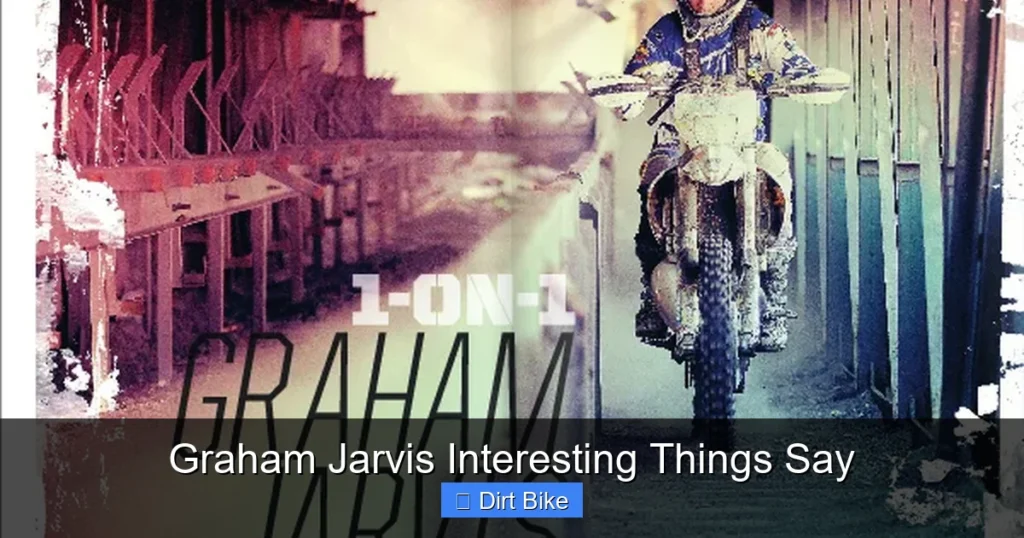
Learn the most inspiring and insightful quotes from Graham Jarvis, one of the greatest extreme enduro riders of all time. This guide breaks down his wisdom into actionable tips for dirt bike riders of all levels.
Key Takeaways
- Mindset is everything: Jarvis emphasizes mental strength over physical ability—believing you can do it is half the battle.
- <Ride smart, not just hard: Technique and patience often beat raw power in tough terrain.
- Embrace failure as feedback: Jarvis sees every crash or stall as a lesson, not a setback.
- Preparation beats panic: Knowing your bike and the trail reduces fear and increases control.
- Stay present: Focus on the next move, not the entire obstacle—this keeps you calm under pressure.
- Respect the terrain: Nature is unpredictable; humility keeps you safe and sharp.
- Have fun, always: Jarvis rides with joy—even in the toughest races, he reminds us why we started.
Introduction: What You’ll Learn from Graham Jarvis’s Best Quotes
If you’re into dirt biking—especially extreme enduro—you’ve probably heard of Graham Jarvis. He’s not just a champion; he’s a legend. Over decades of conquering some of the world’s toughest trails, Jarvis has shared powerful insights that go beyond technique. His words reveal a deep philosophy about riding, resilience, and life.
This guide dives into the most interesting things Graham Jarvis says and turns them into practical advice. Whether you’re a beginner or a seasoned rider, his wisdom can help you ride smarter, safer, and with more confidence. You’ll learn how to build mental toughness, improve your technique, and enjoy every ride—even when it gets tough.
Let’s break down his best quotes and show you exactly how to apply them on your next dirt bike adventure.
Step 1: Master Your Mindset—“It’s All in Your Head”
One of Jarvis’s most famous quotes is: “If you think you can’t do it, you won’t. If you think you can, you’re already halfway there.”
This isn’t just motivational fluff—it’s a proven truth in extreme enduro. The mental game separates good riders from great ones.
How to Apply This Quote
Before you even start your engine, take a moment to visualize success. Picture yourself navigating that rocky climb or muddy ravine smoothly. This mental rehearsal builds neural pathways that help your body respond better under pressure.
Try this: Before a tough section, close your eyes and imagine three clean attempts. See yourself balancing, choosing the right line, and staying calm. Then ride it for real.
Practical Tip
Use positive self-talk. Instead of saying, “I’m going to crash,” say, “I’ve got this. One step at a time.” Jarvis often repeats simple mantras like “Smooth and steady” to stay focused.
Step 2: Ride Smart, Not Just Hard—“Speed Is a Byproduct of Control”
Jarvis once said, “People think enduro is about going fast. It’s not. It’s about going slow when you need to.”
This might sound counterintuitive, but it’s key. In technical terrain, rushing leads to mistakes. Control leads to consistency.
How to Apply This Quote
Focus on precision over pace. When approaching a tricky obstacle, slow down. Use your clutch, brakes, and body position to maintain balance. Speed will come naturally when you’re in control.
For example, when climbing a steep, rocky hill, Jarvis often crawls up using minimal throttle and maximum balance. He’s not racing—he’s solving a puzzle.
Practical Tip
Practice “slow-speed drills” in a safe area. Ride figure-eights, stoppies, and pivots at walking speed. This builds muscle memory and confidence for real-world challenges.
Step 3: Learn from Every Fall—“Mistakes Are Just Data”
Jarvis doesn’t fear failure. He says, “Every time I fall, I learn something. Even if it’s just what not to do next time.”
In enduro, crashes and stalls are part of the process. The best riders don’t avoid them—they analyze them.
How to Apply This Quote
After a fall, take 30 seconds to reflect. Ask yourself:
– What went wrong?
– What could I have done differently?
– What did I learn?
Write it down in a riding journal. Over time, you’ll see patterns—like always stalling on left turns or losing balance on wet roots.
Practical Tip
Record your rides. Watching footage helps you spot mistakes you didn’t feel in the moment. Jarvis often reviews his runs to fine-tune his approach.
Step 4: Prepare Like a Pro—“Know Your Bike, Know the Trail”
Jarvis emphasizes preparation: “If you’re not prepared, you’re already behind.”
He spends hours studying maps, checking weather, and tuning his bike before a race. This isn’t just about safety—it’s about confidence.
How to Apply This Quote
Before any ride, do a full bike check:
– Tire pressure
– Brake function
– Chain tension
– Fluid levels
Also, research the trail. Use GPS apps or trail guides to understand elevation changes, obstacles, and water crossings.
Practical Tip
Pack a small tool kit and spare parts (like a tube or clutch cable). Jarvis always carries essentials—because getting stranded is worse than being slow.
Step 5: Stay Present—“Focus on the Next Move, Not the Whole Obstacle”
When facing a massive rock garden or river crossing, it’s easy to feel overwhelmed. Jarvis’s advice? “Don’t look at the top. Look at the next rock.”
This keeps your mind from spiraling into panic.
How to Apply This Quote
Break big challenges into small steps. Instead of thinking, “I have to cross this entire ravine,” focus on the next foot of terrain. Pick a line, commit, and move.
This technique reduces anxiety and improves decision-making.
Practical Tip
Use your eyes to lead your body. Look where you want to go—not at the obstacle you’re afraid of. Your bike follows your gaze.
Step 6: Respect the Terrain—“Nature Doesn’t Care How Tough You Are”
Jarvis often reminds riders: “The mountain doesn’t know your name. It doesn’t care if you’re a champion.”
This humility keeps him safe and sharp.
How to Apply This Quote
Always assume the terrain is more powerful than you. Mud can hide holes. Rocks can shift. Weather can change fast.
Ride within your limits, especially in unfamiliar areas. It’s better to walk a section than risk a serious injury.
Practical Tip
Ride with a buddy. Jarvis rarely rides alone in extreme conditions. Having someone nearby can mean the difference between a quick recovery and a long wait for help.
Step 7: Keep the Joy Alive—“If It’s Not Fun, Why Are You Doing It?”
Even in the toughest races, Jarvis smiles. He says, “I ride because it makes me happy. If it stops being fun, I’ll stop.”
This reminds us that dirt biking is a passion, not a punishment.
How to Apply This Quote
Don’t let pressure or competition kill your love for riding. Celebrate small wins—like clearing a tough log or riding a trail smoothly.
Take breaks. Enjoy the scenery. Ride with friends. Laugh at your falls.
Practical Tip
Plan fun rides, not just training sessions. Explore new trails, try new styles (like trials or hill climbs), or just cruise through the woods. Variety keeps you excited.
Troubleshooting Common Challenges
Even with Jarvis’s wisdom, riders face problems. Here’s how to handle them:
Problem: You’re Afraid of Big Obstacles
Solution: Start small. Practice on easier versions of the obstacle. Build confidence gradually. Remember Jarvis: “Fear shrinks when you face it.”
Problem: You Keep Stalling on Hills
Solution: Work on clutch control. Practice starting on a slight incline. Use your rear brake to prevent rolling back. Jarvis calls this “the dance of the clutch and brake.”
Problem: You Get Frustrated After Crashes
Solution: Reframe failure. Say, “This is part of the process.” Take a breath, reset, and try again. Jarvis crashes—he just gets back up faster.
Problem: You Ride Too Fast Too Soon
Solution: Slow down. Focus on clean lines and smooth inputs. Speed will come with skill. As Jarvis says, “Control first, speed second.”
Conclusion: Let Graham Jarvis Inspire Your Ride
Graham Jarvis isn’t just a dirt bike legend—he’s a teacher. His quotes aren’t just catchy phrases; they’re tools for better riding. From mastering your mindset to respecting the terrain, his wisdom applies to every rider.
By embracing his philosophy—ride smart, learn from failure, stay present, and have fun—you’ll not only improve your skills but also deepen your love for the sport.
So next time you’re on your bike, remember: it’s not about being the fastest. It’s about being the most prepared, the most focused, and the most joyful. That’s what Graham Jarvis does. And that’s how legends are made.
Now go ride—and ride with purpose.



