
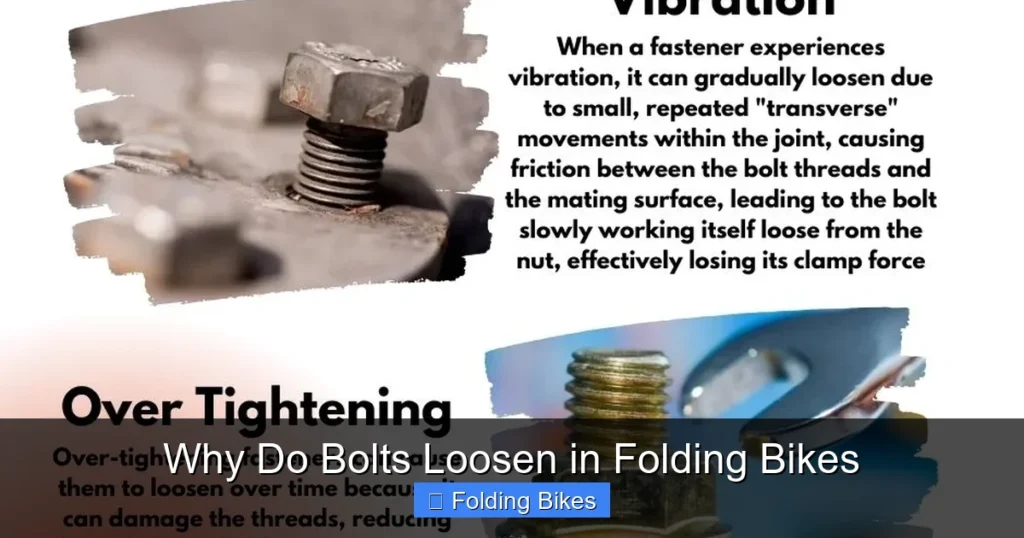
Bolts on folding bikes often loosen due to constant folding, vibration, and stress from riding. This guide explains the causes and shows you how to fix and prevent it with simple tools and smart habits.
Key Takeaways
- Frequent folding creates stress points: Repeated folding and unfolding weakens joints and loosens bolts over time.
- Vibration and road shock are major culprits: Rough terrain and daily riding send vibrations through the frame, gradually loosening fasteners.
- Improper torque is a common mistake: Over-tightening or under-tightening bolts leads to early failure or slippage.
- Use threadlocker for long-term security: Applying a small amount of medium-strength threadlocker helps bolts stay in place.
- Regular maintenance prevents surprises: Checking bolts every few weeks saves you from dangerous failures on the road.
- Upgrade to locking bolts or washers: Specialized hardware like nylon-insert nuts or split washers adds extra grip.
- Store and carry your bike carefully: Rough handling during transport increases the risk of loosening critical bolts.
Why Do Bolts Loosen in Folding Bikes? A Complete Guide to Prevention and Repair
If you own a folding bike, you’ve probably noticed that bolts—especially on hinges, handlebars, and seat posts—tend to loosen over time. It’s not just annoying; it can be dangerous. A loose bolt on your folding mechanism could lead to a sudden collapse while riding. So why does this happen? And more importantly, how can you stop it?
In this guide, we’ll break down the main reasons bolts loosen in folding bikes, show you how to fix them, and share simple habits to keep your bike safe and secure. Whether you’re a daily commuter or a weekend explorer, this guide will help you ride with confidence.
Understanding Why Bolts Loosen
Visual guide about Why Do Bolts Loosen in Folding Bikes
Image source: ayafasteners.com
Folding bikes are designed for convenience, but that convenience comes with mechanical trade-offs. Unlike traditional bikes, folding bikes have multiple moving parts and hinges that experience repeated stress. Here’s why bolts tend to come loose:
1. Repeated Folding and Unfolding
Every time you fold or unfold your bike, the hinges and joints move. This motion creates micro-shifts in the metal parts. Over time, these small movements can cause bolts to gradually back out—even if they were properly tightened at first.
Think of it like wiggling a screw in a piece of wood: the hole gets bigger, and the screw doesn’t hold as tightly. The same thing happens inside your bike’s joints.
2. Vibration and Road Shock
Riding over bumps, potholes, and uneven pavement sends vibrations through the frame. These vibrations travel through the bolts and can slowly work them loose. Folding bikes, especially compact models, often have stiffer frames that transmit more shock to the joints.
This is especially true if you ride on gravel paths, city streets with poor pavement, or during longer rides. The constant shaking is like a tiny hammer hitting your bolts over and over.
3. Improper Torque During Assembly
Many riders—especially new folding bike owners—don’t use a torque wrench when tightening bolts. Over-tightening can strip threads or damage lightweight components. Under-tightening leaves bolts too loose, allowing movement.
For example, the bolts on your folding hinge should be snug but not extremely tight. Using the correct torque setting (usually listed in your bike’s manual) ensures a secure fit without damage.
4. Thermal Expansion and Contraction
Metal expands when it heats up and contracts when it cools. If you leave your bike in a hot car or ride in cold weather, the metal parts change size slightly. This repeated expansion and contraction can loosen bolts over time.
This effect is more noticeable in aluminum frames, which expand more than steel. If your folding bike has an aluminum frame, thermal changes may play a bigger role.
5. Poor Quality or Worn Hardware
Cheap bolts, nuts, or washers can wear out quickly. Threads may strip, or the metal may fatigue after repeated stress. If you’ve had your bike for a few years, inspect the hardware for signs of wear.
Replacing old or damaged bolts with high-quality stainless steel or titanium versions can make a big difference.
How to Prevent Bolts from Loosening
Now that you know why bolts loosen, let’s talk about how to stop it. Prevention is always better than repair—especially when safety is involved.
Step 1: Use a Torque Wrench
Always tighten bolts to the manufacturer’s recommended torque. Most folding bikes require between 4–8 Nm (Newton meters) for hinge and clamp bolts. A torque wrench ensures you don’t over-tighten or under-tighten.
Tip: Keep a small torque wrench in your bike toolkit. It’s one of the most useful tools you can own.
Step 2: Apply Threadlocker
Threadlocker is a liquid adhesive that hardens between threads to prevent loosening. Use a medium-strength formula like Loctite 242 (blue) for most bolts.
Apply a small drop to the bolt threads before tightening. Don’t overdo it—too much can make future removal difficult. Avoid using threadlocker on bolts that need frequent adjustment, like seat post clamps.
Step 3: Upgrade to Locking Hardware
Consider replacing standard nuts and bolts with locking versions:
– Nylon-insert lock nuts: These have a plastic ring inside that grips the bolt threads.
– Split washers or star washers: These add tension to prevent rotation.
– Safety bolts or folding-specific hardware: Some brands sell reinforced bolts designed for folding mechanisms.
These upgrades are inexpensive and highly effective.
Step 4: Inspect Bolts Regularly
Make it a habit to check key bolts every 2–4 weeks. Focus on:
– Folding hinge bolts
– Handlebar clamp bolts
– Seat post clamp
– Pedal axles
– Stem bolts
Use a hex key or wrench to gently test each one. If it turns easily, it’s loose. Tighten it to the correct torque.
Tip: Keep a checklist in your bike bag or phone notes to track inspections.
Step 5: Store and Transport Carefully
How you carry your bike matters. Avoid dropping it or letting it bang against other objects. Use a padded bike bag or case when traveling.
If you use a car rack, secure the bike firmly to prevent movement. Vibration during transport can loosen bolts just like riding does.
Troubleshooting Common Issues
Even with good habits, bolts can still loosen. Here’s how to fix common problems:
Problem: Bolt Won’t Stay Tight
If a bolt keeps loosening despite proper tightening, the threads may be damaged. Try:
– Cleaning the threads with a wire brush.
– Applying threadlocker.
– Replacing the bolt and nut with a slightly larger size (if space allows).
If the hole is stripped, you may need a thread repair kit or to consult a bike mechanic.
Problem: Bolt is Stuck or Seized
Moisture and dirt can cause bolts to seize. To remove a stuck bolt:
– Spray with a penetrating oil like WD-40.
– Let it sit for 10–15 minutes.
– Use a hex key with a rubber mallet to gently tap and loosen.
Never force it—this can strip the head or break the bolt.
Problem: Folding Mechanism Feels Wobbly
A wobbly hinge often means loose or worn bolts. Check all hinge bolts and tighten them. If the wobble persists, the hinge itself may be worn and need replacement.
Some folding bikes have adjustable hinge tension. Refer to your manual for adjustment instructions.
When to Seek Professional Help
While most bolt issues can be fixed at home, some problems require a professional:
– If you’re unsure about torque settings.
– If a bolt is broken or deeply seized.
– If the folding mechanism is damaged or misaligned.
Visit a local bike shop for a safety inspection if you’re concerned. It’s better to be safe than sorry.
Conclusion
Bolts loosen in folding bikes because of repeated folding, vibration, and stress—but that doesn’t mean you have to live with it. With the right tools, habits, and hardware, you can keep your bike secure and ride with peace of mind.
Remember: prevention is key. Use a torque wrench, apply threadlocker, inspect regularly, and upgrade to locking hardware when needed. These small steps make a big difference in safety and performance.
Your folding bike is built for convenience and adventure. Don’t let loose bolts slow you down. Stay proactive, stay safe, and enjoy every ride.
For more tips on maintaining your folding bike, check out our guide on how to choose a pump for e-bikes—especially useful if you’ve upgraded to an electric folding model. If you’re planning a long trip, don’t miss our article on best folding mountain bikes for bikepacking. And for those riding in wet conditions, learn how to protect your bike with weatherproofing tips for mountain bikes.



