
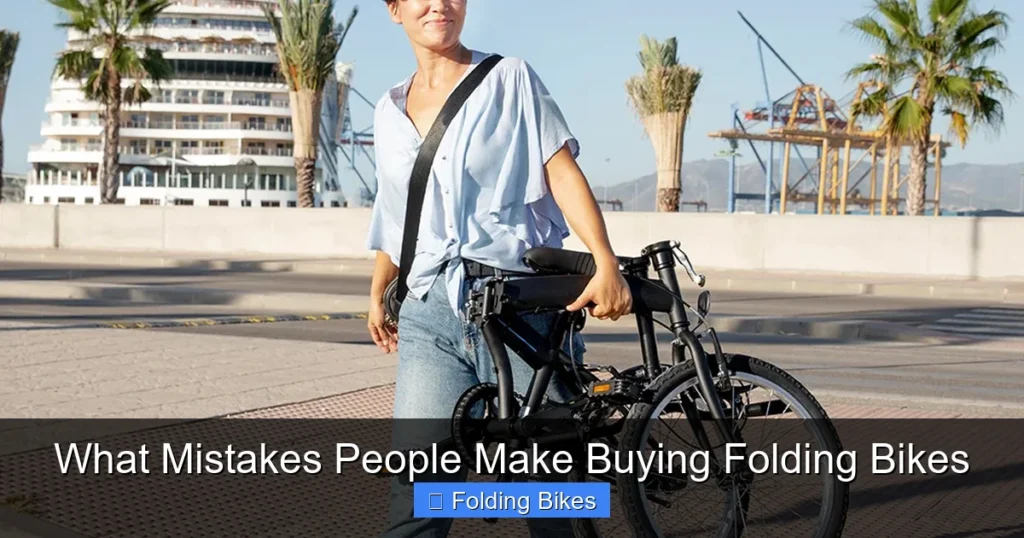
Buying a folding bike can be tricky if you don’t know what to look for. Many riders make avoidable errors—like ignoring frame size, underestimating weight, or skipping test rides—that lead to discomfort or regret. This guide helps you dodge those pitfalls and choose a bike that fits your lifestyle.
Key Takeaways
- Ignoring proper fit: A folding bike that doesn’t fit your body causes discomfort and poor control. Always check standover height and adjustability.
- Overlooking weight and portability: Heavier models are harder to carry upstairs or on transit. Choose lightweight frames if you’ll be lifting often.
- Skipping the test ride: Never buy without riding first. Handling, braking, and comfort vary widely between models.
- Choosing based on price alone: Cheap bikes often use low-quality parts that wear out fast. Invest in reliable components for long-term value.
- Neglecting gear range and terrain match: Flat-city riders need fewer gears; hilly areas demand wider ranges. Match your bike to your route.
- Forgetting about storage and accessories: Consider where you’ll store it at home or work—and whether you need racks, fenders, or lights.
- Assuming all folds are equal: Some bikes fold faster or smaller than others. Test the folding mechanism yourself.
Introduction: Why Folding Bike Buying Mistakes Matter
Folding bikes are perfect for city commuters, travelers, and apartment dwellers who need space-saving transport. But because they’re compact and versatile, many buyers assume “smaller = simpler.” That’s a mistake. Choosing the wrong folding bike can lead to sore backs, frustrating commutes, or a bike that spends more time in storage than on the road.
In this guide, you’ll learn the most common errors people make when buying folding bikes—and how to avoid them. We’ll walk you through fit, weight, gears, folding mechanics, and real-world usability so you can make a confident, informed decision.
Mistake #1: Not Prioritizing Proper Fit
Just like any bike, a folding bike must fit your body. Yet many buyers focus only on wheel size or color and ignore ergonomics.

Visual guide about What Mistakes People Make Buying Folding Bikes
Image source: i.pinimg.com
Check Standover Height
Standover height is the distance from the ground to the top tube. You should be able to stand over the bike with both feet flat and a few inches of clearance. If the frame is too tall, you’ll struggle to mount, dismount, or stop safely.
Test Adjustability
Look for adjustable seat posts and handlebars. A good folding bike lets you fine-tune your riding position. For example, taller riders may need extended seat posts, while shorter riders benefit from lower handlebars for better control.
Pro tip: Bring a tape measure to the shop or check specs online. Most reputable brands list min/max rider heights.
Mistake #2: Ignoring Weight and Real-World Portability
All folding bikes are portable—but some are much easier to carry than others.
Understand the Weight Trade-Off
Lighter bikes (under 25 lbs) are ideal for stair climbing, bus rides, or train commutes. Heavier models (30+ lbs) may have sturdier frames but become burdensome over time.
Consider Where You’ll Carry It
Ask yourself: Will you carry it up three flights of stairs daily? Take it on the subway? Store it under a desk? If yes, prioritize weight and carry handles. Some bikes include built-in grips or wheels for rolling when folded—a huge convenience.
Example: The Brompton M6L weighs just 24.9 lbs and rolls on its rear wheel when folded, making it ideal for urban commuters.
Mistake #3: Skipping the Test Ride
Never buy a folding bike without riding it first. Handling feels different from full-sized bikes due to smaller wheels and shorter wheelbases.
Test Stability and Steering
Ride at low speed and make tight turns. Does the bike feel wobbly? Does steering respond smoothly? Small wheels can feel twitchy on uneven pavement—so test on real-world surfaces if possible.
Check Braking Performance
Apply both brakes firmly. Do they stop the bike confidently without skidding? Many budget models use basic rim brakes that struggle in wet conditions. Consider disc brakes if you ride in rain or hills.
Related read: Learn how to maintain your brakes with our guide on how to choose lock for e-bikes—safety starts with reliable stopping power.
Mistake #4: Choosing Based on Price Alone
A $300 folding bike might seem like a steal—until the gears slip, the chain snaps, or the frame cracks after six months.
Invest in Quality Components
Look for reputable drivetrain brands like Shimano or SRAM. Avoid no-name gear systems. Similarly, check tire quality—cheap tires wear fast and puncture easily.
Think Long-Term Value
A $600 bike with durable parts often costs less over time than replacing a $300 bike every year. Read reviews and check warranty terms. Brands like Tern, Dahon, and Brompton offer strong customer support.
Mistake #5: Mismatching Gears to Your Terrain
Not all folding bikes are built for hills. Yet many buyers assume “geared = good for everything.”
Flat Cities Need Simplicity
If you ride mostly on flat streets, a 3- or 7-speed bike is plenty. More gears add weight and complexity you don’t need.
Hilly Areas Demand Range
For steep climbs, look for bikes with wide gear ranges (e.g., 8–9 speeds) or internal gear hubs like Shimano Nexus. These offer smooth shifting and low maintenance.
Need help picking tires for varied terrain? Check out our guide on how to choose tires for gravel bikes—even folding bikes benefit from the right rubber.
Mistake #6: Overlooking Folding Mechanism and Speed
Not all folds are created equal. Some take 10 seconds; others require tools and five minutes.
Test the Fold Yourself
At the store, ask to fold and unfold the bike. Is it intuitive? Do parts pinch your fingers? Can you do it with one hand? Practice in different settings—like a crowded sidewalk or train platform.
Consider Fold Size
Measure the folded dimensions. Will it fit in your car trunk? Under your office desk? Some bikes fold flatter or narrower than others. If storage space is tight, this matters.
Mistake #7: Forgetting About Accessories and Upgrades
Many buyers forget that folding bikes often need add-ons to be truly practical.
Plan for Commuting Needs
Will you carry a laptop? Ride in rain? Ride at night? Add a rear rack, fenders, and lights. Some bikes have pre-drilled mounts; others require adapters.
Don’t Skimp on Security
Folding bikes are theft magnets because they’re easy to steal and resell. Use a high-quality lock. Our guide on how to use a folding lock shows how to secure your bike properly—even in tight spaces.
Troubleshooting Common Post-Purchase Issues
Even with careful research, problems can arise. Here’s how to handle them:
Bike Feels Unstable at Speed
This is common with small-wheel bikes. Solution: Keep tires properly inflated (check sidewall for PSI), ensure wheels are true, and avoid sudden steering inputs.
Folding Mechanism Gets Stiff
Lubricate hinges and latches with bike-specific grease. Avoid WD-40—it attracts dirt.
Seat Post Slips
Tighten the clamp or upgrade to a locking seat post. Some models use quick-release clamps that loosen over time.
Conclusion: Buy Smart, Ride Happy
Buying a folding bike doesn’t have to be overwhelming. By avoiding these seven common mistakes—prioritizing fit, testing portability, riding before buying, investing in quality, matching gears to terrain, understanding the fold, and planning for accessories—you’ll end up with a bike that fits your life, not the other way around.
Remember: the best folding bike is the one you’ll actually use. Take your time, ask questions, and don’t rush the decision. Your back, your wallet, and your commute will thank you.



