
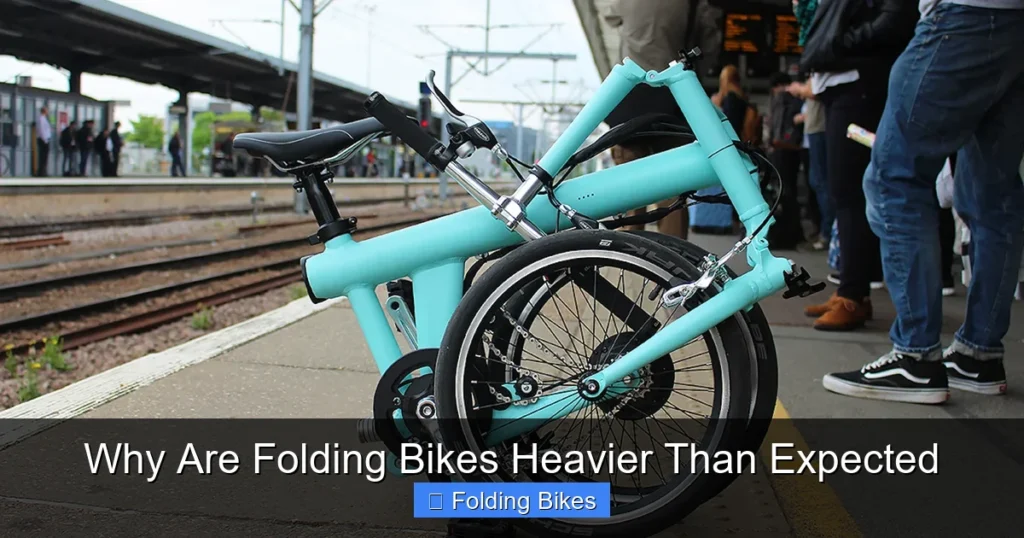
Folding bikes often weigh more than riders anticipate due to reinforced frames, extra hinges, and compact components. This guide breaks down the engineering trade-offs behind their weight and offers practical advice for choosing a lighter, more portable option.
Key Takeaways
- Reinforced frames add weight: Folding bikes need strong joints and hinges to stay safe when folded, which increases overall mass.
- Smaller wheels require sturdier builds: Compact wheels demand thicker tires and stronger rims, contributing to higher weight.
- Folding mechanisms aren’t lightweight: Latches, locks, and hinges are built for durability, not minimalism.
- Materials matter: Many folding bikes use steel or heavy aluminum instead of carbon fiber to keep costs down.
- Integrated features add bulk: Built-in racks, fenders, or lights increase convenience but also weight.
- You can find lighter options: Premium models use advanced materials and smart design to reduce weight without sacrificing function.
- Weight isn’t everything: A slightly heavier foldable may offer better stability, comfort, and longevity for daily commuting.
Introduction: Why Your Folding Bike Feels Heavier Than Promised
You’ve probably seen ads for folding bikes that highlight portability, ease of storage, and quick commutes—but when you lift one, you’re surprised by how heavy it feels. You’re not imagining things. Most folding bikes are heavier than standard city or road bikes of similar size. But why?
In this guide, we’ll walk you through the real reasons folding bikes carry extra weight, from engineering necessities to material choices. You’ll learn how to evaluate weight vs. functionality, compare models wisely, and even find lighter alternatives that still deliver on foldability and performance. Whether you’re commuting, traveling, or just need a bike that fits in your apartment, understanding these factors will help you make a smarter purchase.
Step 1: Understand the Structural Demands of Folding
At first glance, a folding bike looks like any other bicycle—until you try to fold it. That’s where the complexity begins. Unlike rigid-frame bikes, folding bikes must maintain structural integrity while allowing parts to move, lock, and unfold reliably.

Visual guide about Why Are Folding Bikes Heavier Than Expected
Image source: img-s-msn-com.akamaized.net
Hinges and Joints Add Mass
Every fold requires a hinge—and hinges need strength. Manufacturers use steel or reinforced aluminum joints to prevent wobbling or failure under stress. These components are inherently heavier than solid tubing. For example, a typical mid-frame hinge alone can add 300–500 grams compared to a non-folding design.
Reinforced Frame Sections
To compensate for weakened points at fold locations, engineers thicken tubing or add gussets (metal supports) around joints. This reinforcement ensures safety during rides but adds noticeable weight. Think of it like reinforcing a door hinge versus using a solid slab of wood—the extra material is necessary for durability.
Step 2: Consider Wheel Size and Tire Requirements
Most folding bikes use smaller wheels—typically 16″ or 20″—to enable compact folds. While this helps with portability, it introduces new weight challenges.
Smaller Wheels Need Stronger Builds
Small wheels spin faster and absorb less shock, so they require sturdier rims and thicker tires to handle urban bumps and potholes. Heavy-duty tires with puncture protection layers (like Kevlar belts) add grams quickly. A 20″ tire on a folding bike often weighs more than a 700c tire on a road bike due to its reinforced construction.
Hub Complexity
Compact wheels often house internal gear hubs or folding mechanisms within the axle. These systems are more complex and heavier than standard freewheels. For instance, a Shimano Nexus 3-speed hub adds about 1.2 kg—nearly 2.6 pounds—compared to a simple single-speed setup.
Step 3: Evaluate the Folding Mechanism Itself
The magic of a folding bike lies in its ability to collapse—but that convenience comes at a cost.
Locking Systems Must Be Secure
Every fold point needs a reliable latch or clamp to prevent accidental unfolding mid-ride. These locks are made from steel or hardened aluminum and often include springs, bolts, and safety catches. A single high-quality latch can weigh as much as 200 grams.
Multiple Fold Points Multiply Weight
Many models fold in two or three places: handlebars, frame, and pedals. Each additional fold adds another mechanism. Pedal-folding systems, for example, use hinges and clips that aren’t found on regular bikes. All these extras accumulate fast.
Step 4: Assess Material Choices and Cost Trade-Offs
Material selection plays a huge role in weight—and affordability.
Steel vs. Aluminum vs. Carbon Fiber
Entry-level folding bikes often use steel frames because it’s durable, easy to weld at joints, and cost-effective. However, steel is significantly heavier than aluminum or carbon fiber. Even aluminum folding bikes tend to use thicker tubes to maintain strength at fold points, reducing the weight advantage over traditional aluminum bikes.
Carbon fiber is lightweight but expensive and harder to integrate into folding designs due to stress concentrations at joints. As a result, only premium models (like the Brompton Electric or Tern Vektron) use carbon strategically—and even then, not for the entire frame.
Budget Constraints Limit Lightweight Options
Manufacturers balance price, durability, and weight. A $300 folding bike won’t use aerospace-grade alloys or titanium hinges. If you want a sub-10kg (22 lb) folding bike, expect to pay $1,500 or more.
Step 5: Account for Integrated Features
Many folding bikes come loaded with commuter-friendly accessories—but these add weight too.
Built-In Racks and Fenders
Some models include rear racks, front baskets, or full-coverage fenders right out of the box. While convenient, a rear rack alone can add 500–800 grams. Fenders made of metal (rather than plastic) double that.
Lighting and Battery Systems
E-bike versions are especially heavy due to motors and batteries. Even non-electric models may include LED lights powered by dynamo hubs or USB-rechargeable systems—all adding mass.
Step 6: Compare Real-World Weights
To put things in perspective, here’s a quick comparison:
- Standard city bike: 11–13 kg (24–29 lbs)
- Typical folding bike (aluminum): 12–15 kg (26–33 lbs)
- Budget folding bike (steel): 14–18 kg (31–40 lbs)
- Premium lightweight folder: 9–11 kg (20–24 lbs)
As you can see, many folding bikes rival or exceed the weight of full-sized hybrids—even though they’re designed to be portable.
Troubleshooting: What If Your Folding Bike Is Too Heavy?
If you already own a folding bike and find it cumbersome, consider these fixes:
Remove Unnecessary Accessories
Take off racks, baskets, or fenders you don’t use. Every gram counts when lifting or carrying.
Upgrade Tires
Switch to lighter, high-pressure tires if your bike allows it. Look for models labeled “performance” or “urban speed.” Just ensure they’re compatible with your rim width.
Use a Padded Carry Bag
A good bag with shoulder straps distributes weight better than gripping the frame. Some bags even have wheels for rolling.
Consider a Lighter Model for Future Purchases
If portability is your top priority, research ultra-light folders like the Dahon Mariner D8 or Tern Link C8. These use advanced alloys and minimalist designs to shave off kilograms.
Conclusion: Weight Is a Trade-Off—Not a Flaw
Folding bikes are heavier than expected because they’re engineered for two conflicting goals: maximum portability and ride-ready durability. The hinges, reinforcements, and compact components necessary for safe folding simply add mass. But that doesn’t mean they’re impractical—it means they’re built to perform under unique constraints.
When shopping, focus less on the number on the scale and more on how the bike fits your lifestyle. A slightly heavier model with a smooth ride, reliable locks, and weather-resistant features might serve your daily commute better than a featherlight prototype that feels flimsy. And if you’re serious about reducing weight, invest in a quality folding bike pump to keep tires properly inflated—underinflated tires can make any bike feel sluggish and harder to pedal.
Ultimately, the best folding bike is the one you’ll actually use. Understanding why they’re heavier helps you appreciate the engineering behind them—and choose wisely based on your needs, not just the spec sheet.



