

Homeowners insurance may cover bike accidents in certain situations, like theft or damage at home, but it often excludes injuries or accidents while riding. This guide explains what’s covered, what isn’t, and how to ensure your bike is fully protected.
Key Takeaways
- Personal property coverage typically includes bikes: Most homeowners policies cover bicycles under personal property protection, but only up to a set limit.
- Accidents while riding are usually not covered: If you crash your bike and get injured or damage someone else’s property, homeowners insurance generally won’t pay for it.
- Theft and vandalism are often covered: If your bike is stolen from your yard or damaged by vandals, your policy may reimburse you—especially if it’s listed as a scheduled item.
- Liability protection is limited: Homeowners insurance offers some liability coverage, but it’s not designed for bike-related incidents away from home.
- High-value bikes need extra coverage: Standard policies cap payouts for expensive bikes; consider a rider or floater policy for full replacement value.
- Document everything: Keep receipts, photos, and serial numbers to support claims if your bike is damaged or stolen.
- Consider specialized bike insurance: For frequent riders or expensive bikes, standalone bike insurance offers better protection than homeowners coverage alone.
Does Homeowners Insurance Cover Bike Accidents? A Complete Guide
If you’re a cyclist, you know how much your bike means—not just as transportation, but as a source of joy, fitness, and freedom. But what happens when an accident strikes? Whether you crash on a trail, get hit by a car, or wake up to find your bike stolen, you might wonder: Does my homeowners insurance cover this?
The short answer? It depends. Homeowners insurance can help in some cases, but it’s not a one-size-fits-all solution for bike-related incidents. In this guide, we’ll walk you through exactly what homeowners insurance covers (and doesn’t cover) when it comes to bike accidents, how to file a claim, and when you might need additional protection.
By the end, you’ll know how to safeguard your ride—and your wallet—no matter where your wheels take you.
What Does Homeowners Insurance Typically Cover for Bikes?
Most standard homeowners insurance policies include personal property coverage, which protects your belongings—including your bicycle—from specific risks. These usually include:
- Theft (from your home, garage, or even a locked yard)
- Vandalism or malicious mischief
- Fire, lightning, or explosion
- Windstorm or hail
- Falling objects (like a tree branch)
For example, if a storm knocks a tree onto your garage and damages your mountain bike, your homeowners policy may cover the repair or replacement cost—minus your deductible.
However, there’s a catch: standard policies often limit coverage for high-value items like bikes. The typical cap is around $1,000 to $2,500 for all jewelry, electronics, and sporting equipment combined. If your bike costs more than that, you might not get full reimbursement.
How to Increase Coverage for Your Bike
If your bike is worth more than your policy’s personal property limit, consider adding a scheduled personal property rider (also called a floater). This lets you list your bike individually, often with no deductible and full replacement cost coverage.
To do this:
- Get your bike appraised or provide proof of purchase.
- Submit photos, serial numbers, and receipts to your insurer.
- Pay a small additional premium (usually $20–$50 per year for a $2,000 bike).
This extra step can save you thousands if your bike is ever lost or damaged.
What Bike Accidents Are NOT Covered by Homeowners Insurance?
Here’s where things get tricky. While homeowners insurance protects your bike at home, it generally does not cover accidents that happen while you’re riding.
This includes:
- Injuries you sustain in a crash
- Damage to your bike from a fall or collision on the road or trail
- Liability if you injure someone or damage their property while biking
- Mechanical failures or normal wear and tear
For instance, if you skid on gravel during a mountain bike ride and crack your frame, your homeowners policy won’t pay for repairs. Similarly, if you accidentally bump into a pedestrian and they sue you, your homeowners liability coverage likely won’t apply—because the incident didn’t occur on your property.
Why Liability Coverage Falls Short
Homeowners insurance includes personal liability protection, but it’s designed for incidents on your property. If your dog bites a neighbor or a guest slips on your porch, that’s covered. But if you cause an accident while biking downtown? Probably not.
Some insurers offer limited off-premises liability, but it’s rare and often insufficient. That’s why many serious cyclists opt for standalone bike insurance or add a personal umbrella policy for broader protection.
When Might Homeowners Insurance Help After a Bike Accident?
There are a few scenarios where your homeowners policy could come into play—even if you’re not at home.
1. Theft Away from Home
Many policies extend theft coverage beyond your property. If your bike is stolen from a bike rack at the park, a café, or even while traveling, you may still be covered—up to your policy limits.
Pro tip: Always lock your bike with a high-quality U-lock and keep records. Some insurers require proof of secure locking for off-premises theft claims.
2. Damage During a Covered Event
If your bike is damaged in a fire, storm, or vandalism incident—even if it’s in your car or at a friend’s house—your policy might still apply, depending on the terms.
3. Medical Payments to Others
If someone is injured on your property—say, they trip over your bike left in the driveway—your homeowners policy’s medical payments coverage could help pay their minor medical bills, regardless of fault.
But again, this only applies on your property.
How to File a Claim for a Bike Accident or Theft
If your bike is damaged or stolen, acting quickly improves your chances of a successful claim.
Step 1: Document the Incident
Take photos of the damage or theft scene. Note the date, time, location, and any witnesses. If it’s a theft, file a police report—most insurers require one.
Step 2: Gather Proof of Ownership
Provide:
- Receipts or credit card statements
- Photos of the bike (especially unique features)
- Serial number (usually under the bottom bracket)
- Original packaging or manuals
If you’ve registered your bike with a service like Bike Index or 529 Garage, include that info too.
Step 3: Contact Your Insurance Company
Call your insurer as soon as possible. Explain what happened and provide all documentation. They’ll guide you through the claim process, which may include an adjuster’s inspection.
Step 4: Understand Your Payout
Most standard policies pay actual cash value (ACV), meaning they deduct for depreciation. So a 3-year-old $1,500 bike might only get you $600.
If you have a scheduled rider with replacement cost coverage, you’ll get enough to buy a new bike of similar make and model.
Should You Get Separate Bike Insurance?
For casual riders with inexpensive bikes, homeowners coverage might be enough. But if you ride frequently, own a high-end bike, or ride in high-risk areas, specialized bike insurance is worth considering.
Standalone bike insurance typically covers:
- Accidents and crashes (including frame damage)
- Worldwide theft and damage
- Liability for injuries or property damage you cause
- Race or event coverage (optional)
- Accessories like helmets, lights, and locks
Companies like VeloInsurance, Markel, and Spoke offer policies starting around $10–$20 per month for a $2,000 bike.
Compare this to the limited scope of homeowners insurance, and the choice becomes clear for serious cyclists.
Troubleshooting Common Issues
Problem: My claim was denied because the bike wasn’t “securely locked.”
Some insurers require proof that your bike was properly secured when stolen. Always use a certified U-lock through the frame and wheel, and keep photos of your locking routine. If denied, appeal with evidence.

Visual guide about Does Homeowners Insurance Cover Bike Accidents
Image source: dmlawusa.com
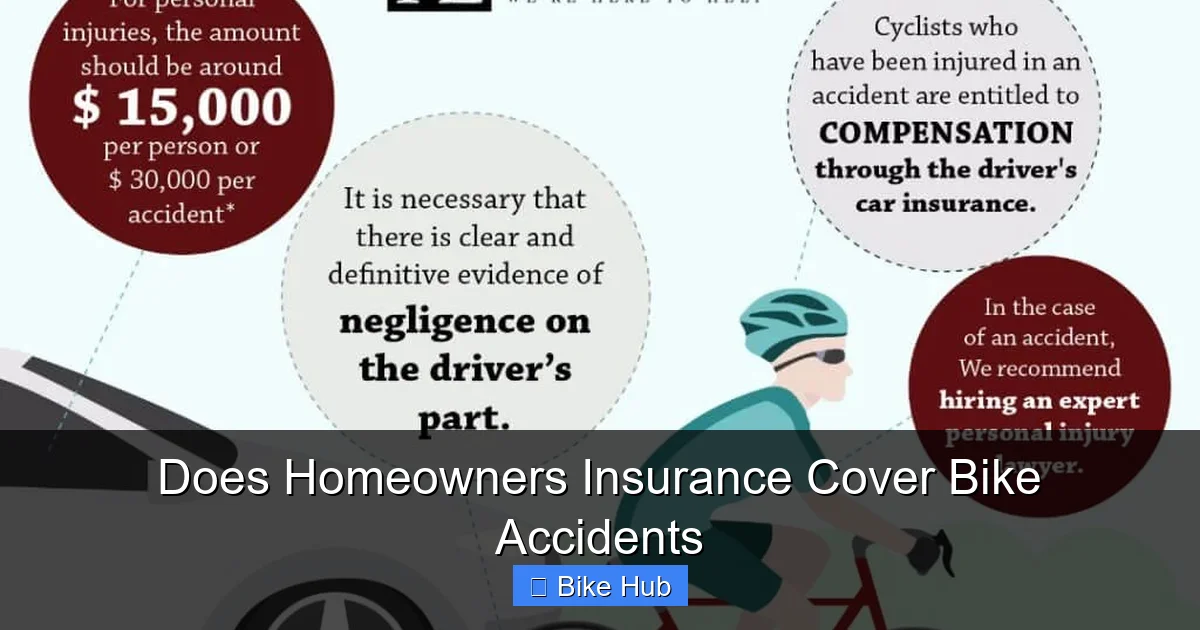
Visual guide about Does Homeowners Insurance Cover Bike Accidents
Image source: avrek.com
Problem: My bike was damaged in a crash—can I claim it?
Unless the damage resulted from a covered peril (like a storm), no. Homeowners insurance doesn’t cover mechanical damage from use. Consider a repair kit or best bike pump and repair kit combo for on-the-go fixes.
Problem: I can’t find my bike’s serial number.
Check under the bottom bracket, on the headset, or near the rear dropout. If missing, contact the manufacturer or use a bike registry. For future reference, store this info digitally.
Final Thoughts: Protect Your Ride the Right Way
So, does homeowners insurance cover bike accidents? Sometimes—but not always, and not enough for serious riders. It’s great for theft or damage at home, but falls short when you’re out on the road or trail.
To truly protect your investment:
- Review your homeowners policy limits
- Add a scheduled rider for high-value bikes
- Keep detailed records and photos
- Consider standalone bike insurance for full coverage
- Use a bike camera to document rides—this can help with claims and liability disputes (learn how to use a bike camera for insurance)
Your bike is more than metal and rubber—it’s freedom on two wheels. Make sure it’s covered, no matter where your journey takes you.



