
Electric bikes generally do not require a license plate in most U.S. states, but rules vary based on motor power, speed, and classification. This guide explains how to check your local laws and stay compliant.
Key Takeaways
- Most e-bikes don’t need license plates: Class 1 and Class 2 e-bikes are typically treated like regular bikes and don’t require registration or plates.
- Class 3 e-bikes may have different rules: Some states require helmets, age restrictions, or registration for higher-speed models.
- State laws vary widely: Always check your local Department of Motor Vehicles (DMV) or transportation authority for up-to-date regulations.
- Motor power and speed matter: E-bikes with motors over 750 watts or speeds exceeding 20–28 mph may be classified as mopeds or motorcycles.
- No license usually needed for low-speed e-bikes: You typically don’t need a driver’s license to ride Class 1 or 2 e-bikes on bike paths or roads.
- Insurance is rarely required: Most states don’t mandate insurance for standard e-bikes, but it’s wise for high-value models.
- Stay safe and legal: Even if no plate is needed, follow traffic laws, use lights, and wear a helmet.
Do Electric Bikes Need a License Plate? A Complete Guide
If you’re thinking about buying an electric bike or already own one, you’ve probably wondered: Do electric bikes need a license plate? The short answer is: usually not—but it depends on where you live and what kind of e-bike you have. Unlike cars or motorcycles, most electric bikes are designed to assist your pedaling and stay within safe speed limits, which keeps them in the same legal category as traditional bicycles.
In this guide, we’ll walk you through everything you need to know about e-bike licensing, registration, and license plate requirements. You’ll learn how e-bikes are classified, what the laws are in different states, and how to make sure you’re riding legally and safely. Whether you use your e-bike for city commuting, weekend adventures, or just getting around town, this guide will help you stay on the right side of the law.
Understanding E-Bike Classifications
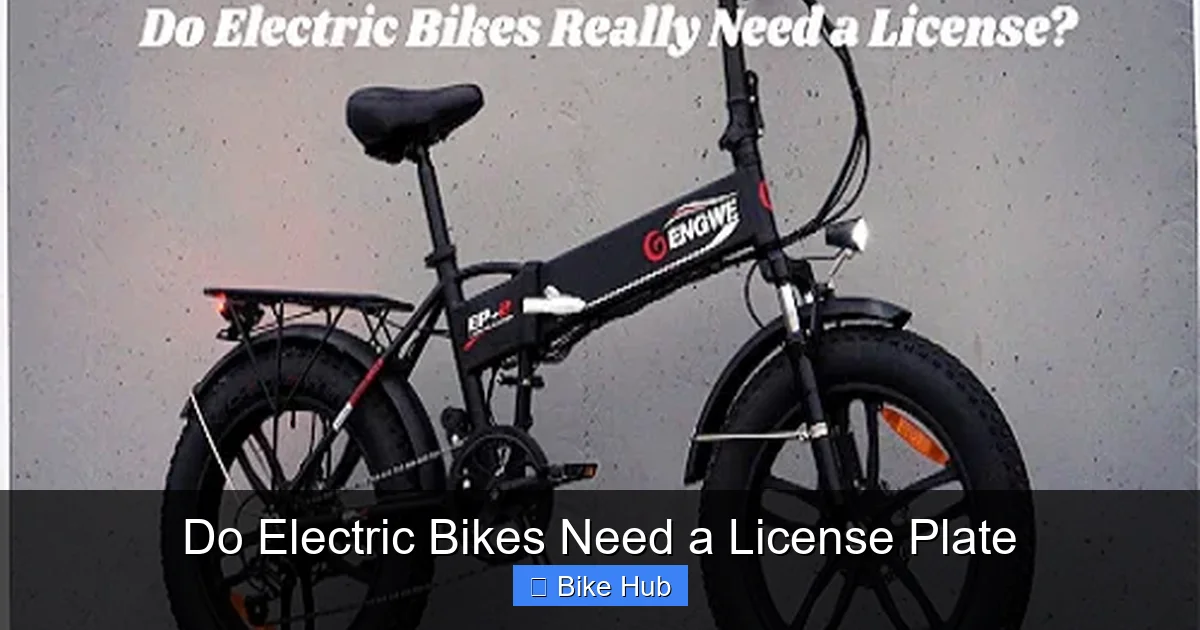
Visual guide about Do Electric Bikes Need a License Plate
Image source: cdn.shopify.com
Before diving into license plate rules, it’s important to understand how electric bikes are categorized. In the U.S., most states follow a three-class system developed by the Consumer Product Safety Commission (CPSC). This system helps determine whether your e-bike needs special registration or a license plate.
Class 1: Pedal-Assist Only
- Motor engages only when you pedal
- Maximum speed: 20 mph
- No throttle
These are the most common e-bikes and are treated like regular bicycles in most areas.
Class 2: Throttle-Assist
- Motor can be activated with a throttle (like a scooter)
- Maximum speed: 20 mph
- No pedaling required
Still considered low-speed, these bikes are usually exempt from registration.
Class 3: Speed Pedelec
- Pedal-assist only
- Maximum speed: 28 mph
- Often requires a helmet and may have age restrictions
Some states treat Class 3 e-bikes more like mopeds, which could mean registration or licensing.
Knowing your e-bike’s class is the first step in determining whether you need a license plate. For example, if you’re riding a Class 1 or Class 2 e-bike, you’re very unlikely to need any kind of registration. But if you’re using a high-speed model, especially for commuting in urban areas, you should double-check local rules.
Do You Need a License Plate for an E-Bike?
Visual guide about Do Electric Bikes Need a License Plate
Image source: electricbikeexplorer.com
In most cases, no, you do not need a license plate for an electric bike. The majority of U.S. states do not require registration, licensing, or insurance for e-bikes that meet the federal definition: a two- or three-wheeled vehicle with fully operable pedals, a motor under 750 watts, and a top speed of 20 mph.
However, there are exceptions. Some states and cities have their own rules, especially for faster or more powerful e-bikes. Here’s a breakdown:
States That Require Registration or Plates
- New York: Class 3 e-bikes must be registered and display a plate if used on public roads. Riders must be at least 16 and wear a helmet.
- Alaska: E-bikes with motors over 1,000 watts may be classified as motorcycles and require registration.
- Hawaii: E-bikes are treated like mopeds if they exceed 20 mph. Registration and a plate may be required.
States with No Plate Requirements
- California: No registration or plates for Class 1, 2, or 3 e-bikes. Helmets required for Class 3 riders under 18.
- Texas: E-bikes are treated as bicycles. No license, registration, or plate needed.
- Colorado: No registration required. E-bikes allowed on bike paths unless locally restricted.
Always check your state’s DMV website or local transportation authority for the most current information. Laws can change, and some cities have additional rules.
How to Check Your Local E-Bike Laws
To make sure you’re compliant, follow these simple steps:
Step 1: Identify Your E-Bike’s Class
Check the manufacturer’s specifications. Look for motor wattage (should be 750W or less) and top speed. Most e-bike makers clearly label the class.
Step 2: Visit Your State’s DMV or DOT Website
Search for “electric bike laws [your state]” or visit the official Department of Motor Vehicles (DMV) or Department of Transportation (DOT) site. Look for sections on “low-speed electric bicycles” or “e-bike regulations.”
Step 3: Check Local City or County Rules
Some cities have additional restrictions. For example, certain bike paths may ban Class 3 e-bikes, or require lights and bells. Check your city’s transportation or parks department website.
Step 4: Look for Updates
E-bike laws are evolving. Subscribe to local transportation newsletters or check annually for changes.
Practical Tip:
Keep a printed copy of your e-bike’s specifications and classification in your bike bag. If stopped by law enforcement, you can quickly show that your bike meets legal standards.
What If Your E-Bike Doesn’t Fit the Standard Classes?
Some high-performance e-bikes blur the lines. If your bike has a motor over 750 watts or can go faster than 28 mph, it may be classified as a moped, motorcycle, or motorized vehicle. In these cases:
- You may need a driver’s license
- Registration and a license plate could be required
- Insurance might be mandatory
- Helmet and safety gear laws often apply
For example, if you’re riding a powerful off-road e-bike like those in our guide to the best electric dirt bikes for adults, you may need to register it if used on public roads. Always verify the classification before riding.
Troubleshooting Common Issues
“I Was Told I Need a Plate—But My Bike Is Class 1!”
This could be a misunderstanding. Some officers may not be familiar with e-bike laws. Politely show your bike’s specs and refer them to your state’s e-bike regulations. If needed, contact your local DMV for clarification.
“Can I Ride My E-Bike on Bike Paths?”
Most Class 1 and 2 e-bikes are allowed on bike paths, but some cities restrict Class 3 bikes. Always check local rules. For example, in some areas, only e-bikes under 20 mph are permitted on multi-use trails.
“Do I Need Insurance?”
Generally, no—but it’s a smart idea for expensive models. Some homeowners or renters insurance policies cover e-bike theft or damage. Consider adding coverage if your bike is worth over $1,000.
Staying Safe and Legal on Your E-Bike
Even if you don’t need a license plate, you still have responsibilities as an e-bike rider:
- Wear a helmet: Especially for Class 3 bikes or if you’re under 18.
- Use lights and reflectors: Required at night in most states.
- Follow traffic laws: Stop at red lights, use hand signals, and ride in the same direction as traffic.
- Maintain your bike: Regularly check brakes, tires, and battery. A well-maintained bike is safer and less likely to malfunction.
For commuters, choosing the right gear matters. If you’re riding in the rain, check out our tips on the best rain gear for electric scooters—many of the same principles apply to e-bikes. And if you’re using your e-bike for daily travel, consider a reliable model from our list of the best electric bikes for commuting.
Conclusion
So, do electric bikes need a license plate? In most cases, the answer is no—especially if you’re riding a Class 1 or Class 2 e-bike that meets federal guidelines. These bikes are designed to be safe, eco-friendly alternatives to cars and are treated like regular bicycles under the law.
However, it’s crucial to know your local regulations. A few states require registration for faster e-bikes, and city rules can vary. Always check your state and local laws, keep your bike in good condition, and ride responsibly.
By understanding your e-bike’s classification and staying informed, you can enjoy all the benefits of electric biking—without any legal headaches. Whether you’re zipping through city streets or exploring scenic trails, your e-bike can be a fun, legal, and sustainable way to get around.



