
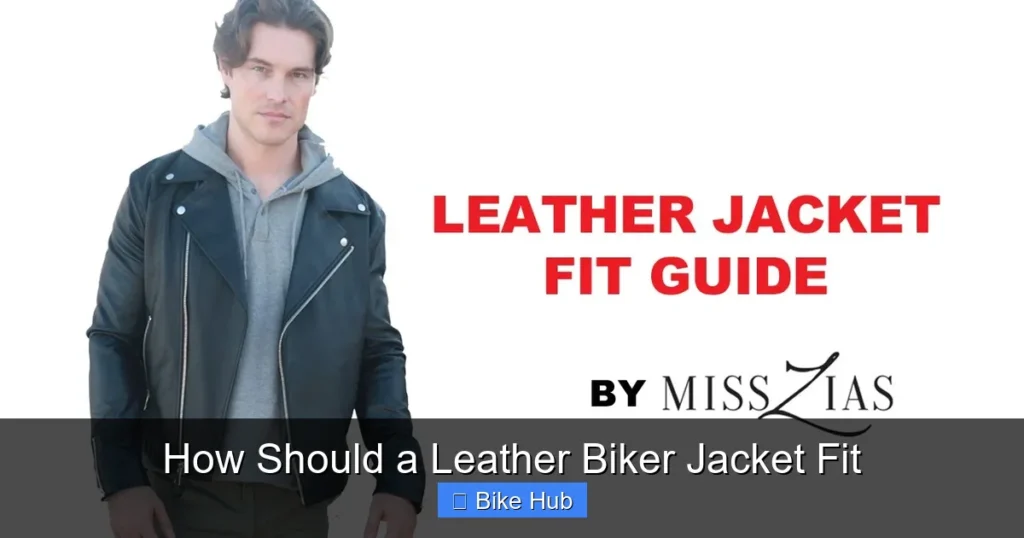
A well-fitting leather biker jacket enhances both safety and style on the road. This guide walks you through every fit detail—from shoulders to waist—so you can ride confidently and look sharp.
Key Takeaways
- Shoulders should align perfectly: The shoulder seams must sit directly on your shoulders, not hang off or pull inward.
- Sleeves end at the wrist bone: Sleeves should reach just past your wrist bone when your arms are relaxed at your sides.
- Snug but not tight fit: The jacket should hug your torso without restricting movement or causing discomfort.
- Zipper closure lies flat: When zipped, the front should close smoothly without bulging or gaping.
- Collar sits comfortably: The collar should rest against your neck without pinching or riding up.
- Mobility is key: You should be able to raise your arms, twist your torso, and grip handlebars with ease.
- Break-in period matters: Real leather softens over time, so allow for a slight initial tightness that will ease with wear.
How Should a Leather Biker Jacket Fit? A Complete Guide
Whether you’re hitting the open road or cruising through city streets, your leather biker jacket is more than just a fashion statement—it’s a piece of protective gear. But style and safety only work if the jacket fits right. A poorly fitted biker jacket can restrict movement, cause discomfort, or even compromise protection in a fall. So, how should a leather biker jacket fit? In this guide, we’ll break it down step by step so you can find the perfect fit for your ride.
You’ll learn how to assess shoulder placement, sleeve length, torso snugness, and closure alignment. We’ll also cover common fit issues and how to avoid them. By the end, you’ll know exactly what to look for when trying on or buying a leather biker jacket—whether online or in-store.
Step 1: Check the Shoulder Fit
The shoulders are the foundation of a good jacket fit. If they’re off, the rest of the jacket will feel unbalanced.
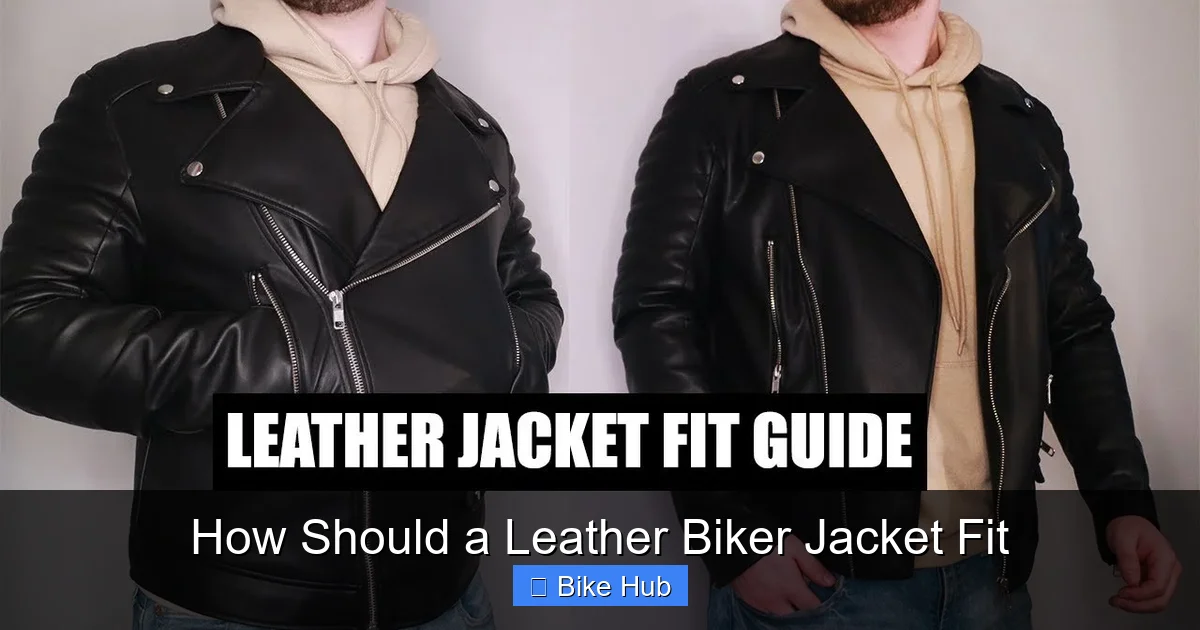
Visual guide about How Should a Leather Biker Jacket Fit
Image source: i.ytimg.com
How to Test Shoulder Fit
- Put on the jacket and stand naturally with your arms at your sides.
- Look in a mirror or ask someone to check: the shoulder seam should land exactly where your shoulder ends and your arm begins.
- If the seam hangs over your shoulder, the jacket is too big. If it pulls inward toward your neck, it’s too small.
A properly fitted shoulder allows the jacket to drape naturally without strain. Remember, unlike fabric jackets, leather doesn’t stretch much across the shoulders, so getting this right from the start is crucial.
Step 2: Evaluate Sleeve Length
Sleeve length affects both comfort and control while riding. Too long, and the sleeves get in the way of your hands on the handlebars. Too short, and they expose your wrists.
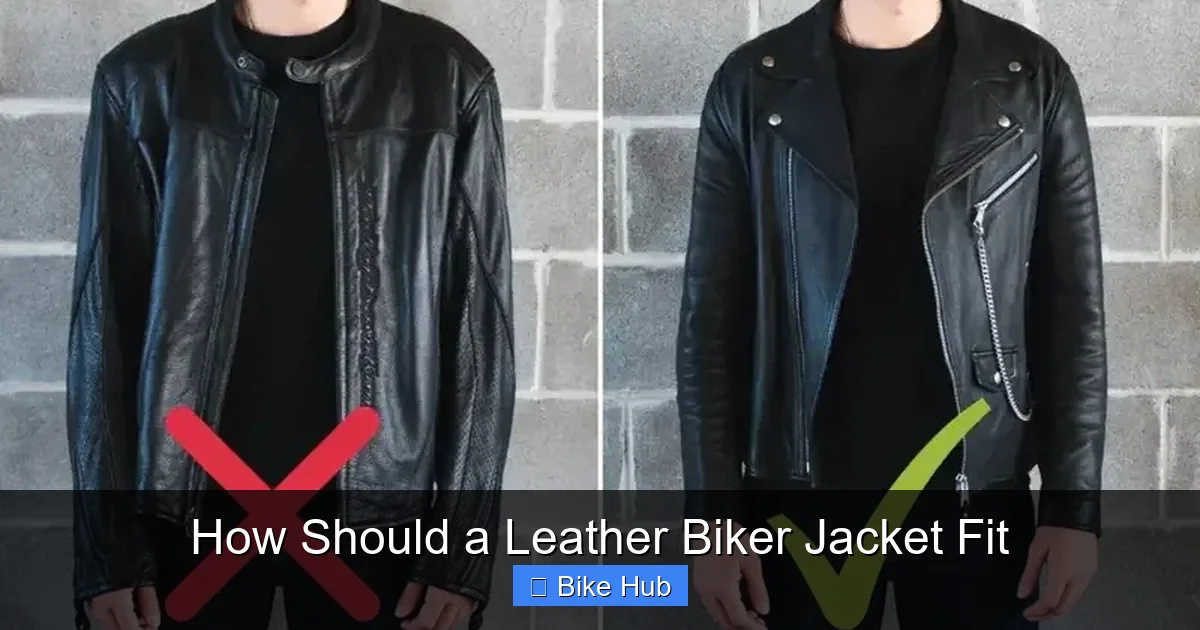
Visual guide about How Should a Leather Biker Jacket Fit
Image source: shunvogue.com
How to Measure Sleeve Fit
- With your arms relaxed at your sides, the sleeve should end just past your wrist bone.
- When you raise your arms to grip imaginary handlebars, the sleeves should stay in place—not ride up more than an inch.
- Avoid jackets with sleeves that bunch at the elbow or pull at the cuff when you bend your arms.
Pro tip: Try on the jacket while wearing your usual riding gloves. The sleeve should cover the base of the glove when your arm is extended, ensuring full wrist protection.
Step 3: Assess Torso and Waist Fit
The torso is where the jacket does most of its protective work. It needs to be snug enough to stay in place during a ride but not so tight that it restricts breathing or movement.
How to Test Torso Snugness
- Zip up the jacket completely. It should close smoothly without pulling or gaping at the center.
- Take a deep breath—you should be able to inhale comfortably without feeling squeezed.
- Raise your arms overhead. The jacket should move with you, not pull up excessively at the waist.
- The hem should sit just above your hips, covering your lower back when seated on your bike.
A common mistake is choosing a jacket that’s too loose “for layering.” While you may wear a hoodie underneath in colder weather, the jacket itself should still fit snugly. If you need room for layers, consider sizing up slightly—but never more than one size.
Step 4: Check the Collar and Neckline
The collar protects your neck from wind, debris, and impact. It should feel secure without being restrictive.
How to Test Collar Comfort
- Fasten all zippers and snaps at the collar.
- The collar should rest gently against your neck—not dig in or flop away.
- Turn your head side to side and up and down. You should have full range of motion.
- If the collar rides up or chafes, it’s either too small or poorly designed.
Many biker jackets feature a snap-button or zippered collar for adjustability. Use these features to fine-tune the fit around your neck.
Step 5: Test Mobility and Riding Position
A jacket can look perfect standing up but fail when you’re actually riding. Always test fit in a riding position.
How to Simulate Riding Posture
- Bend your knees slightly and lean forward as if gripping handlebars.
- Reach forward with both arms as if steering.
- Check for pulling at the shoulders, tightness across the chest, or riding up at the back.
- If you feel resistance or discomfort, the jacket isn’t right for riding.
This step is especially important for sport bikes or aggressive riding positions. If you ride a cruiser or standard bike, the posture is more upright, but mobility testing is still essential.
Step 6: Consider the Break-In Period
Real leather is stiff when new but softens with wear. This means your jacket might feel a bit tight at first—but only in the right places.
What to Expect During Break-In
- Initial stiffness is normal, especially across the shoulders and back.
- The jacket should feel snug but not painful. Mild resistance when zipping is okay; sharp pulling is not.
- After 10–20 hours of wear, the leather will conform to your body shape.
- Avoid jackets that feel loose from day one—they won’t improve with break-in.
Think of it like breaking in a new pair of boots. A little discomfort at first leads to a custom fit later. But if it’s uncomfortable in key areas like the armpits or chest, it’s likely the wrong size.
Troubleshooting Common Fit Problems
Even with careful sizing, fit issues can arise. Here’s how to spot and fix them.
Problem: Jacket Gapes at the Front When Zipped
This usually means the jacket is too big or the chest size is off. Try a smaller size or look for a jacket with adjustable side straps or laces to cinch the waist.
Problem: Sleeves Ride Up When Riding
Short sleeves or tight cuffs can cause this. Opt for jackets with slightly longer sleeves or elasticated cuffs that stay in place.
Problem: Shoulders Feel Tight or Restricted
Don’t force it. Leather stretches minimally across the shoulders. If it’s tight now, it likely won’t improve enough. Choose a larger size or a different cut.
Problem: Jacket Rides Up at the Back
This happens when the torso is too short or the riding position is too aggressive. Look for jackets with a longer back panel or a tailored cut for sport riding.
Final Tips for Buying the Right Fit
When shopping for a leather biker jacket, keep these tips in mind:
- Try it on with your riding gear: Wear your usual base layers, gloves, and helmet to get an accurate fit.
- Check the brand’s size chart: Sizing varies widely between brands. Always measure your chest, waist, and sleeve length and compare to the chart.
- Prioritize function over fashion: A stylish jacket that doesn’t fit well won’t protect you or feel comfortable on long rides.
- Invest in quality leather: Full-grain or top-grain leather lasts longer and breaks in better than synthetic alternatives.
- Consider armor pockets: Many modern biker jackets include pockets for CE-approved armor. Make sure these don’t interfere with fit when empty or filled.
And if you’re also upgrading other gear, don’t forget to check out our guide on how to properly fit a bike helmet—because head protection is just as important as torso protection.
Conclusion
Finding the right fit for your leather biker jacket is essential for comfort, safety, and confidence on the road. A well-fitted jacket should feel like a second skin—snug enough to stay put, flexible enough to move with you, and protective enough to shield you in case of a fall.
Remember: focus on shoulder alignment, sleeve length, torso snugness, and mobility. Don’t ignore the break-in period, and always test the jacket in a riding position. With these guidelines, you’ll be ready to hit the road in style and safety.
Whether you’re a weekend rider or a daily commuter, the right leather biker jacket is worth the investment. Take your time, try before you buy, and ride with confidence.



