
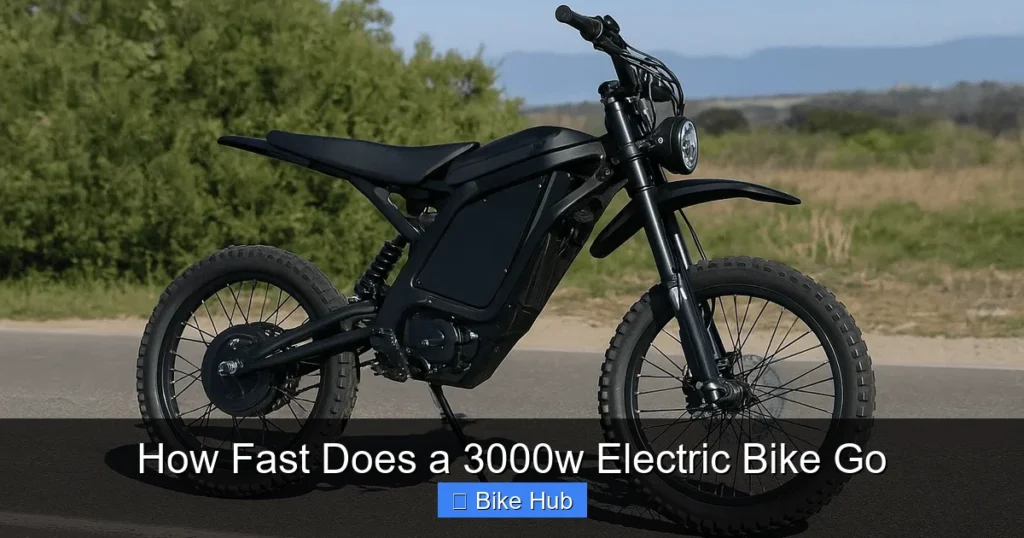
A 3000w electric bike can reach speeds of 35 to 45 mph (56 to 72 km/h) under ideal conditions. However, real-world speed depends on terrain, rider weight, battery power, and local laws. This guide explains everything you need to know about maximizing and safely riding a high-powered e-bike.
Key Takeaways
- Top speed range: Most 3000w e-bikes reach 35–45 mph, with some modified models exceeding 50 mph.
- Battery matters: A high-capacity 72V battery is essential for maintaining top speed and range.
- Terrain and rider weight affect performance: Hills and heavier riders reduce speed and efficiency.
- Legal restrictions apply: Many regions limit e-bike power to 750w and speed to 20–28 mph—check local laws.
- Safety first: Always wear a helmet, use lights, and practice in safe areas before pushing speed limits.
- Maintenance is crucial: Regular checks on brakes, tires, and drivetrain ensure safe high-speed riding.
- Not all 3000w bikes are equal: Build quality, motor type, and components vary widely—choose wisely.
How Fast Does a 3000w Electric Bike Go? A Complete Guide
If you’re considering a 3000w electric bike, you’re probably wondering: just how fast can it go? The short answer? These powerful machines can reach speeds of 35 to 45 mph (56 to 72 km/h)—and sometimes even more. But speed isn’t just about wattage. In this guide, we’ll walk you through everything you need to know about 3000w e-bike performance, including real-world factors that affect speed, safety tips, legal considerations, and how to get the most out of your ride.
Whether you’re commuting, off-roading, or just love the thrill of speed, understanding your e-bike’s capabilities will help you ride smarter and safer.
Understanding Electric Bike Power and Speed
Visual guide about How Fast Does a 3000w Electric Bike Go
Image source: boltbikers.com
Before diving into speed, let’s clarify what “3000w” actually means. The wattage refers to the motor’s power output—3000 watts is four times stronger than a standard 750w e-bike. This extra power translates into faster acceleration and higher top speeds, especially on hills or with heavier loads.
However, wattage alone doesn’t determine speed. Several factors work together to influence how fast your e-bike can go.
Battery Voltage and Capacity
The battery is the heart of your e-bike’s performance. A 3000w motor typically requires a high-voltage battery (60V or 72V) to deliver enough power. Lower voltage batteries (like 48V) may struggle to sustain peak performance, causing speed drops under load.
Battery capacity, measured in amp-hours (Ah), affects range. A 72V 20Ah battery, for example, gives you more range and consistent power than a smaller 15Ah pack. Always match your battery to your motor’s demands for optimal speed and longevity.
Motor Type and Efficiency
Most 3000w e-bikes use hub motors or mid-drive motors. Hub motors (in the wheel) are common and offer strong torque, while mid-drive motors (near the pedals) provide better balance and efficiency, especially on hills.
Efficiency also depends on motor quality. A well-built motor with proper cooling will maintain speed better than a cheaper, overheating model.
Weight and Aerodynamics
Heavier riders or bikes with cargo will slow down faster. Every extra pound increases resistance, especially on inclines. Similarly, aerodynamics matter—riding in an upright position creates more wind drag than leaning forward.
For best results, keep your bike lightweight and maintain a streamlined posture at high speeds.
Real-World Speed Expectations
Visual guide about How Fast Does a 3000w Electric Bike Go
Image source: boltbikers.com
So, how fast will your 3000w e-bike actually go? Let’s break it down.
On Flat Ground
On smooth, flat pavement with a full battery and no wind, most 3000w e-bikes hit 35–40 mph (56–64 km/h). High-end models with aerodynamic frames and efficient motors can reach 45 mph (72 km/h) or more.
For example, a rider weighing 160 lbs on a quality 72V e-bike might cruise at 40 mph effortlessly. But if the same bike carries a 250-lb rider, top speed could drop to 32–35 mph.
Uphill Performance
Hills are the true test of power. A 3000w motor can climb steep inclines (10–15% grade) at 15–25 mph, depending on gearing and weight. This makes 3000w bikes ideal for mountainous terrain or hilly cities.
Still, sustained climbing drains the battery fast. Always monitor your charge level and avoid pushing the motor too hard for too long.
Downhill and Assisted Speed
Going downhill, many 3000w e-bikes can exceed 50 mph if unrestricted. However, most controllers limit top speed for safety. Some riders disable these limits, but this is risky and often illegal.
Pedal assist can also boost speed. Using higher assist levels (like PAS 4 or 5) helps maintain momentum, especially in headwinds or on rolling terrain.
Legal and Safety Considerations
With great power comes great responsibility—and legal complexity.
E-Bike Classifications and Laws
In the U.S., e-bikes are classified into three categories:
- Class 1: Pedal-assist only, up to 20 mph.
- Class 2: Throttle-assisted, up to 20 mph.
- Class 3: Pedal-assist only, up to 28 mph.
Most 3000w e-bikes exceed these limits and are often classified as motor vehicles, requiring registration, insurance, and a license in many states. Always check your local regulations before riding.
In the EU, e-bikes are limited to 250w and 15.5 mph (25 km/h). A 3000w bike would be illegal for road use without special permits.
Safety Gear and Precautions
At 40+ mph, a regular bike helmet isn’t enough. Invest in a full-face motorcycle helmet for maximum protection. Also, wear reflective clothing, gloves, and armored jackets.
Brakes are critical. Most 3000w e-bikes need hydraulic disc brakes with large rotors (180mm or bigger) to stop safely at high speeds. Regularly inspect brake pads and fluid levels.
Lighting is another must. Install bright front and rear lights, especially if riding at night. Consider adding turn signals and brake lights for extra visibility.
Tips to Maximize Your E-Bike’s Speed
Want to go faster? Try these proven tips.
Keep Your Battery Charged
A full battery delivers peak voltage. Riding at 50% charge can reduce speed by 10–15%. Charge regularly and avoid deep discharges.
Maintain Proper Tire Pressure
Underinflated tires increase rolling resistance. Check pressure weekly and inflate to the recommended PSI (usually 30–50 PSI for e-bikes). Use a quality electric bike pump for convenience and accuracy.
Reduce Weight and Drag
Remove unnecessary accessories. Use a streamlined rack if carrying gear. Wear tight-fitting clothing to cut wind resistance.
Upgrade Components
Consider upgrading to high-performance tires, a better controller, or a more efficient drivetrain. These tweaks can add a few extra mph.
Ride Smart
Shift your weight back when accelerating hard to prevent wheelies. Use lower gears on hills and higher gears on flats. And always scan the road ahead—high speed means less reaction time.
Troubleshooting Common Speed Issues
Even the best 3000w e-bike can slow down over time. Here’s how to fix common problems.
Speed Drops Suddenly
- Check battery charge—low voltage reduces power.
- Inspect the controller for overheating or damage.
- Ensure the motor isn’t overheating (feel the casing after a ride).
Can’t Reach Top Speed
- Verify tire pressure and tread wear.
- Check for loose chains or drivetrain issues.
- Make sure the speed limiter hasn’t been accidentally enabled.
Battery Drains Too Fast
- Avoid full-throttle starts—use gradual acceleration.
- Reduce weight and aerodynamic drag.
- Consider upgrading to a higher-capacity battery.
Regular maintenance is key. Clean your drivetrain, lubricate the chain, and inspect all bolts and connections monthly.
Conclusion
A 3000w electric bike is a high-performance machine capable of impressive speeds—often 35 to 45 mph or more. But speed depends on more than just motor power. Battery quality, rider weight, terrain, and maintenance all play crucial roles.
Before you hit the throttle, remember to ride safely, follow local laws, and invest in proper gear. These bikes are thrilling, but they demand respect.
Whether you’re using your e-bike for commuting, off-roading, or weekend adventures, understanding its capabilities will help you get the most out of every ride. Stay safe, stay charged, and enjoy the ride!



