
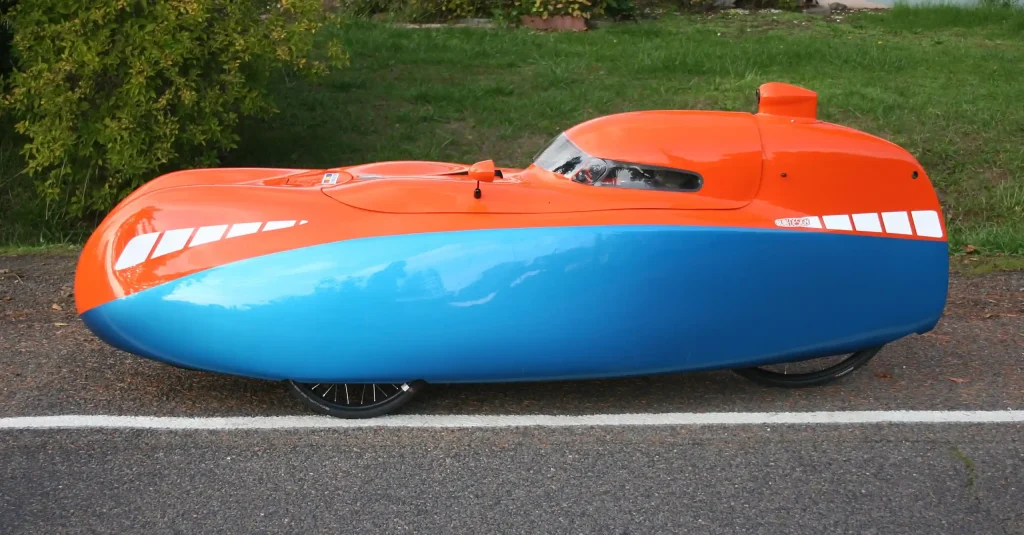
Have you ever wondered how a velomobile works and why it’s gaining attention among cycling fans? If you’re curious about this sleek, pedal-powered vehicle that looks like a mix between a bike and a car, you’re in the right place.
Understanding how a velomobile works can change the way you think about personal transport—making your rides faster, safer, and more comfortable. Keep reading, and you’ll discover the simple mechanics behind velomobiles and why they might be the perfect option for your next adventure on wheels.

Credit: www.velomobileworld.com
Velomobile Basics
A velomobile is a special bike with a shell around it. It helps riders go faster and stay safe.
It uses pedals like a bike but has extra parts to protect and improve riding.
Key Components
Velomobiles have parts that work together to make riding easier and more fun. They have wheels, pedals, and a frame.
The shell covers the rider and parts inside. It helps with speed and safety.
- Pedals to power the vehicle
- Three or four wheels for balance
- Lightweight frame for support
- Aerodynamic shell for less wind resistance
- Steering system to control direction
Design Features
The shape of a velomobile helps it move fast and stay stable. It is low to the ground to reduce wind drag.
Inside, there is space for the rider to sit comfortably while pedaling. The design keeps the rider dry in rain.
- Streamlined body to cut through air
- Enclosed cabin to protect from weather
- Low center of gravity for better balance
- Easy access doors or openings
- Reflectors or lights for safety
Aerodynamics And Efficiency
Velomobiles are designed to move quickly with less effort. Their shape and features help reduce air resistance. This makes riding easier and faster.
Understanding aerodynamics helps explain why velomobiles save energy. The design focuses on smooth airflow and cutting drag to improve efficiency.
Streamlined Shape
The body of a velomobile is smooth and rounded. This shape lets air flow over it without much disturbance. A streamlined shape means less wind pushing back against the rider.
- Rounded front to cut through the air
- Sloped rear to reduce turbulence
- Enclosed wheels to avoid extra drag
- Low profile to keep a small frontal area
Drag Reduction
Drag is the force that slows down moving objects in air. Velomobiles reduce drag with special design features. These help the rider use less energy over long distances.
| Feature | Effect on Drag | Benefit |
| Enclosed cockpit | Blocks air from hitting the rider | Less resistance |
| Smooth surface | Prevents air from catching on bumps | Smoother ride |
| Wheel covers | Stops air swirling around wheels | Improves speed |
| Lightweight frame | Reduces overall weight | Better acceleration |
Power And Propulsion
Velomobiles move using power from the rider’s legs. They use pedals and chains like bikes. Some models add electric motors to help pedal power.
The power system affects speed, effort, and distance. Knowing how propulsion works helps you understand velomobiles better.
Human-powered Mechanism
Riders pedal to turn the wheels. The pedals connect to a chain that spins the rear wheel. This moves the velomobile forward.
Some velomobiles use gears to make pedaling easier. Gears help with hills and different speeds. The rider controls the gear shifts.
- Pedals connect to a chain drive
- Chain turns the rear wheel
- Gears adjust pedaling difficulty
- Rider controls speed and effort
Electric Assist Options
Electric motors can add power to pedaling. They use batteries to run quietly and smoothly. This helps riders go farther and faster.
Electric assist activates when the rider pedals. Sensors detect how hard the rider pushes. The motor then adds the right amount of power.
- Electric motors support pedaling effort
- Batteries provide power for the motor
- Sensors adjust motor power based on pedaling
- Helps with hills and long rides

Credit: www.velomobileworld.com
Steering And Control
Velomobiles offer a unique riding experience. Their steering and control systems differ from regular bikes. Understanding these systems helps riders handle them safely.
Control is key to maneuvering a velomobile. The design focuses on stability and smooth steering, even at higher speeds.
Handlebars And Linkages
Most velomobiles use handlebars to steer. These are often connected to the front wheels through linkages. The linkages transfer the rider’s input to the wheels.
- Handlebars may be inside the shell for aerodynamics.
- Linkages can include rods or cables.
- Some models use direct steering with the front wheel fork.
- Steering systems are designed to require minimal effort.
- Proper adjustment ensures precise control and safety.
Stability Factors
Stability affects how well the velomobile stays balanced. It depends on several design factors that work together.
| Factor | Description | Effect on Stability |
| Wheelbase | Distance between front and rear wheels | Longer wheelbase improves straight-line stability |
| Track Width | Distance between the two wheels on the same axle | Wider track reduces tipping risk |
| Center of Gravity | Height and position of rider and frame weight | Lower center of gravity enhances balance |
| Suspension | System absorbing shocks | Improves comfort and control on rough roads |
Safety And Comfort
Velomobiles offer a unique riding experience with a focus on safety and comfort. Their design keeps riders protected and relaxed.
Understanding how these features work helps explain why velomobiles are safe and comfortable for everyday use.
Protective Shell
The velomobile has a hard outer shell that covers the rider. This shell acts like a shield during accidents.
The shell is made from strong materials that resist impact and protect from weather. It also improves aerodynamics.
- Guards against road debris and small crashes
- Protects from rain, wind, and cold weather
- Made from lightweight but strong composites
- Improves speed by reducing air resistance
Ergonomic Seating
Velomobiles have seats designed to fit the body comfortably. This seating reduces pressure on the back and hips.
The seat position supports good posture and allows easy pedaling. This helps riders stay comfortable on long trips.
- Supports the natural curve of the spine
- Provides cushioning to reduce soreness
- Adjustable to fit different body sizes
- Keeps rider stable while pedaling
Performance And Speed
Velomobiles are designed to move fast by cutting air resistance. Their streamlined shape helps them glide smoothly.
Speed depends on the rider’s power and how well the velomobile handles wind and road conditions.
Comparison With Bicycles
Velomobiles are faster than regular bicycles on flat roads. They use less energy to keep speed due to their shape.
- Velomobiles have full body covers that reduce drag.
- Bicycles have an open frame that faces more wind resistance.
- Velomobiles can reach higher speeds with less effort.
- However, bicycles are lighter and easier to carry or store.
Terrain Adaptability
Velomobiles work best on smooth and paved surfaces. Their low ground clearance limits off-road use.
| Terrain Type | Velomobile Performance | Bicycle Performance |
| Paved Roads | Excellent speed and control | Good speed and control |
| Gravel Paths | Limited stability and slower | Better stability and speed |
| Steep Hills | Challenging due to weight | Easier to climb |
| Off-road Trails | Not suitable | Good performance |
Maintenance And Upkeep
Velomobiles need regular care to keep running smoothly. Proper maintenance helps avoid big repairs and keeps you safe.
Knowing common repairs and ways to extend your velomobile’s life will save time and money.
Common Repairs
Some parts wear out faster on velomobiles. Fixing these quickly keeps your ride in good shape.
- Check and replace flat tires regularly
- Tighten loose bolts on the frame and chain
- Adjust brakes to ensure quick stops
- Lubricate the chain and gears to avoid rust
- Inspect the electrical system for lights and signals
Longevity Tips
Follow simple habits to make your velomobile last longer. Treat it like a valuable tool.
| Tip | Reason |
| Store inside or under cover | Protects from sun and rain damage |
| Clean regularly | Prevents dirt from wearing parts down |
| Check tire pressure weekly | Improves ride and reduces tire wear |
| Service brakes every few months | Keeps stopping power strong and safe |
| Use quality replacement parts | Ensures better performance and durability |
Credit: www.instructables.com
Frequently Asked Questions
What Powers A Velomobile’s Movement?
A velomobile is powered by human pedaling, similar to a bicycle. It uses a chain and gears to transfer energy to the wheels, enabling smooth and efficient motion.
How Does The Aerodynamic Shell Help A Velomobile?
The aerodynamic shell reduces air resistance, allowing higher speeds with less effort. It also protects the rider from wind, rain, and debris.
Can Velomobiles Be Used For Long-distance Travel?
Yes, velomobiles are designed for comfort and efficiency, making them suitable for long-distance rides. Their enclosed design helps reduce fatigue and weather impact.
How Safe Are Velomobiles Compared To Bicycles?
Velomobiles offer enhanced safety with their sturdy frame and protective shell. They provide better visibility and stability, reducing the risk of accidents.
Conclusion
Velomobiles combine pedal power with a protective shell. This design makes riding faster and more comfortable. The shell cuts wind resistance and shields riders from weather. Inside, pedals connect to wheels for smooth motion. Riders steer using handlebars linked to the front wheels.
Lightweight materials keep the vehicle easy to pedal. Velomobiles offer a green way to travel short distances. They blend exercise with practical transport. Simple mechanics make them easy to maintain. A velomobile shows how human power meets smart design.



